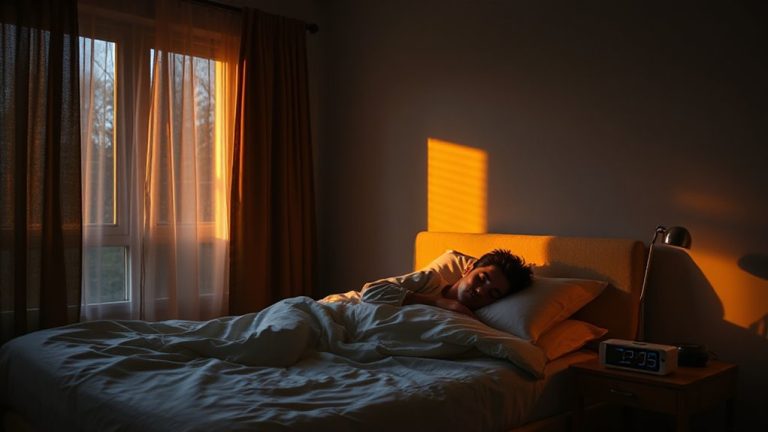
The Importance of Consistent Wake Times in Managing Delayed Sleep Phase Disorder
Waking up at the same time every day helps reset your delayed internal clock, even if you didn’t sleep well. This consistency, including weekends, gradually shifts your sleep schedule earlier and improves alertness. Morning light right after waking boosts this effect by reducing melatonin. While changing bedtime seems logical, fixing wake time works better long-term. You’ll likely struggle at first, but sticking with it builds momentum-there’s more to learn about making it sustainable.
Notable Insights
- Waking at the same time daily resets the circadian rhythm, gradually aligning it with desired sleep-wake hours.
- Consistent wake times, even on weekends, prevent internal clock disruption and stabilize sleep patterns.
- Morning light exposure after waking suppresses melatonin and strengthens circadian synchronization.
- A fixed wake time is more effective than focusing solely on bedtime for improving sleep onset.
- Gradual shifts in wake time improve adherence and allow natural, sustainable realignment of the body clock.
What Is Delayed Sleep Phase Disorder (DSPD)?

While most people fall asleep and wake up without much trouble, you might struggle if your body clock runs on a delayed schedule. This condition is called Delayed Sleep Phase Disorder (DSPD), and it shifts your sleep times later-sometimes by hours. You’re likely to feel alert at night when others are winding down, but groggy when alarms go off. The exact causes aren’t fully known, but genetics, melatonin timing, and circadian rhythm sensitivity play roles. Common symptoms include consistent difficulty falling asleep before 2 a.m. and trouble waking for work or school. Even with enough sleep, daytime fatigue can linger. Diagnosis usually requires tracking sleep logs or using actigraphy. Though no cure exists, treatments like light therapy and strict wake-time routines can improve symptoms. Recognizing these signs helps you consider effective support options early.
Why Your Internal Clock Keeps You Up Late

What makes it so hard to fall asleep at a typical hour, even when you’re tired? Your circadian rhythm runs on a delayed schedule, tricking your body into thinking night starts much later. This internal clock controls when you feel alert or sleepy, and in DSPD, it pushes melatonin production hours behind most people’s routines. Melatonin, the hormone that signals bedtime, doesn’t rise until very late, sometimes not until 2 a.m. or later. That’s why you’re wide awake at 11 p.m., even if you wanted to sleep earlier. Light exposure, especially from screens, worsens the delay by confusing your brain about when night begins. Genetics also play a role, making this more than just a habit issue. Understanding your shifted circadian rhythm helps explain why typical sleep advice often fails. It’s not a lack of effort-it’s a biological timing difference you can work with, not against.
The #1 Treatment for DSPD: Wake Up at the Same Time

You might find it surprisingly effective to set your alarm for the same time every single day-even on weekends. Doing this helps reset your internal clock by promoting consistent circadian alignment, which is essential for managing Delayed Sleep Phase Disorder. When you wake up at the same time daily, your body begins to expect light exposure earlier in the day, reinforcing a more regular sleep-wake cycle. Morning light exposure, especially within an hour of waking, signals your brain to reduce melatonin and increase alertness, gradually shifting your rhythm earlier over time. While it may feel tough at first, sticking with it supports long-term improvement in sleep timing. This approach doesn’t require supplements or devices, just daily commitment. Evidence shows routine wake times are more effective than changing bedtime alone. It’s a foundational step-one you can rely on without side effects or costs.
How to Set a Realistic Wake Time: and Stick to It
If you’re used to waking up late, picking a wake time that’s too early right away might set you up for frustration, so start by choosing a time only 30 to 60 minutes earlier than your current average, making it more likely you’ll stick with it. Use sleep tracking apps or devices to monitor your current patterns and identify a consistent baseline. This data helps you adjust gradually, supporting better habit formation over time. Pick a wake time you can maintain seven days a week, even on weekends, to stabilize your internal clock. Place your alarm across the room and expose yourself to bright light right away to reinforce the routine. Consistency matters more than perfection-missing one morning isn’t a failure, but restarting quickly keeps progress on track. Sleep tracking gives you feedback, helping fine-tune the schedule. Over weeks, this steady habit formation shifts your rhythm naturally, improving alertness and long-term sleep timing.
What to Do When You Can’t Fall Asleep Early?
A common challenge when adjusting to an earlier sleep schedule is lying awake at night, unable to fall asleep, even when tired. Don’t panic-this is normal during the shift. Focus on consistent sleep hygiene: keep your bedroom cool, dark, and quiet, avoid screens for at least an hour before bed, and stick to a calming pre-sleep routine. If you’re still alert after 20 minutes, get up and do something quiet, like reading under dim light, then try again. Mental relaxation techniques-deep breathing, progressive muscle relaxation, or guided imagery-can ease your mind without medication. Avoid stimulating activities or checking the clock. These strategies support your body’s adjustment without disrupting your progress. It might take time, but staying consistent helps reset your internal clock safely and gradually. Using a high-quality sound machine can also promote relaxation and mask disruptive noises, helping you fall asleep more easily during this transition period. best sound machines
Can You Sleep In on Weekends With DSPD?
Sticking to a steady sleep schedule matters even more when dealing with delayed sleep phase disorder, especially as weekends approach. You might think sleeping in offers relief, but weekend exceptions can worsen your rhythm. Delaying your wake time even a few hours shifts your internal clock, making it harder to wake early Monday. Each shift builds sleep debt, leaving you fatigued despite long weekend sleep. That debt impairs focus, mood, and daytime performance. Instead of extending sleep, keep wake times within an hour of your weekday schedule. This consistency reduces sleep debt and supports gradual phase adjustments. Think of your wake time as a daily anchor-it stabilizes your cycle more than bedtime does. While it’s tempting to catch up, doing so risks undoing progress. Stay steady, and your body will adapt more smoothly.
When to See a Doctor for DSPD?
Why is it that, despite your best efforts, your sleep pattern still feels out of reach? If you’ve tried sticking to a consistent wake time and avoiding late-night screens but still can’t fall asleep or wake up at socially acceptable hours, it might be time to see a doctor. A proper medical evaluation can rule out other conditions and confirm if you truly have Delayed Sleep Phase Disorder. Your doctor might recommend sleep studies, which monitor your brain activity, breathing, and movement overnight, to better understand your sleep architecture. These tests can take place at home or in a lab and help shape a personalized plan. Treatment might include light therapy, melatonin, or behavioral changes-all based on solid data. Don’t wait years; early evaluation makes management easier and improves daily functioning over time.
On a final note
You can manage DSPD by waking up at the same time every day, even on weekends. This consistency helps reset your internal clock over time. When you struggle to fall asleep early, avoid napping and bright evening light. Stick to your wake time to build sleep drive. If problems persist, talk to a doctor about light therapy or melatonin. Small, steady changes often work better than quick fixes.