Managing Sleep While Caring for Aging Parents: Strategies for Caregivers
You need sleep as much as food or water, so protect it. Set a consistent bedtime and wind down with dim lights, no screens, and calming habits like tea or reading. Use door alarms and nightlights to stay alert without sharing a room. Share nighttime duties with family or try respite care-many agencies offer trial periods and screened providers. Keep your bedroom cool, dark, and quiet with comfortable bedding. If sleep struggles continue, tracking patterns can help determine if a doctor’s input is needed. More solutions are available based on your situation.
Notable Insights
- Prioritize sleep as essential for health, similar to nutrition and hydration, to prevent burnout and support emotional well-being.
- Establish a consistent bedtime routine with dim lighting, no screens, and relaxing activities like reading or herbal tea.
- Set clear boundaries by using door alarms and nightlights to monitor parents safely while sleeping separately.
- Share nighttime duties with family members or hire respite caregivers to ensure regular rest and reduce exhaustion.
- Optimize the bedroom environment with a comfortable mattress, cool temperature, and blackout curtains to improve sleep quality.
Why Sleep Is Non-Negotiable for Caregivers
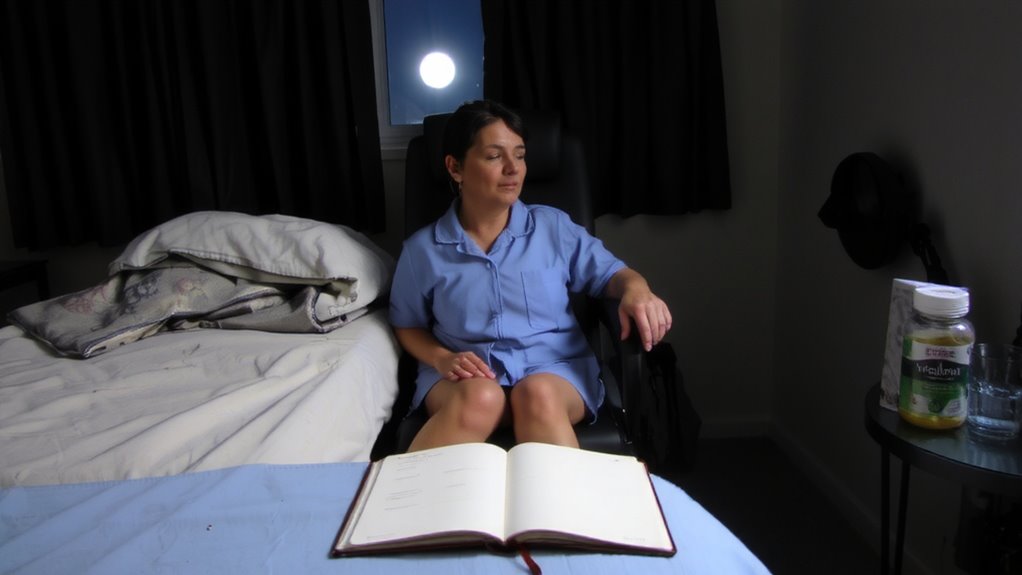
When it comes to your well-being as a caregiver, sleep isn’t a luxury-it’s a basic need, just like food or water. Without enough rest, you’re more likely to experience mental fatigue, making it harder to think clearly, stay patient, or react calmly during tough moments. This ongoing exhaustion increases your risk of caregiver burnout, a serious condition that can affect both your physical and emotional health. Sleep supports healing, focus, and emotional regulation-all essential when managing daily care tasks. If you’re struggling to fall or stay asleep, consider whether a sleep disorder like insomnia or sleep apnea might be involved. Evaluating symptoms and tracking sleep patterns can help you decide if changes in habits, environment, or professional support-including short-term use of sleep aids-might be appropriate. Many options come with trial periods or clear usage guidelines, so you can assess effectiveness safely and without pressure. A comfortable nighttime eye mask can help block out light and signal to your body that it’s time to rest.
Build a Calming Pre-Sleep Routine You Can Stick To

You’ve likely heard how sleep keeps your mind sharp and emotions steady, especially when caregiving demands never seem to let up. A consistent pre-sleep routine strengthens sleep hygiene and makes rest more achievable. Start by setting a regular bedtime and wake time, even on weekends. About 30–60 minutes before bed, ease into relaxation techniques like deep breathing, gentle stretching, or listening to calming music. Dim the lights and avoid screens to signal your body it’s time to wind down. Choose activities you enjoy and can repeat nightly-consistency helps. Some find herbal tea or reading helpful, as long as it doesn’t interfere with sleep. Avoid stimulants and heavy meals late in the evening. Over time, this routine trains your brain to associate these steps with sleep, improving sleep quality without relying on sleep aids. Certain supplements like nighttime muscle recovery supplements may also support rest and physical recovery during sleep.
Set Caregiver Boundaries That Protect Your Sleep
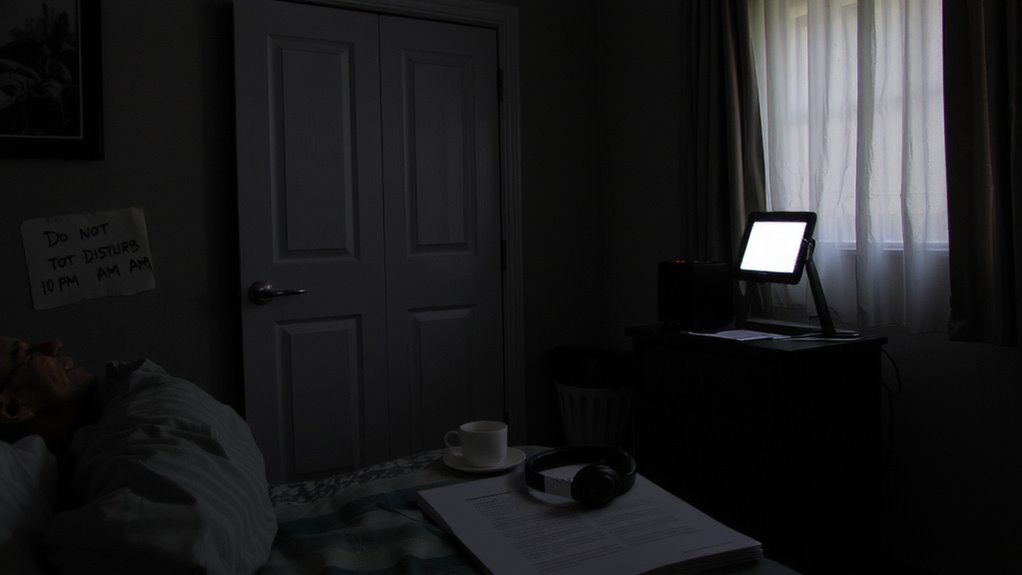
Because caregiving often spills into nights and interrupts sleep, setting clear boundaries is essential for protecting your rest and long-term well-being. Setting limits helps you stay present without burning out-decide what duties you can handle during the day and which ones can wait. Defining priorities means recognizing that your health matters just as much as your parent’s. If nighttime awakenings are frequent, consider a sleep-friendly schedule that aligns with their needs but still carves out uninterrupted hours for you. Use a door alarm instead of room-sharing, so you can sleep safely down the hall. Choose low-light nightlights and noise-canceling earplugs to improve sleep quality. A consistent bedtime signals your body it’s time to rest, making falling asleep easier. Small, practical choices now support better sleep health later-without guilt or grand gestures. For those struggling with night sweats, using the right cooling fan can make a significant difference-consider models designed for best fans for beating night sweats.
Get Help From Family or Respite Care to Lighten Nights
Setting boundaries helps you reclaim some control over your nights, but even the most thoughtful limits won’t eliminate every disruption. That’s where shared responsibilities come in. Talking openly with family can lead to a schedule where others take overnight shifts, giving you predictable time to rest. If family help isn’t an option, respite care offers temporary relief through trained professionals who step in for short periods. Many agencies provide overnight services with background-checked caregivers, some offering trial periods or satisfaction guarantees. Medicare may cover limited respite stays under hospice, and private insurance or local programs might help with costs. Respite care isn’t a luxury-it’s a practical way to prevent burnout. You don’t have to manage everything alone. Shared responsibilities ease the load, and temporary relief protects your health so you can keep providing care.
Make Your Bedroom a Sleep-Friendly Zone
Even when nighttime duties can’t be fully avoided, creating a bedroom environment that supports quick, restful sleep makes a meaningful difference in how well you recover between interruptions. Start by choosing a comfortable mattress that supports spinal alignment and reduces pressure points-memory foam and hybrid models often work well, especially if you shift positions during sleep. Pair it with breathable, soft bedding to enhance comfort. Keep the room cool, ideally between 60–67°F, and control light with blackout curtains. A quiet environment is essential; consider using earplugs or a white noise machine to mask disruptive sounds. Electronics should be limited, as screen light can interfere with melatonin. Test these changes gradually and assess improvements over a week or two-many find even small adjustments boost sleep quality markedly.
Know When to Talk to a Doctor About Sleep Problems
How long has it been since you’ve had truly restful sleep? If you’re struggling nightly, it might be time for a medical consultation. Chronic fatigue, loud snoring, or waking up gasping aren’t normal-they could signal sleep disorders like apnea. Don’t wait. Talk to your doctor, especially if lifestyle changes haven’t helped. They might recommend sleep studies to diagnose underlying issues. These studies monitor your breathing, heart rate, and brain activity to guide treatment.
| Symptom | When to Seek Help |
|---|---|
| Insomnia lasting 3+ weeks | Yes |
| Frequent night awakenings | Yes |
| Daytime exhaustion | Yes |
| Nightmares disrupting sleep | Monitor |
| Occasional restlessness | Try adjustments first |
Sleep studies and a medical consultation can uncover treatable causes. Treatments may include CPAP machines, therapy, or sleep aids-but only use them under guidance. Knowing when to reach out helps protect your health and caregiving ability.
On a final note
You need rest to care well, so treat sleep as essential, not optional. Try quiet routines, set clear limits, and share night duties when possible. If problems persist, talk to a doctor-sleep aids or therapies may help, but test them carefully. Your bedroom should be dark, cool, and quiet. Small, consistent changes often work better than quick fixes, so track what improves your rest and build from there.