Creating a Sleep-Optimized Evening Routine With Three Herbal Steps
You can support natural sleep by drinking valerian root tea 30 minutes before bed, diffusing lavender essential oil to calm your nervous system, and soaking in a warm chamomile herbal bath for 20 minutes. These steps work together gently, without dependency, to encourage relaxation and improve sleep quality over time. Results may become clearer after consistent use for a few weeks, and adjusting timing or blends can help match your body’s needs. Trying this sequence nightly offers a practical way to see what works best for you.
Notable Insights
- Begin with a caffeine-free herbal tea blend of chamomile and passionflower 30 minutes before bed to support relaxation.
- Use a diffuser with 3–5 drops of therapeutic-grade lavender oil to calm the nervous system before sleep.
- Take a warm herbal bath with chamomile or lavender in a muslin bag to ease tension and prepare the body for rest.
- Take valerian root 30–60 minutes before bed to gently enhance sleep onset, but limit use to short-term periods.
- Avoid herb interactions by timing ashwagandha earlier in the evening and consulting a provider if on sedative medications.
How Herbs Help You Sleep Better
Ever wonder why some people sip tea before bed and actually sleep better? It’s not just habit-it’s about herbal synergy supporting your natural sleep physiology. Certain herbs interact gently with your nervous system, helping your body wind down without heavy sedation. Compounds in valerian root or passionflower, for example, may boost GABA, a brain chemical linked to relaxation. When combined thoughtfully, these botanicals enhance each other’s effects, encouraging deeper rest over time. Unlike harsh sleep aids, they don’t force sleep but instead support your body’s rhythms. You might notice improvements in how quickly you fall asleep or how rested you feel. Results vary, so trial periods of 1–2 weeks are practical for evaluation. Most herbal blends come with clear usage instructions and lack the next-day grogginess linked to pharmaceuticals. They’re non-habit forming, making them a balanced option when building a sleep-optimized routine. For best results, consider trying one of the best natural sleep remedies that align with your body’s needs.
Pick The Best Herbal Tea For Sleep
Why do some herbal teas seem to work better than others when you’re trying to unwind at night? It often comes down to the plant’s active compounds and how your body responds. Chamomile benefits include mild sedative effects from antioxidants like apigenin, which bind to receptors in your brain that reduce anxiety and initiate sleep. Studies suggest regular use may improve sleep quality over time. Valerian root is another common choice, but valerian safety is important-short-term use appears safe for most, though long-term effects are less clear. Some report vivid dreams or morning grogginess. Always check labels for purity and dosage, and consider starting with half a cup to assess tolerance. Not every blend works the same, so trial periods of 3–5 nights help determine effectiveness. Look for organic, caffeine-free options with transparent sourcing. A variety of blends are available, and choosing among the best herbal sleep teas can enhance your nightly routine.
Use Essential Oils To Unwind Naturally
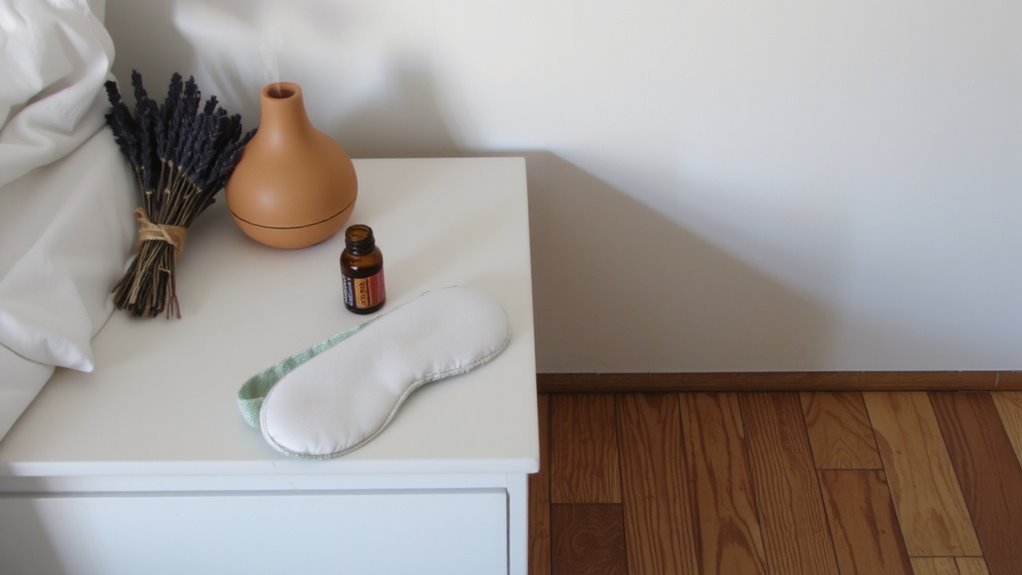
How do certain scents ease your mind at the end of a long day? Essential oils work by stimulating the limbic system, which controls emotions and sleep. When you inhale lavender oil, it can slow your nervous system, mimicking the calm of walking through lavender fields. Research shows it may improve sleep quality, especially for those with mild insomnia. For chamomile dreams, diffuse Roman chamomile oil-its natural apigenin content supports relaxation. Try a diffuser with 3–5 drops, placed across the room from your bed. Opt for 100% pure, therapeutic-grade oils; adulterated versions may lack benefits. Brands often offer sample sizes, so you can test a few before committing. Look for dark glass bottles and batch-specific GC/MS reports to verify purity. While results vary, consistent use over 2–4 weeks offers the best insight. This simple step may reduce reliance on sleep aids, supporting your body’s natural wind-down. For targeted support, consider trying one of the best aromatherapy picks for better sleep.
Take A Relaxing Herbal Bath Before Bed
A warm bath with herbal infusions can ease tension and signal your body it’s time to rest. You’ll want to keep the bath temperature around 98–100°F (37–38°C), just above body level, to avoid overstimulation while still promoting relaxation. Adding herbs like lavender or chamomile enhances the aromatherapy benefits, helping quiet a busy mind. Use a muslin bag or bath sachet to contain plant material and prevent residue. Soak for 20 minutes to let your body absorb the herbal properties and shift into rest mode. This practice supports natural sleep cycles without dependency risks tied to sleep aids. While not a cure for sleep disorders, consistent use may improve sleep quality over time. Always test herbal blends for skin sensitivity. If you have medical concerns, consult a healthcare provider before making changes to your routine. This step complements other sleep-supportive habits effectively.
Skip These Common Herbal Sleep Mistakes
Where could things go wrong when using herbs for better sleep? You might unknowingly mix herbs with medications, leading to harmful herb interactions. For example, valerian can intensify sedatives, while passionflower may affect blood pressure drugs. Always check with your healthcare provider if you take prescriptions. Another common issue is poor dosage timing. Taking herbal supplements too early or too late disrupts their effectiveness. Some herbs need 30–60 minutes to work, so mistiming can leave you awake or groggy. Also, exceeding recommended doses doesn’t help-you’re more likely to experience side effects like dizziness or stomach upset. Start low, go slow, and observe how your body responds. Pay attention to product labels for extraction methods and potency. Trial periods of a few nights help assess results. With careful choices, herbs can support rest-without the setbacks.
Time Your Herbs For Deeper Sleep
You’ve likely considered which herbs to use for better sleep, but timing plays just as important a role in how well they work. Taking certain herbs too early or too late can reduce their effect, disrupting herbal timing needed for best rest. For example, valer penal root works best 30–60 minutes before bed, letting its sedative compounds peak when you’re ready to sleep. Meanwhile, calming nervines like passionflower or lemon balm support relaxation when taken 20–30 minutes prior, enhancing sleep synergy when paired with proper wind-down habits. Some herbs, like ashwagandha, build benefits over time and are better taken earlier in the evening. Aligning each herb’s onset and duration with your bedtime routine strengthens overall effectiveness. Thoughtful herbal timing guarantees you don’t just use sleep-supportive plants, but use them when they perform best. Trial with consistent dosing helps determine your ideal schedule.
Build Your 3-Step Herbal Sleep Routine
Think of your evening as a staircase down into deeper rest-each step setting the stage for the next. Start with a calming herbal tea, like chamomile or valerian, 60–90 minutes before bed-this herbal timing allows active compounds to take effect as your body cools and relaxes. Follow with a magnesium supplement paired with passionflower, which may support muscle relaxation and quiet mental chatter. This combination boosts sleep synergy by aligning with your body’s natural wind-down signals. Finish by dimming lights and diffusing lavender essential oil, a step shown to ease heart rate and support REM cycles. Use these steps consistently for at least one week to assess their effect. They’re non-habit forming, easy to adjust, and compatible with most sleep aids, though you should consult a healthcare provider if you’re on medication or managing a sleep disorder.
On a final note
You can improve sleep by choosing herbal teas like chamomile or valerian, using lavender essential oil for relaxation, and soaking in a bath with calming herbs. These steps work best when timed 30–60 minutes before bed. Not all herbs suit everyone, so try them one at a time. Check product labels for purity and consult a healthcare provider, especially if you take other medications.