The Effects of Overheating on Toddler Sleep Quality
Overheating disrupts your toddler’s sleep by interfering with their developing ability to regulate body temperature. If they’re too warm, you might notice restlessness, sweating, or flushed skin, all of which signal discomfort. This leads to frequent wake-ups and poor sleep quality, affecting mood and development over time. Keeping the room between 68°F and 72°F with breathable cotton or Tencel bedding helps maintain a safe, comfortable environment. You’ll find better solutions for consistent, restorative sleep with the right adjustments.
Notable Insights
- Overheating disrupts sleep cycles, causing frequent waking and restlessness in toddlers.
- Elevated body temperature reduces deep, restorative sleep essential for development.
- Hot, sweaty skin and flushed cheeks signal discomfort that impairs sleep quality.
- Excessive bedding or high room temperatures increase the risk of overheating during sleep.
- Maintaining a room temperature of 68–72°F promotes safer, more consistent sleep patterns.
Why Toddlers Overheat During Sleep
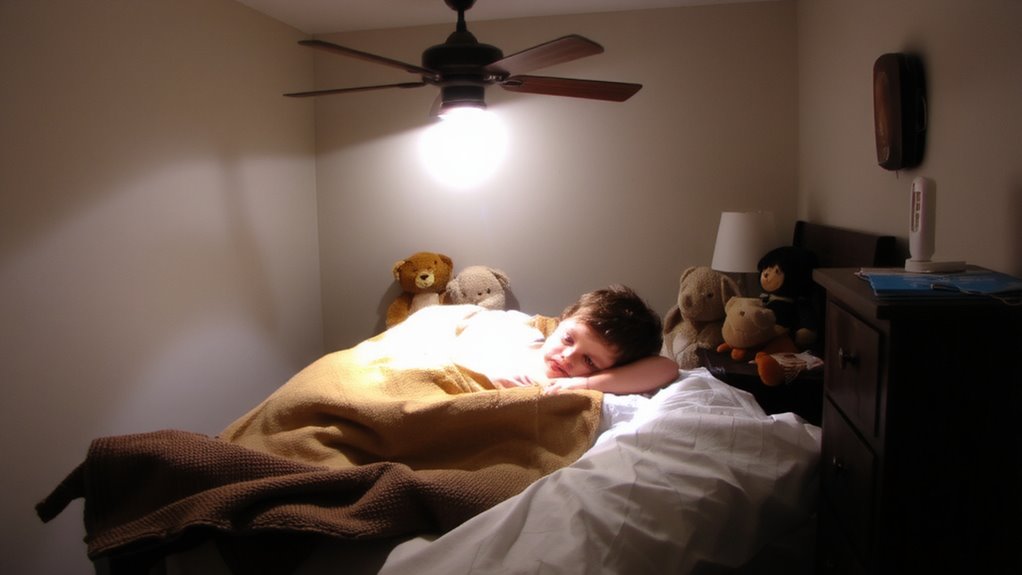
While your toddler’s body is still learning to regulate temperature, they’re more prone to overheating during sleep than adults are. Their developing systems simply don’t respond as efficiently to changes in heat. A well-planned sleep environment plays a key role in preventing excess warmth. Keep the room between 68–72°F and choose breathable, lightweight bedding. Avoid overdressing or layering too much, even in colder months. Your bedtime routines can also influence thermal comfort-opt for calming activities that don’t raise body heat before bed. Consider moisture-wicking pajamas made from natural fibers for better airflow. Fans or air purifiers can help circulate air without creating drafts. Choose sleep aids like wearable monitors with alerts for temperature changes, checking for reliable performance and trial periods. A stable, cool setting supports safer, more restful sleep.
Signs of Overheating in Toddlers at Night
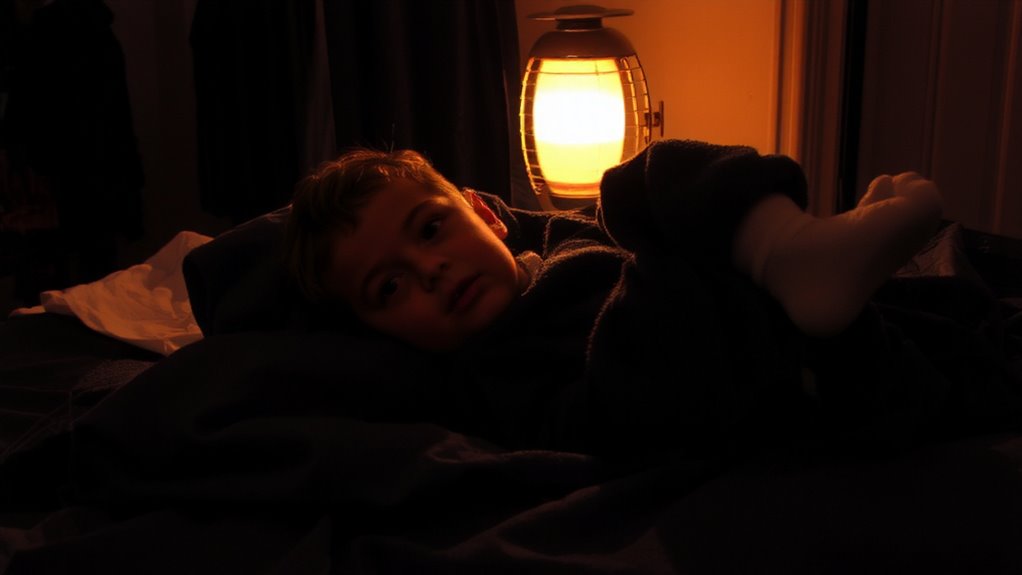
If your toddler’s skin feels unusually warm or flushed during the night, especially on the chest or back, it could be an early sign they’re overheating. Watch for hot skin, a flushed face, or sweaty hair even if the room seems cool. These signs suggest their body is struggling to regulate temperature. Catching these cues early helps prevent discomfort and supports safer sleep.
| Symptom | What It Means | What to Do |
|---|---|---|
| Hot skin | Body temperature is elevated | Adjust layers, check room temp |
| Flushed face | Blood flow increased to cool off | Remove blanket, use fan |
| Clammy neck | Sweating during sleep | Switch to breathable PJs |
| Restlessness | Discomfort from heat | Re-evaluate bedding thickness |
How Overheating Affects Toddler Sleep Quality
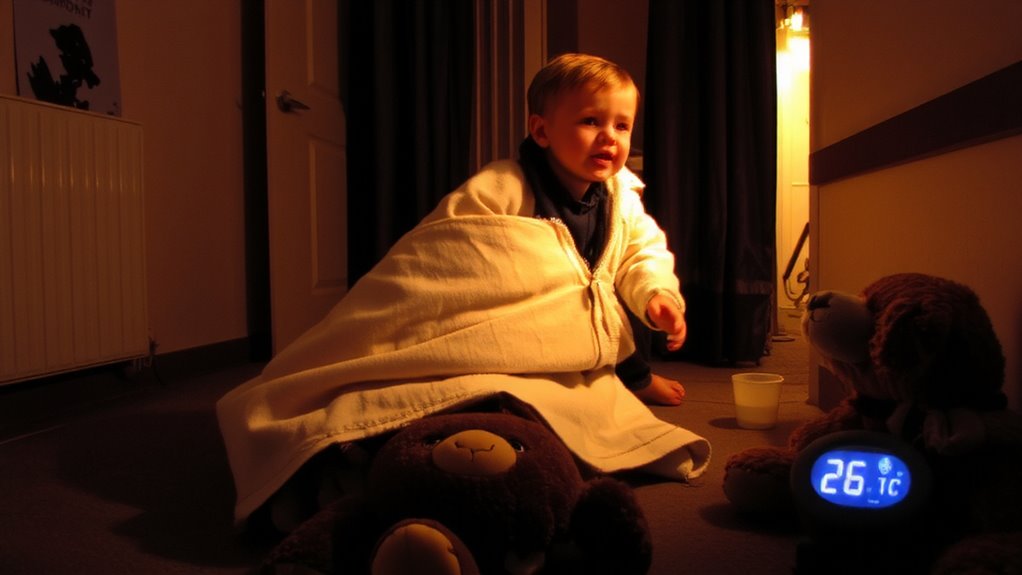
You’ve likely noticed signs like hot skin or a flushed face when checking on your toddler at night-clear signals their body’s working hard to cool down. When overheating occurs, it disrupts your child’s natural body regulation, making it harder to shift between sleep cycles. This can lead to frequent waking, restless sleep, or trouble falling asleep initially. An unsafe sleep environment-like one that’s too warm or has excessive bedding-increases these risks. Proper body regulation is key for maintaining consistent, restorative sleep. Over time, poor sleep quality may affect mood, development, and overall health. You’ll want to assess the room climate, clothing layers, and sleepwear breathability to support better thermal balance. Monitoring these factors helps reduce sleep disturbances without relying on sleep aids. A well-managed sleep environment supports long-term sleep patterns and reduces likelihood of recurring sleep issues.
Best Room Temp and Bedding for Safe Sleep
Since maintaining a stable body temperature is essential for uninterrupted sleep, keeping the room between 68°F and 72°F creates a safe and comfortable environment for your toddler. This range supports thermoregulation, especially when paired with proper bedding material like breathable cotton or moisture-wicking fabric, which helps prevent overheating. Room humidity also matters-aim for 40% to 60% to avoid dry air or dampness that can disrupt breathing and comfort. Lightweight, fitted sheets and sleepers made of natural fibers allow airflow while reducing suffocation risks. Avoid heavy quilts or excessive layers; instead, use a wearable blanket if extra warmth is needed. You can monitor conditions with a basic room thermometer and hygrometer combo, many of which include nightlights and min/max memory. Trial periods on select sleep products let you test comfort and safety over time.
Common Mistakes That Cause Toddler Overheating
While aiming to keep your toddler warm and cozy, it’s easy to go overboard-especially during colder months or in homes with inconsistent heating. Overdressing or over-layering can lead to overheating, which disrupts sleep quality and increases discomfort. Loose pajamas help regulate temperature by allowing airflow, while heavy fabrics trap heat. Some parents forget that even a few extra blankets can raise core body temperature. Also, don’t overlook ventilation-sleeping near open windows may cause drafts, but slightly open windows in a temperature-controlled room can aid air circulation without chilling your child. For optimal comfort, consider pajamas made from Tencel fabric, which offer breathability and moisture-wicking properties ideal for regulating body temperature.
| Mistake | Risk | Recommendation |
|---|---|---|
| Overbundling | Elevated body temp | Use breathable layers |
| Wrong pajamas | Reduced airflow | Choose loose pajamas |
| No air flow | Stuffy environment | Use open windows cautiously |
| Heavy bedding | Heat retention | Opt for lightweight sleep sacks |
Effective Ways to Keep Your Toddler Cool at Night
Choosing the right sleep environment helps your toddler stay comfortable and sleep more soundly through the night. Portable fans improve airflow, gently circulating air without pointing directly at your child-opt for models with adjustable speeds and safety grills. Many come with timers and quiet motors, making them practical for use in small rooms. Cooling mats, typically made of gel-infused or phase-change materials, draw heat away from the body and can be placed under your toddler’s sheet or as a layer on the crib mattress; they’re often machine washable and safe for sensitive skin. While they don’t cool the whole room, they offer localized relief. Use breathable, lightweight pajamas and cotton sheets to avoid trapping heat. Always monitor your child’s comfort-cool skin and regular breathing are good signs. Test cooling aids during naps first, and guarantee all devices meet safety standards. For added comfort, consider a small fan that doubles as a source of best small fans for white noise.
On a final note
You can help your toddler sleep better by keeping the room between 68–72°F and using lightweight, breathable bedding. Overheating may lead to restless sleep or frequent wake-ups, so monitoring for flushed skin or sweating is important. Avoid overbundling and opt for cotton sleepwear. A fan can improve air circulation. Most safe sleep products meet regulatory standards, and many offer trial periods, letting you test what works best for your child’s comfort and safety.