Using Cognitive Stimulation in the Evening for Advanced Sleep Phase Disorder
You can use evening cognitive stimulation to gently delay your sleep if you have Advanced Sleep Phase Disorder. Try puzzles, reading, or learning something new 2–3 hours before bed to push your sleep time later. Doing these in bright light boosts the effect, especially with a 10,000-lux light box. Consistency matters-stick with it nightly. Most notice shifts in 1–4 weeks. Results vary, but combining mental activity and light strengthens your body’s clock reset. More tips follow.
Notable Insights
- Evening cognitive stimulation can delay the circadian rhythm, helping to counteract early sleep onset in Advanced Sleep Phase Disorder.
- Engaging in activities like puzzles or reading 2–3 hours before bedtime supports better sleep timing.
- Performing cognitive tasks in bright light enhances circadian delay, especially when combined with 10,000-lux light therapy.
- Using e-ink readers or printed materials minimizes blue light exposure while maintaining mental engagement.
- Consistent daily timing of cognitive activities can shift sleep patterns within one to four weeks.
What Is Advanced Sleep Phase Disorder?
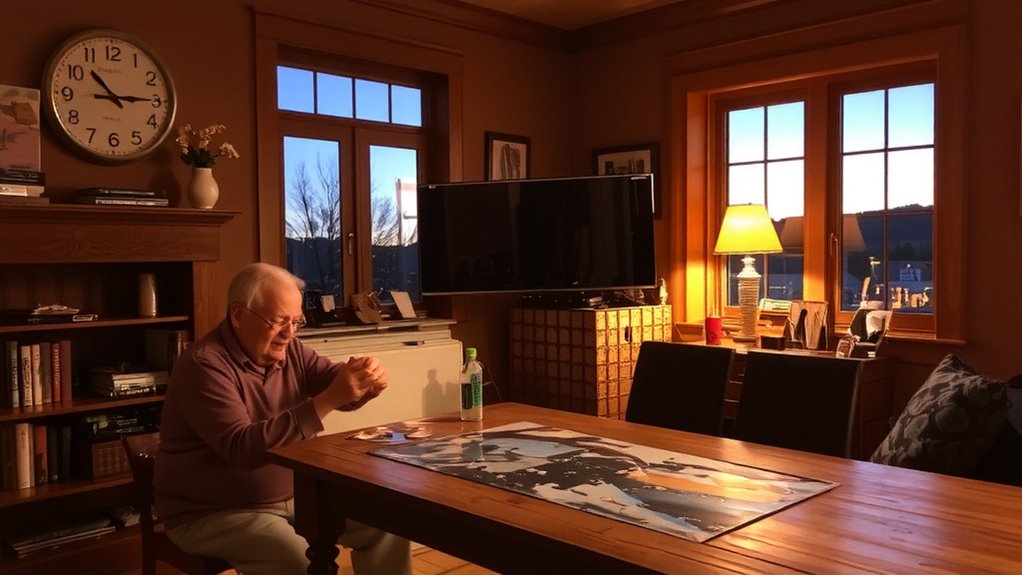
Think of your body’s internal clock like a finely tuned instrument-when it runs too far ahead, you might be dealing with advanced sleep phase disorder (ASPD). You likely feel sleepy early in the evening, maybe by 7 or 8 p.m., and wake up too early in the morning, often before 5 a.m., even if you don’t want to. This shift isn’t just habit-it can stem from genetic predisposition, meaning it may run in your family. Age factors also play a role, as ASPD becomes more common in middle to older adulthood. While it doesn’t suit everyone’s schedule, it’s not inherently harmful. You can track your patterns first, then decide whether adjusting light exposure, routine, or seeking professional advice makes sense. Treatments exist, but starting with observation helps you make informed choices about next steps.
How Cognitive Stimulation Resets Your Circadian Clock
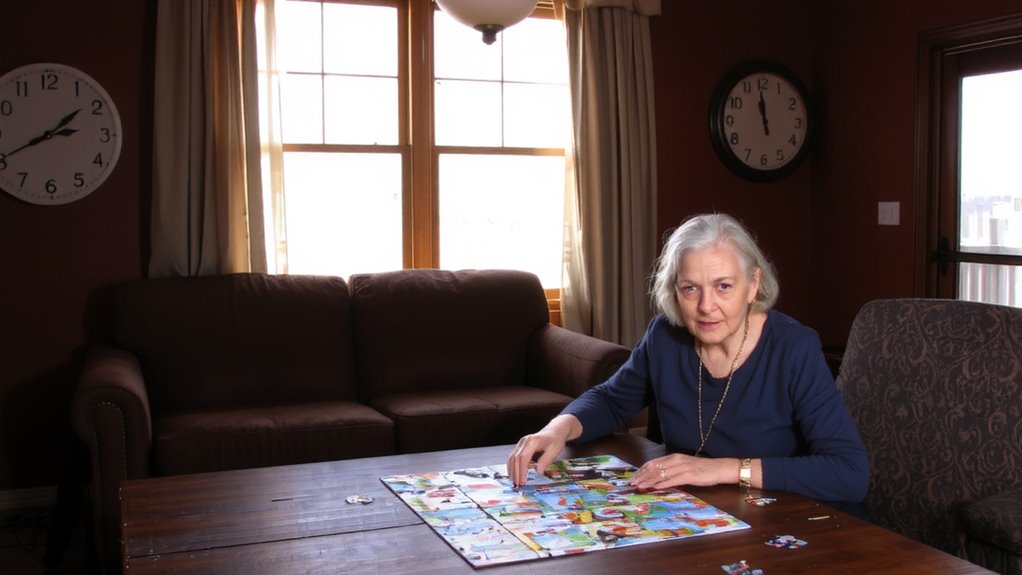
Your internal clock may be running early, but the right activities during the day can help shift it back into better alignment. Engaging in cognitive stimulation in the evening signals to your brain that it’s not time to wind down yet. This delay in mental activity helps gradually push your circadian rhythm later. Tasks that support memory enhancement and boost mental alertness-like puzzles, reading, or learning a new skill-activate neural pathways tied to wakefulness. The increased brain activity mimics natural evening alertness, reinforcing a later sleep schedule over time. It’s not about exhaustion, but consistent timing. Think of it like training a muscle: regular, timed effort reshapes your rhythm. Results vary, but many notice changes within a few weeks. There’s no special equipment or cost-just intentional, accessible mental engagement. No warranty, but plenty of real-world trial support.
Best Evening Activities for Cognitive Stimulation

While not every evening activity delivers the same impact on your internal clock, certain mentally engaging tasks can make a meaningful difference when timed correctly. Puzzle solving, like crosswords or Sudoku, gently challenges your brain and may help delay sleep signals. These activities require focus without being overly stimulating, making them practical choices. Reading novels also provides steady cognitive input, especially when done in a well-lit room with minimal screen use. Choose print or e-ink readers to reduce blue light exposure, which supports circadian alignment. Both activities are low-cost, easy to start, and adjustable based on your energy levels. They don’t require special equipment or setup, and you can pause or stop them without consequence. For consistent results, use these habits nightly, observing how they affect your sleep timing over a week or two.
When to Begin Cognitive Stimulation to Delay Sleep
How early should you start cognitive stimulation to effectively delay sleep? Begin mental activation about 2 to 3 hours before your usual sleep timing. This window allows your brain to stay engaged when your body starts signaling for rest. Starting too early may reduce effectiveness, while beginning too late might not give enough time to shift your rhythm. Mental activation that aligns with natural light exposure and evening routines helps adjust sleep timing gradually. Consider activities like puzzles or light reading that provide steady stimulation without stress. Consistency matters most-practicing at the same time nightly supports results. You’ll likely notice changes in sleep timing within a week or two. Always monitor how alertness and sleep quality shift. If adjustments don’t improve rest, consider consulting a sleep specialist to review options.
How to Build an Evening Cognitive Routine
What if shifting your sleep schedule started with something as simple as a nightly routine that keeps your mind gently active? You can build an evening cognitive routine by choosing quiet, engaging activities that delay drowsiness without causing stress. Start around 7 or 8 p.m., depending on your natural sleep drift. Try memory games like card matching or number recall, which challenge attention without screens. Puzzle solving with crosswords, Sudoku, or jigsaw puzzles also works well-they’re structured, satisfying, and mentally absorbing. Aim for 30 to 60 minutes of consistent effort each night. Rotate tasks to prevent boredom and track what helps most. Use low lighting to avoid alerting your brain too much. Over time, you might notice you’re staying awake more easily until your target bedtime. It’s not a fix overnight, but with regular use, these exercises can support a gradual phase delay.
Pair Light Therapy With Cognitive Stimulation
Light exposure in the evening can shift your internal clock later, making it easier to stay awake into the night and wake up later in the morning. When you combine light exposure with mental engagement, the effect strengthens. Using a light box for 30 to 60 minutes while doing puzzles, reading, or learning a skill supports alertness and reinforces delayed sleep timing. The brain responds better when light therapy isn’t passive-active tasks increase mental engagement, signaling it’s still time to be awake. You’ll want bright, white light at 10,000 lux placed at eye level, about 16 to 24 inches from your face. Stick to consistent timing, ideally starting 2 to 3 hours before your usual bedtime. Pairing structured cognitive activities with this routine improves results over time, helping your body adapt. Trial periods of 2 to 4 weeks let you gauge changes in sleep onset and mood.
Real-Life Success Stories: Cognitive Stimulation That Shifted Sleep
You’ve likely tried adjusting your schedule or using a light box in the evening to push back your sleep timing, and when paired with active thinking tasks, many people start to see changes within a few weeks. Take Sarah, a 68-year-old retired teacher-she added 30 minutes of memory games and light problem solving to her evenings using a tablet app. Over three weeks, her bedtime shifted later by nearly 90 minutes. Mark, age 72, combined crossword puzzles with strategic board games, noticing improved alertness and delayed sleep onset. These routines don’t replace medical advice but offer practical support. Memory games and problem solving keep your mind engaged when natural drowsiness strikes early. Consistency matters-doing these nightly strengthens the effect. Results vary, but most report shifts within 2–4 weeks. Consider trying structured cognitive tasks while tracking your progress. It’s low-risk, easy to adjust, and fits alongside other methods.
On a final note
You can use evening cognitive stimulation to gently delay your sleep timing if you have advanced sleep phase disorder. Activities like reading, puzzles, or light socializing help signal your brain to stay alert later. Pairing them with bright light therapy boosts effectiveness. Start activities 1–2 hours before bed, consistently, to stabilize your rhythm. Results vary, so try it for several weeks. Most tools are low-cost and carry no warranty, but patience and regular use shape performance.