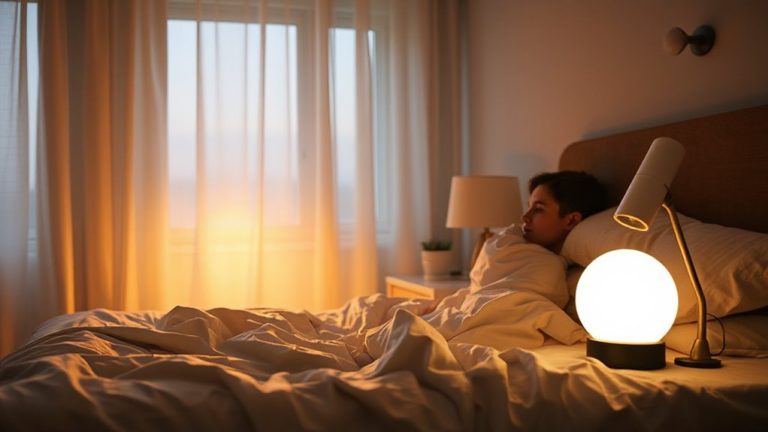
Timing Evening Dim Light Exposure to Prevent Melatonin Suppression
You should dim your lights and reduce blue light exposure at least one hour before bed, since even low-intensity light then can delay melatonin. Your eyes’ sensitivity to blue wavelengths tricks your brain into staying alert. Warm, dim lighting 1–2 hours earlier signals it’s time to wind down, supporting natural sleep timing. Screen habits, bulb color, and lamp placement matter more than brightness. Try shifting your evening routine-you might find simple changes improve sleep onset and quality over time.
Notable Insights
- Dim light exposure should begin 2 hours before bedtime to minimize melatonin suppression.
- Avoid bright or blue-rich light within 1 hour of bedtime to prevent delayed melatonin onset.
- Use warm, amber-toned lighting in the evening to align with natural circadian rhythms.
- Keep screen use minimal and devices at arm’s length during late evening hours.
- Prioritize indirect, low-intensity lighting like floor lamps to support melatonin release.
How Evening Light Suppresses Melatonin
Why does flipping on a lamp or scrolling through your phone at night make it harder to fall asleep? Because the blue light from screens and bright indoor lighting signals your brain to stay alert, suppressing melatonin-the hormone that tells your body it’s time to sleep. Even dim light with strong blue wavelengths can trigger circadian disruption, shifting your internal clock and delaying sleep onset. Your eyes’ photosensitive cells respond most to blue light, mistaking it for daylight. Over time, this nightly exposure reduces melatonin levels, weakening sleep quality. If you use phones, tablets, or overhead lights after sunset, consider switching to warmer, amber-toned bulbs or enabling night mode. These emit less blue light and align better with natural rhythms. For sleep aids, choose options backed by clinical data, such as red-tinted glasses tested for 90% blue light blockage. Trial periods let you test comfort and effectiveness without commitment.
Why Timing Beats Brightness for Dim Light
Even though dim light might seem harmless, when you’re exposed to it during the hour before bed can matter more than how bright it is. Your eyes respond strongly to timing because of biological inertia-your system keeps reacting to light even after exposure ends. The light spectrum of evening sources, like warm bulbs or screens, still includes enough blue to delay melatonin if hit too late. Early dim light? Usually fine. Same light sixty minutes before bed? Riskier.
| Timing | Effect on Melatonin |
|---|---|
| 2+ hours before bed | Minimal impact |
| 1 hour before bed | Noticeable suppression |
| At bedtime | High suppression risk |
Adjusting schedule beats upgrading bulbs. Prioritize moving dim light earlier. Use warmer tones if needed, but respect timing-it’s your best buffer against unintended shifts in sleep signals.
Evening Habits That Block Melatonin Release
Because your body’s natural sleep rhythm depends on timely melatonin release, certain evening habits can quietly interfere with this process, even if they seem harmless. Using screens late at night is one of the biggest culprits, as blue light from phones, tablets, and computers tricks your brain into thinking it’s still daytime. This exposure delays melatonin production, making it harder to fall asleep. Your screen habits-like scrolling right before bed or watching TV in a dark room-can have a stronger impact than you think. Blue light suppresses melatonin more than other wavelengths, disrupting both sleep onset and quality. Adjusting these habits earlier in the evening, such as powering down devices at least an hour before bed, supports better hormonal timing. Small, consistent changes improve sleep onset without needing sleep aids. For added protection, consider using blue light blocking bulbs in evening lighting to further minimize disruptive light exposure.
When to Use Dim Light for Better Sleep
If you’re aiming to support your body’s natural sleep cycle, shifting to dim light in the evening can make a noticeable difference in how quickly and easily you fall asleep. Aim to reduce light intensity about 1–2 hours before bed, since bright light can delay melatonin release. Lower light levels signal your brain it’s time to wind down, improving sleep onset and quality. Your screen habits play a key role-phones, tablets, and TVs emit blue-rich light that suppresses melatonin. To minimize disruption, use night modes or limit screen time during this window. Dim, warm-toned lighting at home supports circadian alignment without harsh contrasts. You don’t need total darkness, just a consistent, low light intensity that feels calming. This small adjustment enhances sleep readiness, especially if you struggle with falling asleep or rely on sleep aids. Try it for several nights to assess improvements in your sleep routine.
Shift Your Light Schedule: Simple Fixes
How can you adjust your light exposure without overhauling your entire evening routine? Start by tweaking light placement-move lamps away from seating areas or choose floor lighting that casts a soft, indirect glow. This reduces direct exposure and helps ease melatonin production. You can also manage device proximity by keeping screens at arm’s length and using night modes that reduce blue light. Holding phones or tablets closer than 14 inches increases eye exposure, so creating distance matters. Try reading with a dim overhead light instead of a bright bedside lamp. These small shifts don’t require new gear, just mindful habits. Over time, you’ll notice improved sleep onset and quality. There’s no warranty on better rest, but consistent, gentle changes support your body’s natural rhythm-without extreme measures or sleep aids.
On a final note
You can protect your melatonin by timing dim light exposure right-start winding down 2–3 hours before bed. Even low brightness at the wrong time may delay sleep. Use warm, dim lights instead of cool, bright ones in the evening. Simple changes, like adjusting lamp color or screen settings, support better sleep without costly aids. Consistency matters more than perfection. Try small shifts first, watch how you feel, and adjust as needed.