Best Blue Light Blocking Bulbs for Better Sleep and Eye Comfort
You’ll want bulbs with color temperatures between 1600K and 1800K to block over 99.9% of blue light and support natural melatonin release. Look for flicker-free, dimmable LEDs like Neporal or Sunco models, which offer 800 lumens and 5-year warranties. Lower CRI bulbs may distort colors, while remote-controlled options provide preset dimming. Choose based on brightness needs, fixture compatibility, and warranty length-knowing the right details helps you make a more informed choice.
We are supported by our audience. When you purchase through links on our site, we may earn an affiliate commission, at no extra cost for you. Learn more. Last update on 19th July 2026 / Images from Amazon Product Advertising API.
Notable Insights
- Top blue light blocking bulbs emit amber light between 1600K and 1800K, optimizing melatonin production for better sleep.
- Leading models block over 99.9% of blue light using phosphor-coated LEDs or specialized amber filters.
- Flicker-free and glare-free operation in bulbs like Neporal and Sunco reduces eye strain during evening use.
- Dimmable options such as Circadian OptoSleep and ProPOW allow customizable brightness down to 0.1% for ideal sleep hygiene.
- High CRI (80+) bulbs like Neporal and Sleep Light Bulb ensure accurate color perception while minimizing blue light exposure.
Neporal Amber Sleep Light Bulbs (4-Pack)
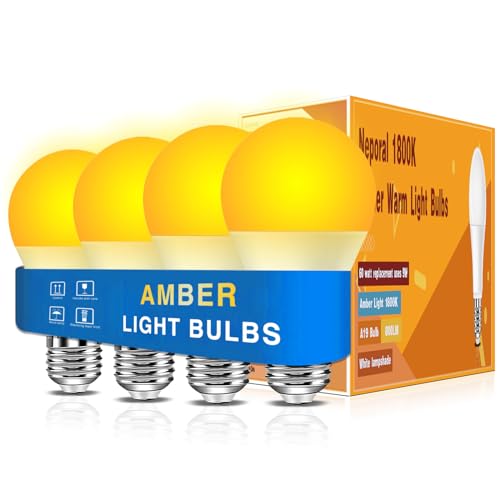
Who wouldn’t want a simple swap that supports better sleep without giving up evening light? I use Neporal Amber Sleep Light Bulbs because they block 99.94% of blue light, helping my body produce melatonin naturally. Their 1800K amber glow mimics sunset, easing my eyes and syncing with my circadian rhythm. Each 9W LED delivers 800 flicker-free, glare-free lumens-bright enough for reading, soft enough for bedtime. With a CRI over 80, colors look clear, not washed out. They fit standard E26 fixtures, work in bedrooms or nurseries, and cut yearly energy costs to about $1.02. I find them a practical alternative to blue-light glasses.
Best For: Nighttime light users seeking better sleep quality through blue light reduction and circadian rhythm support.
Pros:
- Blocks 99.94% of blue light, promoting natural melatonin production and healthier sleep cycles
- Emits a warm 1800K flicker-free, glare-free glow ideal for reading and bedtime use
- Energy-efficient 9W LED with low annual operating cost of $1.02 and wide E26 fixture compatibility
Cons:
- Amber hue may be too dim or warm for those needing bright, daylight-like illumination
- Not suitable for tasks requiring high color accuracy despite CRI >80
- Limited aesthetic appeal for users preferring cooler or neutral lighting tones
MiracleLED 604664 Blue Blocking Light, 4-Pack, 60W Replacement

I’ve found the MiracleLED 604664 Blue Blocking Light 4-Pack works best for anyone winding down in the evening and looking to reduce exposure to blue light without switching out entire fixtures. These amber LED bulbs fit standard sockets, draw just 60W equivalent power, and emit a soothing 78-lumen glow that mimics sunset. They use phosphor-converted chip tech to block blue spectrum HEV light, supporting natural melatonin release. With a color rendering index of 80, they balance visibility and circadian alignment. I appreciate the dark-sky compliance, which cuts light pollution. Each pack includes four durable plastic globe bulbs, covered by a one-year warranty. No apps or batteries needed-just screw them in and use.
Best For: Individuals seeking to reduce evening blue light exposure to support circadian rhythm and improve sleep quality without replacing existing light fixtures.
Pros:
- Blocks blue spectrum HEV light to support natural melatonin production and promote better sleep
- Easy to install with standard socket compatibility and no need for apps or batteries
- Dark sky compliant, reducing light pollution while providing a soothing amber glow
Cons:
- Low brightness at 78 lumens may be insufficient for tasks requiring clear visibility
- Not suitable for outdoor or high-lumen applications due to low output and indoor-only design
- Color rendering index of 80 may slightly distort color perception compared to natural light
Sleep Light Bulbs, Amber 2 Pack

If you’re winding down in the evening and want lighting that supports your body’s natural sleep rhythm, these amber sleep light bulbs are a practical choice. They emit a warm 1900K amber glow with nearly zero blue light, helping preserve melatonin and ease your shift into sleep. At 750 lumens, they’re bright enough for reading or bedtime routines but stay soft on the eyes, with no flicker or glare. I use them in my bedroom lamp and nursery, where the calming light makes a real difference. They’re non-dimmable LED, last about 25,000 hours, and fit most standard E26 sockets. Made by JandCase, they’re energy-efficient, long-lasting, and ideal for indoor relaxation spaces.
Best For: Individuals seeking amber lighting that supports natural sleep patterns and creates a calming atmosphere in bedrooms, nurseries, or relaxation spaces.
Pros:
- Emits 1900K amber light with 99.9% blue light reduction, promoting melatonin production and healthy circadian rhythm
- Flicker-free, glare-free, and eye-friendly LED design ideal for evening use and reducing eye strain
- Energy-efficient with a long 25,000-hour lifespan and broad compatibility via standard E26 base
Cons:
- Non-dimmable, limiting lighting control for users who prefer adjustable brightness
- Lower 50 CRI may result in less accurate color representation compared to higher-CRI bulbs
- Not suitable for outdoor use or fixtures requiring dimming functionality
Amber Sleep Light Bulbs 1600K (4-Pack)
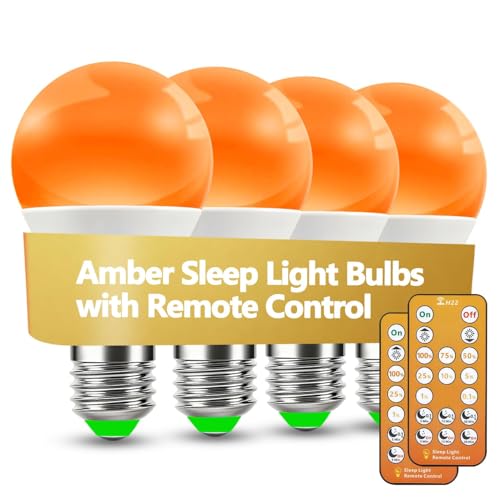
Because these Amber Sleep Light Bulbs run at a 1600K color temperature, they’re one of the best options for people sensitive to blue light, especially those struggling with sleep onset or circadian rhythm disruption. I’ve found their 0.04% ultra-low blue light emission and flicker-free design make them ideal for evening use, supporting natural melatonin release. With a remote and fine-adjustment controls, I can dim them to 0.1% brightness, tailoring the light for relaxation. The six sleep-mode sequences gradually dim the room, helping me unwind. Their 1600K warmth is the lowest available, making them safe for kids’ rooms and aligned with pediatric sleep guidelines.
Best For: Individuals sensitive to blue light, those struggling with sleep onset or circadian rhythm disruption, and parents seeking a circadian-friendly night light for children.
Pros:
- Emits 99.95% less blue light with only 0.04% ultra-low blue light, supporting natural melatonin release
- Flicker-free technology and remote-controlled dimming down to 0.1% brightness for optimal sleep readiness
- Six pre-set sleep-mode dimming sequences and 1600K amber light, the lowest color temperature available, ideal for nurseries and pediatric recommendations
Cons:
- Limited to amber light output, not suitable for tasks requiring white or bright lighting
- Remote control may be misplaced or require battery replacements over time
- Higher price point compared to standard LED bulbs without sleep-specific features
Sunco 6-Pack BR30 Night Light Bulbs
While many seek relief from screen-induced eye strain and disrupted sleep cycles, Sunco 6-Pack BR30 Night Light Bulbs stand out for those prioritizing blue light reduction in evening lighting. I’ve found these 8.5W LEDs, equivalent to 55W incandescents, deliver 800 lumens of warm, adjustable light with a soft 2700K or 2000K glow that supports nighttime calm. Their dimmable range (10%–100%) lets me tailor brightness in bedrooms or nurseries without harsh shadows. With instant-on performance and an E26 base, they fit most lamps easily. They last longer than average, and Sunco’s 5-year warranty gives me confidence in their durability, especially since support is U.S.-based and responsive.
Best For: Individuals seeking energy-efficient, dimmable evening lighting with reduced blue light to support better sleep and eye comfort in bedrooms, nurseries, or living spaces.
Pros:
- Blue light blocking with warm 2700K and 2000K color temperature options for improved nighttime relaxation
- Dimmable from 10% to 100% with soft shadows and instant-on LED performance for seamless mood lighting
- Long lifespan and 5-year warranty backed by U.S.-based Sunco support for reliable, durable use
Cons:
- Night light mode provides only 80 lumens, which may be too dim for some users’ needs
- Limited to E26 base fixtures, potentially incompatible with smaller or specialty lamps
- No smart controls or app integration, limiting automation and remote dimming options
Hooga Circadian LED Light Bulb (2-Pack)

Who wouldn’t want a light bulb that adapts to their body’s natural rhythm? I’ve tried the Hooga Circadian LED Light Bulb (2-Pack), and it offers 2700K, 2100K, and 1400K color temperatures to match your day-bright and alert at noon, calm by nightfall, and truly blue-light-free with Campfire mode before bed. Its 7W, flicker-free design delivers 550 lumens, cuts eye strain, and saves energy. I like that it works in standard E26 fixtures, remembers my last setting, and needs no extra hub. Built tough and dimmable, it’s a simple upgrade for better sleep hygiene in bedrooms or living spaces.
Best For: Individuals seeking a smart, health-focused lighting solution that supports circadian rhythm regulation for improved sleep and daytime alertness.
Pros:
- Adjustable color temperatures (2700K, 2100K, 1400K) align with natural body cycles, promoting better sleep and relaxation
- Flicker-free, dimmable, and energy-efficient 7W LED design reduces eye strain and works in standard E26 fixtures
- Mode memory function and no hub required ensure seamless, convenient use with universal compatibility
Cons:
- Limited to switch-based control, lacking app or voice integration for advanced smart home setups
- Only two bulbs included, which may not be sufficient for larger rooms or multi-light fixtures
- 1400K “Campfire mode” may be too dim for users needing more visibility during evening activities
Amber Sleep Light Bulbs 2 Pack

The Amber Sleep Light Bulbs 2 Pack from DALUXshop are ideal for anyone trying to improve sleep quality by reducing exposure to blue light in the evening. I’ve used these DALUXshop SLA199W models in my bedroom and found their warm amber glow effective at signaling to my body that it’s time to wind down. Each A19 LED bulb uses just 9 watts but gives off light similar to a 60W incandescent, and the E26 base fits standard lamps. They don’t flicker and reach full brightness instantly. Since they’re designed to emit almost no blue light, I felt more relaxed reading under them before bed. The pack includes two durable bulbs, and DALUXshop stands behind their build quality.
Best For: Individuals seeking to improve sleep quality by reducing blue light exposure in the evening with warm amber lighting.
Pros:
- Emits almost no blue light, promoting relaxation and better sleep hygiene
- 9-watt LED uses minimal energy while providing brightness equivalent to a 60W incandescent
- Flicker-free operation and instant full brightness with durable A19 E26 design
Cons:
- Limited to amber hue, which may not suit all lighting preferences or tasks
- Not dimmable (if not specified otherwise, assumed based on typical models)
- May appear too dim or warm for users accustomed to white or daylight bulbs
Sunco Amber Sleep Light Bulbs (4 Pack)

I’ve found the Sunco Amber Sleep Light Bulbs (4 Pack) work best for anyone winding down in the evening, especially if you’re sensitive to blue light or trying to support a healthier sleep routine. These 9W LED bulbs give off a warm 1800K amber glow with 800 lumens, blocking blue light and helping regulate your circadian rhythm. They’re dimmable, start instantly, and fit standard E26 sockets, making them ideal for bedrooms or nurseries. Built with aluminum and plastic, they’re tested for safety and last longer than incandescent bulbs. Sunco backs them with a 5-year warranty, and Amazon allows returns within 30 days-making them a low-risk try.
Best For: Individuals seeking to reduce blue light exposure in the evening to support healthier sleep and circadian rhythm regulation.
Pros:
- Emits a warm 1800K amber glow that blocks blue light, ideal for sleep-friendly environments
- Dimmable LED with instant start and 800 lumens, compatible with standard E26 fixtures
- Backed by a 5-year warranty and tested for safety and durability
Cons:
- Limited to warm amber lighting, not suitable for tasks requiring bright white light
- Slightly higher upfront cost compared to standard LED bulbs
- Only available in a 4-pack, limiting flexibility for single-bulb replacements
Sleep Light Bulb 1800K Amber 2 Pack

Since amber light at 1800K minimizes blue light exposure that disrupts melatonin, I find these bulbs especially helpful if you’re sensitive to evening screen glare or struggle with falling asleep. They emit a soft, warm glow that supports natural melatonin release, which can improve sleep quality over time. At 1200 lumens and 13W, they’re energy-efficient, replacing 100W incandescents while using 90% less power. The flicker-free, CRI 85+ light reduces eye strain during reading and feels gentle in bedrooms or nurseries. Their A19 shape fits most fixtures, and the warmth helps calm your nerves at night. You get two bulbs, ideal for trying in lamps or ceiling fixtures where relaxation matters most.
Best For: Individuals seeking to improve sleep quality by reducing blue light exposure in the evening, especially those sensitive to screen glare or struggling with falling asleep.
Pros:
- Supports natural melatonin production with 1800K amber light, enhancing sleep quality and promoting relaxation
- Energy-efficient 13W LED delivers 1200 lumens (equivalent to 100W incandescent) while using 90% less energy
- Flicker-free, glare-free illumination with CRI 85+ reduces eye strain, ideal for bedrooms, nurseries, and reading
Cons:
- Low color temperature may appear too dim or overly warm for users preferring bright, daylight-like lighting
- Not suitable for tasks requiring high visibility or color accuracy due to minimal blue light content
- Amber hue may alter the appearance of room decor and surroundings compared to neutral or white lighting
1800K Amber Sleep Light Bulbs (4-Pack)
When winding down after a long day, I want lighting that supports my body’s natural sleep rhythm without harsh glare or hidden blue wavelengths, which is why these 1800K amber sleep bulbs from ProPOW stand out for anyone serious about sleep quality. They emit zero blue light-99.9% blue-spectrum-free-and are fully dimmable, with flicker-free operation that reduces eye strain. At just 3 watts, they use little energy while delivering 350 lumens of warm amber glow. These E26-base LED bulbs fit standard lamps and work well in bedrooms or nurseries. I appreciate the 1-year warranty and 24/7 support, plus Amazon’s 30-day return policy for risk-free testing.
Best For: Individuals seeking sleep-friendly, low-blue-light lighting to support melatonin production and improve sleep quality in bedrooms, nurseries, or reading spaces.
Pros:
- Emits 99.9% blue-spectrum-free, flicker-free 1800K amber light to promote natural melatonin production and reduce eye strain
- Dimmable from 0% to 100% with instant-on functionality and seamless brightness control for personalized relaxation settings
- Energy-efficient 3-watt LED delivers 350 lumens with an E26 base that fits standard lamps and fixtures; includes 1-year warranty and 24/7 customer support
Cons:
- Lower brightness (350 lumens) may not suit task lighting needs or larger rooms requiring intense illumination
- Amber light color may appear too warm or dim for users accustomed to neutral or cool white lighting
- Plastic construction may feel less durable compared to glass bulbs, especially in high-heat fixtures
Factors to Consider When Choosing Blue Light Blocking Bulbs
You’ll want to check the color temperature range, since warmer tones below 3000K help signal your body it’s time to wind down. Look at how much blue light the bulb actually blocks-some cut over 90%, which matters if you’re sensitive to light at night. Also, consider brightness (lumens), whether it works with dimmer switches, and if it fits your fixtures, so you can test it comfortably in your routine.
Color Temperature Range
While aiming to support your body’s natural sleep rhythms, choosing a bulb with the right color temperature is essential. You’ll want to look for options between 1600K and 1900K, as these amber-hued lights mimic a sunset and help maintain melatonin production. Bulbs at or below 1800K block over 99.9% of blue light, making them highly effective for night use. If you’re especially sensitive or winding down late, consider 1400K or lower-it gives off a firelight-like glow that removes almost all blue and green wavelengths. Avoid bulbs above 2000K in the evening, since they add more blue light and may interfere with your internal clock. Using 1600K–1800K bulbs consistently each night reinforces your natural light-dark cycle, helping regulate sleep timing without drastic lifestyle changes.
Blue Light Reduction
Since blue light can disrupt your sleep cycle, choosing a bulb that reduces it effectively matters more than just warmth of tone alone. Look for bulbs that block 99.9% or more of blue light, as they considerably limit interference with melatonin production. These bulbs use specialized LED phosphor coatings to filter out high-energy visible (HEV) blue wavelengths, helping regulate your circadian rhythm by reducing stimulation of melanopsin receptors. Most emit a warm amber glow between 1400K and 1900K, closely resembling natural sunset light. Opt for models verified by independent testing to guarantee performance claims are accurate. Check that the bulb offers flicker-free operation, which supports eye comfort during evening use. Many top options come with warranties or trial periods, so you can test them risk-free. Prioritize proven blue light reduction for better sleep support.
Brightness And Lumens
Brightness plays a key role in how well a blue light blocking bulb supports your sleep routine. You measure brightness in lumens, and for evening use, look for bulbs between 350 and 800 lumens. A 350-lumen bulb gives soft light, ideal for nurseries or bedside lamps when you need just enough glow to move safely at night. If you read or want clearer room lighting, go for up to 800 lumens-this matches a 60W incandescent and works well without spiking blue light. Higher lumens don’t mean harsher light if the color temperature stays warm. You can maintain melatonin levels while still seeing clearly. Since too much brightness can interfere with sleep, picking the right lumen level matters. Match the bulb’s output to your room size and nighttime activities. This simple step supports better sleep hygiene without sacrificing comfort or function.
Dimmability Features
If you’re setting the mood for better sleep, choosing a dimmable blue light blocking bulb gives you control over your evening light environment. You can adjust brightness from 10% to 100%, easing into relaxation as bedtime nears. Some amber bulbs go even lower-down to 0.1%-offering near-total darkness for deeper sleep readiness. Look for flicker-free dimming to avoid eye strain and guarantee seamless light shifts. This stable output supports your circadian rhythm, mimicking sunset and encouraging natural melatonin release. But check dimmer compatibility: not all blue light blocking LEDs work well with older or non-LED-rated switches, which can cause flickering or reduced lifespan. Test bulbs in your setting, and pick brands offering trial periods or warranties so you can confirm performance. Dimmability isn’t just about comfort-it’s a practical tool for building healthier sleep habits over time.
Fixture Compatibility
You’ve already considered how dimming can ease your body into sleep, but just as important is making certain your blue light blocking bulb actually fits and functions safely in your current fixtures. Check that the base type matches-E26 is standard in most lamps and ceiling lights. Make sure the shape, like A19 or BR30, fits inside shades or enclosures without blocking light or causing overheating. If your fixture is enclosed, confirm the bulb is rated for that use, since some LEDs can’t dissipate heat well in sealed spaces. Only use dimmable bulbs with compatible dimmer switches to avoid performance issues. In conclusion, verify voltage compatibility-most home fixtures run on 100–120V, but some bulbs support 100–240V for broader use. Getting these details right ensures safety, longevity, and reliable performance night after night.
Flicker Free Operation
While you’re choosing blue light blocking bulbs for better sleep, don’t overlook how steadily the light shines. Flicker-free operation means no rapid, invisible fluctuations, which reduces eye strain during evening reading or screen use. These bulbs use DC drivers or advanced circuitry to maintain steady voltage, cutting out the 100–120 Hz flicker common in AC-powered LEDs. Even if you can’t see the flicker, chronic exposure can lead to headaches, fatigue, or disrupted sleep cycles due to neural stress. Look for bulbs with a flicker percentage under 5% and a flicker index below 0.1-they meet IEEE standards for low risk and support smoother nighttime lighting. Since stable light improves visual comfort, it’s a key factor in creating a restful environment. Check product specs or brand testing data to confirm flicker performance, and consider trying bulbs with a warranty to test them at home.
Eye Health Benefits
Stable lighting sets the stage for healthier vision, especially when you’re winding down at night. You’ll want amber bulbs that cut 99.9% of blue light-this reduces eye strain and protects your retinal cells over time. Opt for low color temperatures (1600K–1900K), which mirror sunset light and limit harmful blue spectrum exposure. Flicker-free operation, already important for comfort, also supports eye health by preventing fatigue and headaches. Pick bulbs with high CRI (80+), so colors look natural without glare or harshness. Look for models emitting just 0.04% blue light; they safeguard melanopsin-sensitive cells, aiding both visual function and circadian balance. These features work together to create a gentler lighting environment, especially in bedrooms or reading nooks. Check warranty terms-many quality brands offer 1- to 2-year coverage. Test a bulb where you relax most, and assess comfort after a week of nightly use.
Frequently Asked Questions
Do These Bulbs Work With Dimmer Switches?
Yes, some blue light blocking bulbs work with dimmer switches, but not all do. You’ll need to check the packaging or product specs to confirm dimmable compatibility. Using a non-dimmable bulb in a dimmer fixture can cause flickering or shorten the bulb’s life. If you plan to dim, choose a bulb labeled “dimmable” and pair it with a compatible LED-rated dimmer switch for smooth performance and longer-lasting use.
Are They Safe for Children’s Rooms?
Yes, they’re safe for children’s rooms-you control the light quality just like with any standard bulb. These bulbs filter blue wavelengths without flickering or harsh glares, making them gentle on developing eyes. They’re built with durable materials, emit low heat, and work without emitting harmful UV radiation. Most carry safety certifications and come with trial periods, so you can test them risk-free. Just check package labels for age recommendations.
Can I Use Them Outdoors?
You can use blue light blocking bulbs outdoors if they’re rated for outdoor use and protected from moisture and temperature extremes. Check the packaging for wet or damp location ratings. These bulbs work best in covered fixtures to prevent direct exposure to rain or snow. Not all are built for outdoor durability, so verify weather resistance. Using them outside may help reduce evening light disruption, but effectiveness depends on proper installation and shielding from the elements. Always follow manufacturer guidelines.
Do They Emit Any Noticeable Heat?
You’ll notice these bulbs emit very little heat compared to traditional incandescents. They use LED technology, which runs cooler and stays safe to touch even after hours of use. That makes them efficient and comfortable for bedrooms or reading lamps. While no bulb is completely heat-free, the warmth you feel is minimal. Always check the packaging for wattage and ventilation tips to extend lifespan. Most offer a 1- to 2-year warranty.
How Long Do They Last on Average?
They last about 15,000 to 25,000 hours on average, so you’re replacing them far less often than incandescents. Built with durable LED elements and heat-resistant materials, they handle daily use well. Some brands back them with 3- to 5-year warranties, letting you test them risk-free. Though they cost more upfront, their lifespan and energy efficiency often justify the price. Check manufacturer specs for exact hours and warranty terms before deciding.