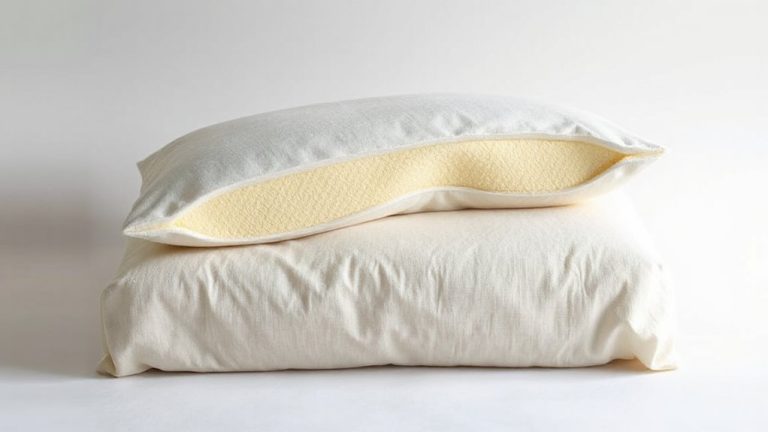
How to Layer Pillows on Top of a Thickly Made Bed Without Overcrowding
Start with a sturdy bed frame and breathable mattress protector to support layered bedding without sagging. Place your largest pillows against the headboard for alignment, then layer medium and thin pillows forward to create a smooth slope. Use euro shams and standard pillows in balanced pairs to maintain proportion. Mix one textural accent-like velvet or faux fur-among cotton or linen for depth without clutter. Anchor the look with a bold focal pillow in the center or back row, choosing one with a washable cover and trial period for long-term comfort. Adjust your setup nightly based on how your neck and back feel, fine-tuning for support. Choosing the right fills, like down alternative or memory foam, guarantees durability and ease of reshaping-you’ll find your ideal balance with a few thoughtful tweaks.
Notable Insights
- Use a staggered layering approach with larger pillows at the back and smaller ones in front to maintain visual balance.
- Limit the total number of pillows to avoid overcrowding while preserving comfort and aesthetic appeal.
- Choose pillows with varied textures but similar scale to add depth without visual clutter.
- Anchor the arrangement with a single focal pillow to draw the eye and streamline the design.
- Adjust nightly by removing excess pillows to suit sleep needs while keeping daytime style intact.
Start With Your Bed’s Foundation Layers
A solid foundation starts with what lies beneath-your mattress and bottom sheet. You need a sturdy bed frame to support your setup, especially with added layers. It keeps everything stable and aligned, reducing wear. If you move often, look for frames with warranties and easy assembly. A good mattress protector goes right over the mattress-it shields against spills, allergens, and dust mites, which can disrupt sleep. Most protectors are breathable, so they won’t trap heat. Pick one with a fitted design and a quiet, soft fabric that doesn’t slip. Waterproof styles offer extra defense but check breathability. Pair your protector with a smooth bottom sheet to prevent bunching. These base layers affect comfort and longevity. Test materials if possible-some brands offer trial periods. Starting right guarantees support, hygiene, and smoother sleep, which matters if you deal with night disruptions or sensitivities. For heavier individuals, choosing a king-size bed frame with reinforced construction ensures long-term durability and proper weight distribution.
Layer Pillows From Back to Front
While your foundation layers set the stage, the way you stack your pillows from back to front shapes both comfort and support. Start with your largest, most supportive pillows against the headboard-they anchor your sleep posture and help maintain spine alignment. Slide in medium-density pillows just in front, creating a graduated slope that eases neck strain. This layering reduces pressure points, especially helpful if you deal with morning stiffness or sleep discomfort. Finish with thinner accent pillows at the front for easy nightly access. Arrange them with pillow symmetry to balance visual weight and promote a restful environment. Use color blocking to distinguish zones-softer tones in back for calm, bolder fronts for visual lift. This method supports not just posture, but sleep quality, making it easier to settle in and stay aligned through the night. Choosing the right pillow for your sleep position, such as a best pillow for side sleepers, can further enhance spinal support and comfort in your layered arrangement.
Choose Complementary Sizes and Proportions
Three key sizes typically work together to create a balanced, supportive pillow layout: large euro shams at the back, standard or queen mid-layer pillows, and smaller lumbar or accent cushions in front. You’ll want to maintain scale balance so the bed doesn’t feel cluttered or lopsided. Big pillows in the back support your back when sitting up, while medium ones offer comfort for lounging or sleeping. The smaller front cushions add subtle support and visual interest without crowding. For pillow symmetry, place matching pairs on either side-this creates order and makes the bed feel intentional. Uneven sizes can disrupt both look and function, especially if you rely on pillows for neck or back support at night. Choosing the right proportions helps maintain airflow and ease of movement, which matters if you shift positions often or manage discomfort. Keep sizes proportional to your mattress width to preserve balance and useability. When selecting euro shams for the back row, consider filling them with premium euro pillow inserts for optimal plumpness and support.
Mix Textures Without Overcrowding
One well-chosen textured layer can elevate both comfort and design without overwhelming your sleeping space. You can mix velvet, linen, faux fur, and cotton to add depth while maintaining balance. Start with a base of soft linen or cotton-breathable, smooth, and easy on the skin, ideal for regulating temperature during sleep. Then, layer in one accent pillow in velvet for subtle richness or faux fur for gentle warmth, both offering sensory comfort without trapping heat. Choose fabrics with similar weight to avoid clashing textures that feel chaotic. High-pile faux fur works well in cooler months, while crisp cotton or slubby linen keeps things light year-round. Test different combinations to see how they affect your comfort, especially if you have sensitivities influencing sleep quality. Most quality pillow covers come with care instructions and warranties, so check labels before buying.
Use a Focal Pillow to Anchor the Look
A standout pillow can pull the whole bed together, giving your layered setup a clear visual center. Smart pillow placement starts with choosing one bold or uniquely textured piece as your focal point-this creates visual balance and keeps the look intentional. Position it near the center or back row so it anchors the arrangement without overcrowding. You’ll want something with durable construction and a design that complements your bedding without overwhelming it. Since comfort affects sleep quality, pick a focal pillow filled with supportive materials like memory foam or down alternatives, especially if you have sleep posture concerns. Consider options with removable, washable covers and trial periods to test performance.
| Emotion | Pillow Feature | Sleep Benefit |
|---|---|---|
| Calm | Soft texture | Eases tension |
| Focus | Bold color | Clears clutter |
| Rest | Supportive fill | Aligns spine |
Adjust for Comfort Every Day
You’ll likely want to tweak your pillow arrangement daily to match your sleep needs and comfort level, especially if you shift positions or wake with stiffness. Daily comfort depends on how well your pillows support your neck and spine, so don’t hesitate to remove or re-fluff them each evening. Some nights you might prefer a softer loft; others may call for extra firmness-this is where personal preference truly matters. Memory foam holds shape well over time, while down alternatives compress faster but are often washable. Try switching pillow types to see what eases discomfort, and check warranty lengths if durability’s a concern. There’s no single “right” setup-your ideal arrangement can change night to night. Pay attention to how your body responds, and adjust accordingly. Small changes can make a real difference in both sleep quality and morning comfort.
On a final note
You can keep your bed cozy and functional by balancing pillow arrangement with daily comfort. Start with support pillows at the back, then layer smaller ones in front. Mix sizes and textures sparingly to avoid clutter. Choose one bold pillow as a visual anchor. Make adjustments each night based on how you sleep. Well-placed pillows improve both look and rest, giving you better support without sacrificing space or simplicity.