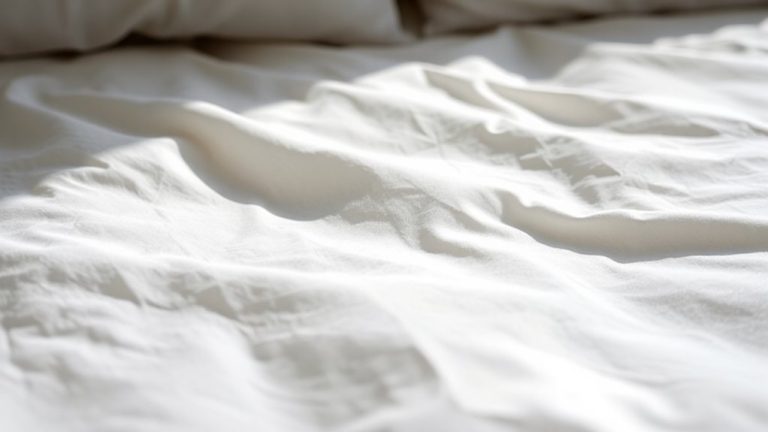
How to Wash Cotton Percale Duvet Covers Without Fading
Wash your cotton percale duvet cover in cold water to preserve its tight weave and slow fading. Turn it inside out to shield the outer surface from friction. Use a mild, chlorine-free detergent to protect fibers and keep colors bright. Don’t overload the machine-leave space for proper cleaning. Skip bleach and softeners to maintain breathability and fabric strength. Tumble dry on low or lay flat to avoid damage. Store it clean and flat to prevent discoloration over time-details on ideal drying and storage follow.
Notable Insights
- Wash in cold water to preserve color and prevent fading over time.
- Turn the duvet cover inside out before washing to protect the outer surface.
- Use a mild, chlorine-free detergent to avoid fiber damage and dye stripping.
- Avoid overloading the washing machine to ensure gentle and even cleaning.
- Skip bleach and fabric softeners to maintain fabric integrity and breathability.
Wash Your Percale Duvet in Cold Water
While it might be tempting to use warm water for a deeper clean, sticking to cold water is your best bet when washing a cotton percale duvet cover. The right water temperature helps preserve the fabric’s tight weave and prevents color fading over time. Cold water slows down fiber breakdown, keeping the cover soft and durable after repeated washes. It also supports energy savings since your machine won’t need to heat the water, reducing overall power use. This small step adds up in both cost and environmental impact, especially with frequent laundering. Cotton percale performs best when cared for gently, and using cold water aligns with long-term fabric health. You’ll maintain breathability and comfort, which can support consistent sleep quality. Over time, proper care may extend the life of your duvet cover, offering better value. Stick to cold water-it’s effective, efficient, and kind to the material.
Turn the Cover Inside Out First
Turning your cotton percale duvet cover inside out before washing helps protect its outer surface from friction and fading during the cycle. This simple step boosts fabric protection by reducing direct contact between the visible side and the drum or other laundry items. Since cotton percale is tightly woven and breathable, maintaining its surface integrity supports long-term softness and performance. Inside-out washing also aids in color preservation, especially for dyed or patterned covers, by shielding the outer fibers from abrasion that can dull hues over time. Think of it as a small move with measurable benefits-particularly if you wash your bedding weekly or use a high-efficiency machine with vigorous agitation. For those managing sleep routines, consistent care helps keep bedding feeling fresh and comfortable, which may support better sleep hygiene. Just flip it inside out, then proceed. It’s an easy habit that supports durability without requiring extra time or tools. Choosing the right duvet cover colors can also impact how well the fabric maintains its appearance after repeated washes.
Use a Mild Detergent Without Chlorine
You’ve turned the duet cover inside out to protect its surface, and now it’s time to choose the right detergent for the wash. Detergent selection matters-opt for a mild formula without bleach or additives. Harsh chemicals break down cotton fibers over time, leading to thinning and color loss. Most importantly, avoid any detergent with chlorine. The chlorine impact on cotton percale is significant: it weakens the fabric structure and strips dye, speeding up fading. Instead, use a gentle, pH-balanced detergent designed for fine linens. These formulas clean effectively without compromising fabric integrity. Look for labels that specify “no chlorine” or “chlorine-free” to guarantee protection. Liquid detergents often dissolve better in water, reducing residue. Using the correct product helps maintain softness, strength, and color vibrancy after multiple washes. Proper care supports long-term comfort, which can positively influence sleep quality over time.
Don’t Overload the Washing Machine
Since cotton percale needs room to move during the wash cycle, don’t pack the machine too full-overloading prevents water and detergent from reaching all areas of the fabric, which leads to uneven cleaning and increased wear. You should leave about 30% of the drum empty to stay within the recommended load capacity, ensuring each piece moves freely. When the machine is too full, the duvet cover can’t rinse properly, trapping detergent and increasing the risk of fading over time. During the spin cycle, an unbalanced or overcrowded drum strains the machine and may cause excess wrinkling or misshapen fabric. A proper load allows even spinning and better moisture extraction, which helps preserve the weave and finish. Keeping to the right load capacity also improves cleaning performance and reduces stress on fibers. This small step supports the fabric’s longevity, helping your duvet cover stay soft and fade-resistant through repeated washes.
Skip Bleach and Fabric Softeners
A small but important change in your laundry routine can go a long way-skip bleach and fabric softeners when washing cotton percale duvet covers. Bleach weakens fibers over time and speeds up fading, so opt for bleach alternatives like oxygen-based cleaners that lift stains gently without harming the fabric. These alternatives maintain the cover’s integrity and color. Fabric softeners, meanwhile, leave a residue that affects breathability, which can disrupt comfortable sleep-especially if you’re sensitive to temperature changes or skin irritants. Over time, softener effects build up, reducing absorbency and altering the crisp, cool feel percale is known for. To preserve both comfort and durability, choose a mild, pH-balanced detergent instead. This helps protect the tight weave and natural performance of cotton percale, keeping your bedding suited for restful, uninterrupted sleep.
Dry on Low Heat or Flat to Prevent Damage
When drying your cotton percale duvet cover, choosing the right method helps preserve its texture and durability over time. Tumble drying on low heat allows for gentle temperature control, reducing stress on the cotton fibers that can lead to shrinkage or stiffness. This low-heat setting balances efficiency with care, especially when paired with proper air circulation in the dryer. Make sure the cover has enough room to move freely, helping moisture escape evenly and minimizing wrinkles. If you prefer a more cautious approach, laying it flat on a clean, dry surface keeps it safe from mechanical wear and maintains its soft hand feel. Good air circulation is still key when air-drying-avoid damp areas or direct sun to prevent mildew and discoloration. Either method, done right, supports long-term fabric performance without compromising comfort. For those looking to enhance their sleep environment further, adding a high-quality mattress pad can improve comfort and protect your mattress.
Store Clean and Flat to Stop Fading
If you want your cotton percale duvet cover to stay fresh and resist fading over time, storing it clean and flat is your best bet. Always make sure the cover is completely dry before putting it away-moisture can weaken fibers and speed up discoloration. Use flat folding to prevent deep creases that might stress the fabric and lead to wear. Smooth it out neatly and stack it loosely to avoid pressure marks. Among smart storage methods, a cool, dry drawer or linen closet works best since sunlight and humidity contribute to fading. Never hang cotton percale long-term-it can stretch the material out of shape. Flat folding also makes it easier to rotate covers seasonally without damaging seams. This gentle approach supports fabric longevity and keeps texture intact, so you get the same crisp feel wash after wash. Simple, consistent habits in storage methods go a long way in keeping your bedding looking like new.
On a final note
You’ll keep your cotton percale duvet cover looking fresh by washing it in cold water and turning it inside out, which helps preserve the color. Use a mild, chlorine-free detergent and skip bleach or fabric softeners to protect the fibers. Don’t overload the machine, and dry on low heat or flat to prevent wear. Storing it clean and flat reduces fading over time. These simple steps maintain softness and durability, so your bedding stays comfortable and long-lasting with every wash.