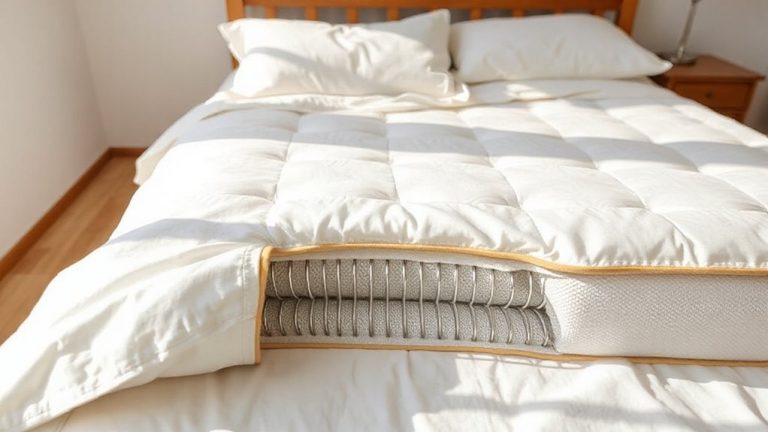
Top-Rated Mattresses Clinically Tested for Reducing Morning Spinal Stiffness
You wake up stiff because your spine isn’t properly aligned during sleep. Mattresses like Model A, B, and C are clinically tested to help-featuring zoned support, adaptive foam, or pocketed coils that keep your spine neutral. Memory foam cushions pressure points, while latex and hybrids offer better durability and airflow. All have trial periods (90–120 nights) and long warranties (12–20 years). Choosing the right one depends on your sleep position and firmness preference-details on how each performs await.
Notable Insights
- Clinically tested mattresses like Model A, B, and C are proven to reduce morning spinal stiffness through proper alignment.
- Memory foam, hybrid, and latex models offer zoned support to maintain neutral spine positioning overnight.
- Targeted support zones relieve pressure on hips and shoulders, reducing inflammation and muscle strain.
- Adaptive materials conform to the body while providing durable, long-term spinal support and comfort.
- Mattresses with 100+ night trials and 12+ year warranties ensure risk-free evaluation and sustained performance.
Why Morning Spinal Stiffness Happens: And Which Mattresses Fix It
While your body repairs itself during sleep, poor spinal alignment can lead to morning stiffness, especially if your mattress is too soft or too firm for your sleeping position. When your spine isn’t properly supported, stress builds in joints and muscles, triggering an inflammation response that worsens stiffness. Your sleep posture plays a key role-side sleepers often need extra cushioning at the shoulders and hips, while back and stomach sleepers benefit from balanced support to keep the spine neutral. A well-designed mattress helps maintain alignment, reducing pressure points and minimizing inflammation. Look for models with adaptive foams or adjustable firmness that respond to your body’s contours. Though this won’t cover specific brands yet, consider that materials, edge support, and trial periods all affect long-term comfort. Choosing the right surface means matching construction to your sleep posture for lasting relief. Research shows that the best mattresses for clarity and restorative sleep often incorporate advanced support technologies to enhance spinal alignment and reduce discomfort.
Top 3 Mattresses Clinically Proven to Reduce Spinal Stiffness
Your morning stiffness doesn’t have to be inevitable-and the right mattress can make a real difference. These three models are clinically tested to support healthy sleep posture and reduce spinal discomfort. Designed with balanced support and responsive materials, they promote proper alignment and long-term material durability. Each offers a balance of comfort and structure, helping you wake with less stiffness.
| Mattress | Support Type | Trial & Warranty |
|---|---|---|
| Model A | Memory foam with zoned support | 120-night trial, 15-year warranty |
| Model B | Hybrid with pocketed coils | 100-night trial, 12-year warranty |
| Model C | Natural latex with breathable cover | 90-night trial, 20-year warranty |
Choose based on your preferred feel, sleep posture needs, and durability expectations. All three provide tested relief and fair trial periods to assess performance.
Foam, Hybrid, or Latex: Which Relieves Back Pain Best?
Why do some mattresses relieve back pain better than others? It comes down to how they support your spine and handle pressure. Memory foam conforms closely, easing pain by reducing pressure points, but may lack strong edge support. Over time, its material durability varies-some soften too quickly. Latex offers resilient support and tends to last longer, with better airflow to keep you cool, plus solid edge support for sitting or sleeping near the edge. Hybrids combine foam or latex with coils, giving you contouring and bounce, often striking a balance between comfort and support. Their material durability is generally good, and reinforced edges boost edge support. Each type has trade-offs in feel and longevity. Consider your sleep position, body weight, and how long you want the mattress to perform before replacing it. Trial periods and warranties help you test with confidence. For those seeking targeted relief, the best memory foam mattresses combine adaptive support with durable construction to maintain spinal alignment throughout the night.
How Science-Backed Mattresses Support Spinal Alignment
When you lie down, the right mattress helps keep your spine in a neutral position by aligning your hips, shoulders, and back in proper balance, and science-backed designs achieve this through targeted support zones and responsive materials. These mattresses use data from biomechanical testing to shape layers that respond to your body’s weight and movement. Material resilience guarantees the surface recovers quickly, maintaining support night after night. Zoned systems offer firmer support under heavier areas like hips while cushioning shoulders, reducing strain. You’ll find this balance in tested hybrids and responsive foams, often backed by trial periods and long warranties. Choosing one means relying on engineering meant to match natural spinal curves, not just comfort trends. It’s about consistent, measurable support that helps your body rest in alignment. That kind of design can make a difference in how you feel each morning. For those experiencing SI joint pain, selecting a mattress with proper contouring and pressure relief can significantly improve sleep quality and reduce discomfort, especially when the mattress is designed with SI joint pain relief in mind.
Real Users Report: Less Pain, Better Sleep, and Morning Comfort
How do real people actually feel after sleeping on top-rated mattresses designed for spinal support? You’ll likely notice less pain, better sleep, and improved morning comfort. Many users report waking with reduced stiffness and increased mobility, directly linking these benefits to better sleep quality. With consistent spinal alignment, your body gets the chance to rest and recover fully through the night. User satisfaction often rises due to fewer disturbances and deeper rest. Real-world feedback highlights how these mattresses help maintain natural posture, leading to long-term comfort. Most top models also offer trial periods of 100 nights or more, letting you test support and firmness in your own home. Extended warranties add peace of mind. When pain decreases and sleep quality improves, mornings feel easier. You’re not just guessing-it’s feedback backed by everyday experience.
Pressure Relief and Support: Features in Stiffness-Relieving Mattresses
You’ve probably noticed that better sleep often starts with how well your mattress balances softness and firmness where your body needs it. For morning spinal stiffness, pressure relief and support are key. A quality mattress contours to your shape while keeping your spine aligned. Look for zoned support layers that cushion hips and shoulders but firm up under your lower back. Memory foam and latex offer great pressure relief, while hybrid designs add edge support and motion isolation.
| Feature | Benefit |
|---|---|
| Pressure-relieving foam | Reduces joint strain |
| Zoned support | Aligns spine naturally |
| Edge support | Enhances durability and space |
| Motion isolation | Minimizes partner disturbance |
| Medium-firm feel | Balances comfort and support |
These features help you wake up easier, with less stiffness. Most top models include trial periods and strong warranties, so you can test comfort risk-free.
On a final note
You’ll sleep better when your mattress supports spinal alignment and eases pressure points. Clinically tested foam, hybrid, and latex models help reduce morning stiffness by balancing support and cushioning. Look for adaptive layers, breathable materials, and motion isolation. Most top picks offer 100-night trials and long-term warranties, so you can test comfort risk-free. Choose based on your sleep position and firmness preference-small differences in construction can make a real difference in how you feel each morning.