How to Optimize Your Evening Lighting for Melatonin Production and Pain Reduction
Turn off cool, bright lights after sunset and switch to warm-toned bulbs (2700K or lower) to support natural melatonin release. Dim lights gradually to mimic dusk, using lamps below eye level for softer lighting. Reduce screen time or enable night mode on devices to limit blue light. These changes help align your circadian rhythm, improve sleep quality, and may lessen pain over time-especially when applied consistently each evening. You’ll find deeper benefits by shaping your environment around your body’s natural cues.
Notable Insights
- Use warm lighting (2700K–3000K) in the evening to support natural melatonin release.
- Dim lights gradually after sunset to mimic dusk and signal nighttime to the brain.
- Avoid blue-rich light from screens and cool-white LEDs that suppress melatonin.
- Install amber or circadian-friendly bulbs to filter harmful wavelengths and aid sleep.
- Limit screen use one hour before bed or enable night mode to reduce blue light exposure.
How Evening Light Disrupts Sleep and Worsens Pain
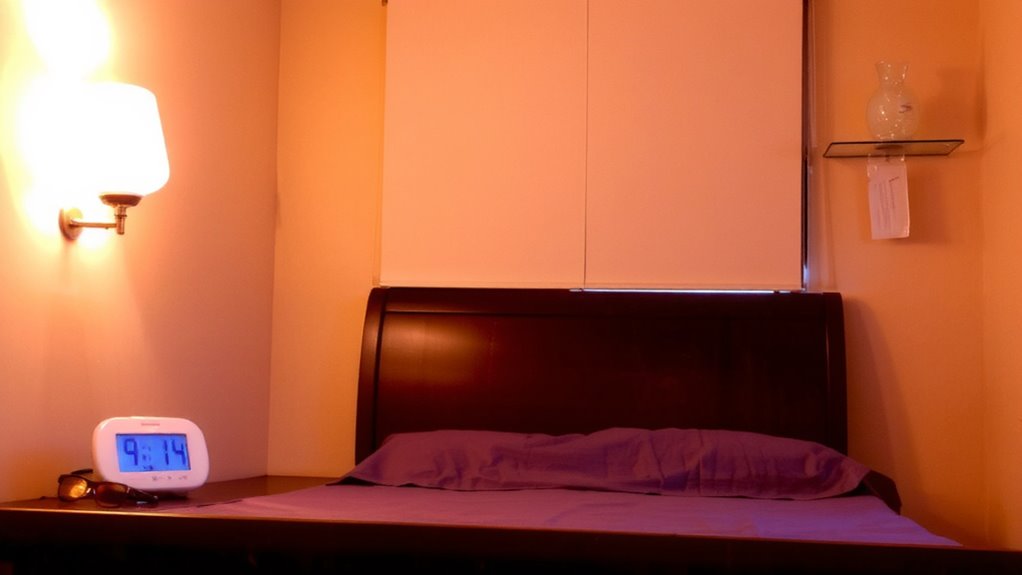
While your body relies on natural light cues to regulate sleep, exposure to bright or blue-rich light in the evening can delay melatonin release, making it harder to fall asleep and reducing sleep quality. Your circadian rhythm depends on consistent light and dark cycles, and evening light sensitivity means artificial light, especially from screens or LEDs, can trick your brain into staying alert. This shift suppresses melatonin, disrupts sleep timing, and may worsen chronic pain due to poor recovery. Over time, this imbalance contributes to sleep disorders like insomnia. Choosing dimmer environments at night supports natural hormone patterns. Consider how lighting affects your routine when evaluating sleep aids or treatments. Small changes-like reducing screen time-can improve sleep quality without cost or risk. These practical adjustments align with your biology, offering a sustainable way to support rest and potentially reduce pain sensitivity through better-regulated circadian rhythm function. For optimal protection, wearing orange and blue light-blocking glasses can further minimize evening light disruption.
Shift to Warmer Lights When the Sun Goes Down
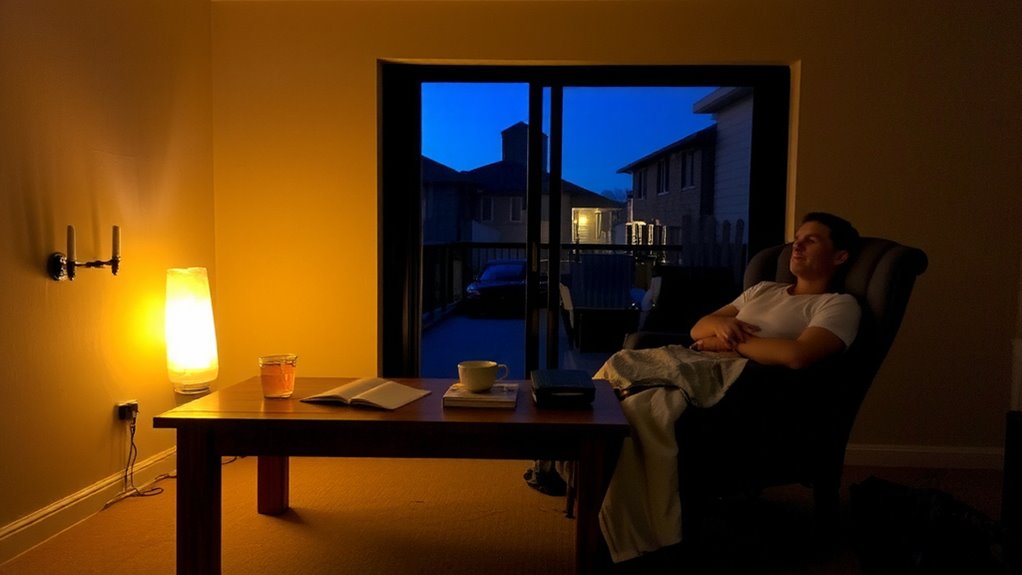
As the sun sets, your body starts preparing for sleep by increasing melatonin production, and switching to warmer lighting can support this natural shift. You should aim for light with a lower color temperature-around 2700K to 3000K-because it mimics sunset hues and interferes less with melatonin. Blue-rich white light, common in standard LEDs, has a higher color temperature and can delay sleep onset. At the same time, keep light intensity moderate; overly bright spaces, even with warm tones, may still disrupt your circadian rhythm. Use bulbs labeled “warm white” and check packaging for color temperature details. Lamp design matters too-shaded or indirect fixtures soften light intensity. This small change doesn’t replace sleep aids or treat sleep disorders directly, but it supports better sleep hygiene. Many find improved results when combining this with consistent routines. Trial adjustments over a week can reveal what works best for you. For ease of selection, consider trying one of the best color light bulbs recommended for bedroom environments.
Dim the Lights to Signal Nighttime Healing
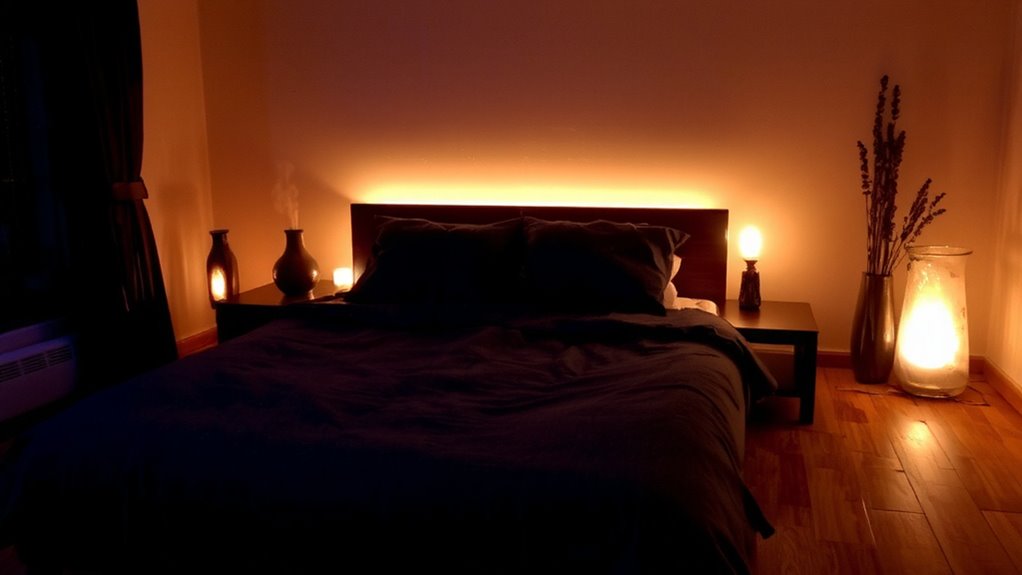
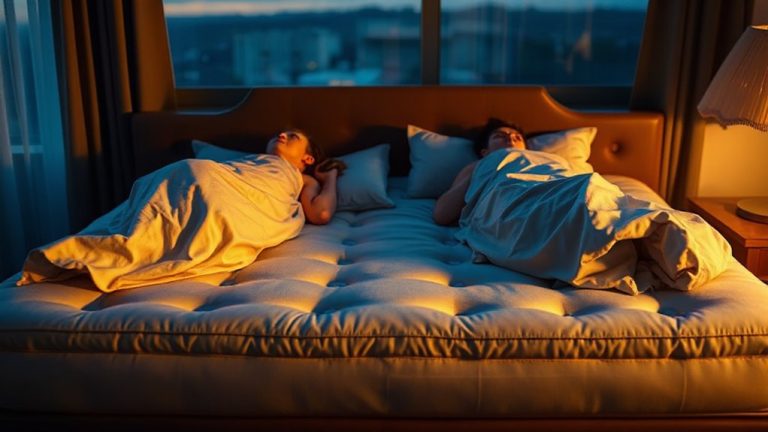
Why does your body feel more ready for rest when the room grows dim? Because lowering light levels signals your brain that nighttime healing has begun. As you reduce brightness, your pineal gland starts releasing melatonin, which supports deeper sleep and may help reduce pain sensitivity overnight. To make this shift effective, focus on lamp placement-position lights below eye level, like floor or table lamps, to create ambient shadows instead of harsh overhead glare. These softer gradients mimic natural dusk, easing your shift into rest. Avoid sudden darkness; instead, dim lights gradually over 30–60 minutes. This approach works well with any lighting plan and supports consistent circadian timing. You don’t need special equipment-just mindful adjustments. Over time, this simple habit may improve sleep quality and reduce reliance on sleep aids.
Choose Bulbs That Support Natural Melatonin Release
What kind of light bulb lets your body wind down without fighting your natural rhythm? Warm-toned bulbs with a low color temperature-around 2700K or less-help support melatonin release by mimicking sunset light. You’ll want to avoid cooler, blue-rich whites that suppress melatonin. Pair that with low light intensity; aim for under 50 lumens per square foot in evening spaces. Soft, dimmable LEDs placed lower in the room reduce glare and signal nighttime effectively. Look for bulbs labeled “amber” or “circadian-friendly,” as they filter out disruptive wavelengths. Many come with long warranties and are built to last, making them a reliable sleep aid. Swapping just one overhead bulb in your living area can make a measurable difference in how easily you fall asleep. Test a bulb for a few nights to see how your sleep patterns respond.
Reduce Blue Light From Phones and TVs at Night
Though your evening habits may feel set in stone, small shifts in screen use can make a real difference when it’s time to wind down. Your phones and TVs emit blue light, which can interfere with melatonin production if used too close to bedtime. Most devices now include night modes that shift colors toward warmer tones after sunset, reducing stimulation and supporting natural sleep cycles. You can also apply screen filters that lower blue light emission without dimming overall brightness. These tools are easy to enable and often come with schedules that adjust automatically. While night modes help, limiting screen time at least an hour before bed offers even better results, especially if you struggle with falling asleep. Using these features consistently may improve sleep quality over time, particularly for those dealing with mild sleep issues. Try different settings and see what helps you feel more rested-most options are free and built into your devices.
Build an Evening Lighting Routine to Reduce Pain and Improve Sleep
How well you manage evening light could shape both your comfort and sleep quality, especially if pain tends to linger at night. Start dimming lights 2–3 hours before bed to support melatonin production. Swap overhead bulbs for warm, low-wattage lamps (under 2700K). Pair this routine with gentle stretching to ease muscle tension and consider aromatherapy benefits from lavender or chamomile to calm the nervous system.
| Feeling | With Routine | Without Routine |
|---|---|---|
| Pain level | Reduced | Often worse |
| Sleep onset | Faster | Slower |
| Mood | Calmer | More tense |
| Energy (AM) | Steadier | Low or flat |
| Focus (Next Day) | Clearer | Foggy |
This combination supports natural pain relief and prepares your body for deeper rest. Try it consistently for at least one week to assess changes.
On a final note
You can support melatonin production and reduce pain by adjusting evening lighting. Switch to warm-colored bulbs, dim lights after sunset, and limit blue light from screens. These steps align your body’s rhythms with natural cycles. Choose LED bulbs labeled 2700K or lower, designed to minimize blue emission. Try these changes consistently for several weeks. Many quality bulbs come with a warranty, allowing returns if results don’t meet expectations.