Why Deep Sleep Is Crucial for Cognitive Functioning and Memory
You need deep sleep to lock in memories and sharpen skills, as your brain replays and organizes daily experiences. It strengthens important neural connections while pruning weaker ones, boosting recall and learning. Without it, brain fog, slower thinking, and long-term cognitive risks rise. Poor sleep quality disrupts this nightly reset. Good sleep hygiene-cool, dark rooms, consistent routines, reduced screen time-can improve deep sleep. Better habits mean clearer thinking tomorrow. There’s more to uncover about how this nightly process powers your mind.
Notable Insights
- Deep sleep enables memory consolidation by replaying and strengthening daily experiences for long-term storage.
- Neural pruning during deep sleep removes weak connections, enhancing brain efficiency and cognitive clarity.
- Skill learning improves during deep sleep through neural adaptation, especially for motor and technical abilities.
- Lack of deep sleep disrupts memory recall and causes brain fog, slowing reaction times and impairing focus.
- High-quality deep sleep supports mental performance by restoring neuronal function and enabling sharp cognitive processing.
How Deep Sleep Strengthens Memory
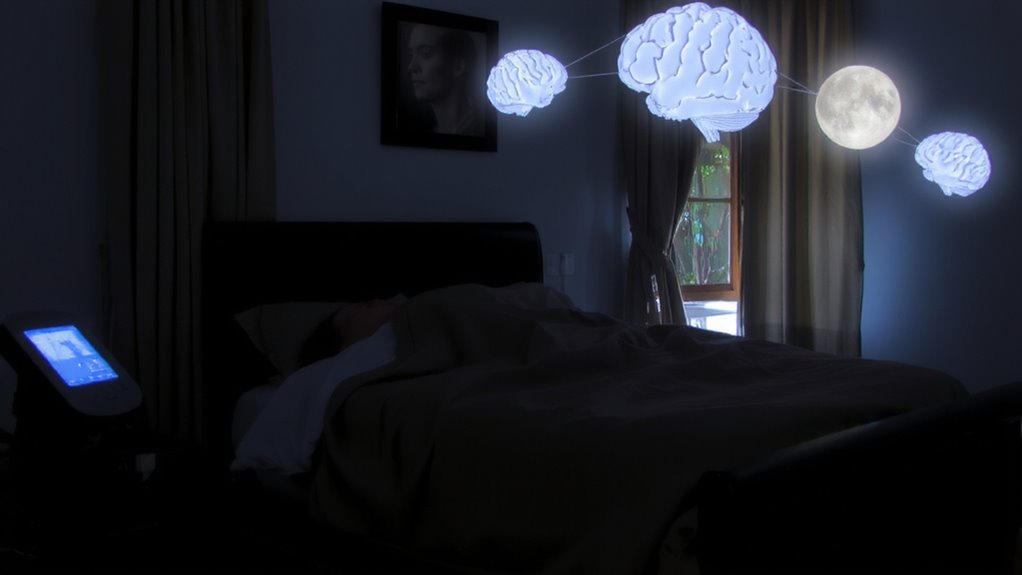
Memory consolidation happens most effectively during deep sleep, the restorative stage where your brain processes and stores what you’ve learned. During this phase, neural consolidation strengthens important memories by replaying and organizing daily experiences into long-term storage. At the same time, synaptic pruning trims weaker or less-used connections, making your brain’s network more efficient. This balance helps maintain cognitive function and supports clear thinking during waking hours. If you’re dealing with sleep disorders like apnea or insomnia, untreated issues can disrupt these essential processes, reducing memory quality over time. Consider consulting a sleep specialist and reviewing treatment options, from CPAP machines to behavioral therapy. Some sleep aids may help you fall asleep but might not improve deep sleep needed for synaptic pruning and neural consolidation. Look for solutions backed by clinical trials and warranties that allow trial periods so you can assess real benefits.
Why Deep Sleep Is Key to Learning New Skills

You’re building new skills every day, and your brain needs time to lock those improvements in-deep sleep is where that work happens. During deep sleep, your brain strengthens connections through neural adaptation, turning practice into progress. This stage is essential for skill consolidation, helping you perform better the next day.
| Sleep Stage | Role in Skill Learning |
|---|---|
| Light Sleep | Prepares brain for memory processing |
| Deep Sleep | Drives neural adaptation and skill consolidation |
| REM Sleep | Supports creativity, not core skill retention |
Quality deep sleep enhances motor skills, problem-solving, and technical abilities. If you’re learning something new, consistent, uninterrupted sleep cycles matter more than sleep aids. Most adults need 7–9 hours nightly. Sleep disorders like apnea disrupt deep sleep, so consult a specialist if you snore or wake frequently. Natural sleep patterns support long-term gains without trade-offs.
What Your Brain Loses Without Deep Sleep

What happens when your brain skips deep sleep? You start losing critical mental functions. Without it, your brain struggles to consolidate memories, making recall harder and learning less effective. You’re likely to experience brain fog-difficulty focusing, slower reactions, and muddled thinking. Over time, repeated deep sleep loss raises your risk of cognitive decline, weakening attention, problem-solving, and long-term memory. Your neurons don’t get the nightly reset they need, impairing communication and repair. This isn’t just about feeling tired; it’s about measurable drops in mental performance. Sleep disorders like apnea disrupt deep cycles, so getting evaluated matters. Some consider sleep aids, but check their impact on sleep architecture-some reduce deep sleep. Prioritizing quality rest supports brain health, helping maintain sharp, reliable cognition throughout life. Track changes, consult professionals, and weigh options carefully.
How to Get More Deep Sleep Naturally
Skipping deep sleep takes a real toll on how well your brain works, from memory to focus and long-term thinking. To boost deep sleep naturally, start by improving your sleep environment-keep the room cool, dark, and quiet, and choose a comfortable mattress and pillows. Reduce screen time before bed, since blue light can interfere with your body’s natural wind-down process. Establish a consistent bedtime routine, like reading or light stretching, to signal your brain that it’s time to rest. Avoid heavy meals and caffeine close to bedtime. These habits support your body’s natural sleep cycles without relying on sleep aids. While some turn to supplements or devices, simple lifestyle adjustments often bring steady improvements. Give changes a few weeks to assess effectiveness. Many find that small, consistent steps yield better long-term results than quick fixes. Optimizing your bedroom for sleep can significantly enhance rest quality, and incorporating proven sleep environment enhancers can make a measurable difference.
Why Quality Sleep Boosts Mental Performance
When your brain gets the uninterrupted rest it needs, it’s better able to manage daily mental demands, from solving problems at school to making quick decisions at work. Quality sleep supports mental clarity and focus enhancement, helping you stay sharp throughout the day. You’ll notice improved reaction times, better comprehension, and smoother recall when you consistently rest well.
| Sleep Quality | Mental Clarity | Focus Enhancement |
|---|---|---|
| Low | Scattered thoughts, forgetfulness | Distracted, reduced attention span |
| Moderate | Clearer thinking, fewer errors | Steady concentration, minor lapses |
| High | Sharp awareness, quick processing | Sustained attention, efficient task control |
Choosing the right sleep habits-or seeking help for disorders or temporary aids-can make a measurable difference. Look for solutions with trial periods and clear usage guidelines to find what works best for you.
What Happens in Deep Sleep (and Why It Matters)
While you’re in deep sleep, your body and brain go to work repairing tissues, strengthening memories, and clearing out mental fog that builds up during the day. Your brain slows to synchronized, rhythmic brain waves called delta waves, which signal the deepest stage of sleep. This shift supports memory consolidation, turning what you learned into lasting knowledge. During this phase, your brain strengthens neural connections and discards unneeded information. Without enough deep sleep, memory consolidation suffers, and focus weakens the next day. Sleep disorders like sleep apnea can disrupt this stage, reducing its benefits. If you struggle with sleep quality, consider speaking to a specialist or evaluating sleep aids that support natural cycles. Devices with sleep tracking can help identify disruptions. Prioritizing consistent bedtime routines and healthy habits improves deep sleep over time. It’s a key investment in long-term brain health and daily performance. Tracking your sleep stages with a best sleep tracker can provide actionable insights into your deep sleep patterns.
On a final note
You need deep sleep to lock in memories and sharpen thinking, so prioritize it. If you struggle to stay asleep or feel unrested, track your patterns and consult a specialist-treatments like CBT-I work well. Consider sleep aids only after trying natural fixes like consistent bedtimes and cooler rooms. Most devices don’t guarantee deep sleep tracking accuracy, but lifestyle changes do improve sleep quality over time, with no side effects.