Sleep Paralysis: Causes, Symptoms & 5 Coping Strategies
You might experience sleep paralysis when your mind wakes up but your body remains temporarily paralyzed, a normal part of REM sleep that’s misaligned with consciousness. It often brings vivid sensations like pressure or a presence, lasting seconds to minutes. Stress, irregular sleep, and sleeping on your back increase risk. To reduce episodes, stick to a consistent sleep schedule, improve sleep hygiene, and manage stress. Staying calm during an episode can help-it’s harmless, though unsettling-and understanding your patterns can lead to better control over time.
Notable Insights
- Sleep paralysis occurs when muscle atonia from REM sleep overlaps with wakefulness, causing temporary inability to move or speak.
- Episodes often involve vivid hallucinations, chest pressure, and a sensed presence due to mixed sleep-wake brain activity.
- It commonly happens during sleep onset or waking, especially with irregular sleep patterns or sleeping on the back.
- Risk factors include sleep deprivation, stress, shift work, and conditions like narcolepsy or sleep apnea.
- Prevention includes consistent sleep schedules, good sleep hygiene, stress management, and remaining calm during episodes.
What Is Sleep Paralysis?

Sleep paralysis can feel unsettling, but it’s a real and well-documented phenomenon. You’re briefly unable to move or speak while falling asleep or waking up, even though you’re conscious. This happens when your brain activity doesn’t align perfectly with your body’s sleep cycle. During normal sleep, your brain temporarily paralyzes muscles to prevent acting out dreams, but in sleep paralysis, this mechanism lingers or activates at the wrong time. It’s linked to sleep disorders like narcolepsy, sleep apnea, or irregular sleep patterns. Shift work, stress, or lack of sleep can increase your risk. While not dangerous, frequent episodes may signal underlying issues. Tracking your sleep and consulting a healthcare provider can help determine if treatment or adjustments to sleep habits are needed. Some find relief through consistent sleep schedules or evaluating sleep aids under medical guidance.
What Does Sleep Paralysis Feel Like?

While it’s common to feel disoriented during an episode, you’re actually awake and aware, yet temporarily unable to move or speak-often right as you’re drifting off or coming back to consciousness. This temporary immobility can last seconds to a few minutes and may be accompanied by vivid hallucinations that seem completely real. You might sense a presence in the room, hear noises, or feel pressure on your chest. Though frightening, these experiences are part of the brain’s mixed state of wakefulness and sleep. Understanding this helps you respond calmly if it happens again. Recognizing symptoms like temporary immobility and vivid hallucinations can guide decisions about sleep hygiene or whether to consult a professional. Improving sleep routines, managing stress, and maintaining regular sleep schedules may reduce occurrences. Tracking episodes can also help identify patterns. If symptoms persist, discussing them with a sleep specialist offers a clear path toward better rest and peace of mind.
When Does Sleep Paralysis Happen?
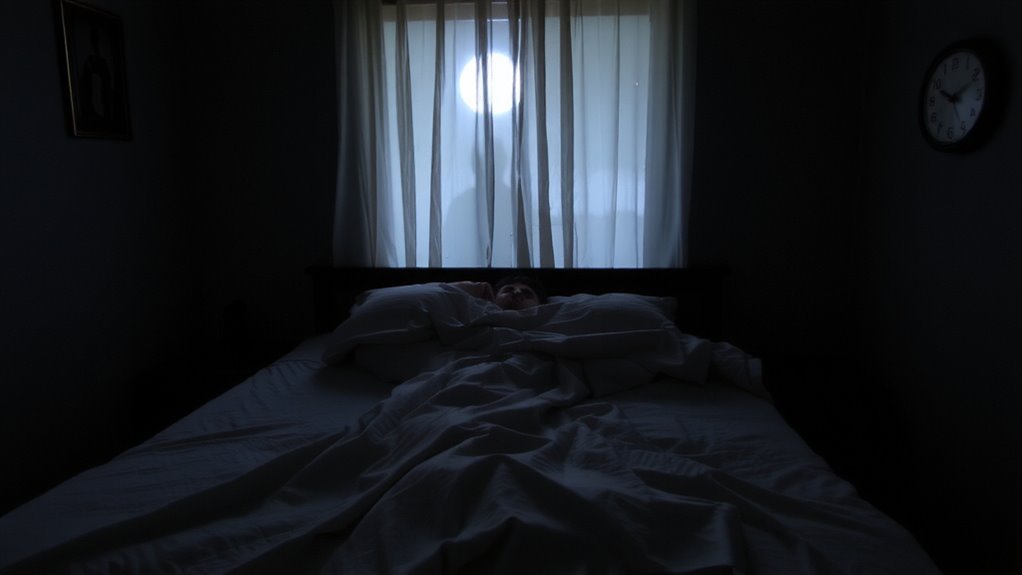
You’re most likely to experience sleep paralysis during two specific windows: right as you’re falling asleep or just after you wake up. This happens when REM timing overlaps with wakefulness, leaving you conscious but temporarily unable to move. Episodes linked to the onset of sleep are called hypnagogic, while those upon awakening are hypnopompic. They’re more common if your sleep schedule is irregular or you sleep on your back. People exploring lucid dreaming may notice it too, since techniques often involve staying mentally alert while the body enters REM-like states. Though unsettling, these moments are brief and usually harmless. Improving sleep hygiene, maintaining consistent bedtimes, and addressing sleep disorders can reduce frequency. Some find relief through repositioning or brief mental exercises. Monitoring patterns helps determine whether lifestyle changes or sleep aids might support better rest.
Why Does Sleep Paralysis Happen?
What makes your body stay still when your mind suddenly wakes up? It’s due to neurological mechanisms that normally keep you from acting out dreams. During REM sleep, your brain paralyzes your muscles to prevent movement, but sometimes this switch doesn’t turn off quickly when you wake. If your mind becomes aware while your body is still in sleep mode, you experience sleep paralysis. This temporary disconnect between brain and body is natural, though unsettling. Cultural interpretations vary widely-some view it as a supernatural event, while science sees it as a glitch in sleep regulation. It often links with disrupted sleep schedules, stress, or sleep disorders like narcolepsy. Understanding these causes helps you decide whether to adjust habits, seek evaluations, or consider aids. Knowing how your body works supports smarter choices without fear.
How Can You Prevent Sleep Paralysis?
If you’ve ever woken up unable to move, you’re not alone-improving your sleep habits can reduce how often it happens. Good sleep hygiene is key: aim for seven to nine hours nightly, keep a consistent sleep schedule, and create a restful bedroom environment-cool, dark, and quiet. Avoid screens and stimulants like caffeine before bed, as they can disrupt your sleep cycle. Stress management also plays a big role; chronic stress can interfere with sleep quality and increase episodes. Techniques like regular exercise, mindfulness, or journaling can help calm your mind. While sleep aids might seem tempting, they aren’t always necessary-try adjusting your routine first. If sleep paralysis persists, consider tracking symptoms and discussing them with a healthcare provider. Simple lifestyle changes often make a meaningful difference over time. Exploring evidence-based Top Sleep Hygiene Picks can further support restful, uninterrupted sleep.
How to Stay Calm During Sleep Paralysis
While it might feel overwhelming, staying calm during sleep paralysis can help shorten the episode and reduce fear. You can use breathing exercises to stabilize your body’s response-focus on slow, deep breaths in through your nose and out through your mouth. This helps signal safety to your brain, easing panic. Pair this with mindfulness techniques, like observing your thoughts without reacting, to stay grounded. Remind yourself that the episode is temporary and not physically harmful. Many find it helpful to mentally repeat a calming phrase or focus on a familiar sensation, like the feel of sheets. Practicing mindfulness regularly during waking hours improves your ability to stay composed during episodes. Breathing exercises and mindfulness techniques are tools you can develop over time, enhancing control. These strategies support better emotional regulation and may reduce future intensity. Using them doesn’t require extra equipment or cost, making them practical, accessible choices for managing symptoms calmly and effectively.
On a final note
You can reduce sleep paralysis by maintaining regular sleep hours, managing stress, and improving sleep hygiene. If episodes continue, consider a sleep study to rule out disorders like narcolepsy. Some find relief with cognitive-behavioral strategies or prescribed treatments. Always consult a healthcare provider before trying sleep aids. Most cases improve with lifestyle changes, but professional support guarantees safer, more effective results over time.