Exploring the Link Between Diet and Quality Sleep Duration
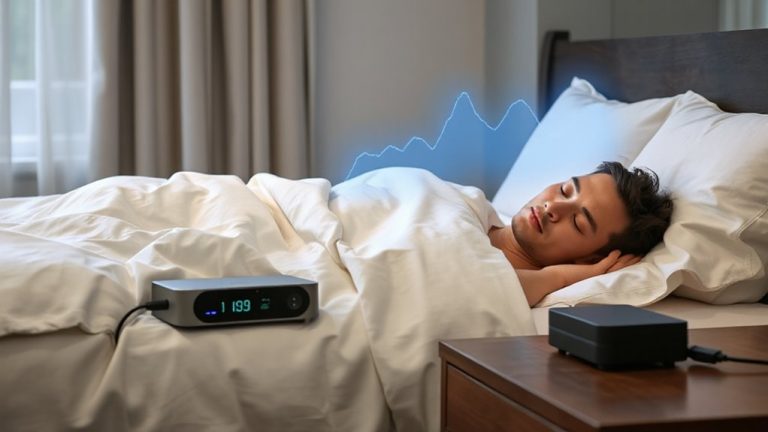
Your food choices affect sleep quality by influencing blood sugar, hormones, and digestion. Eating refined carbs or sugar late can cause nighttime awakenings, while caffeine and alcohol delay drowsiness and disrupt sleep cycles. Meals rich in fiber, protein, and healthy fats support steady energy. Tart cherries, kiwis, and fatty fish offer natural sleep benefits. Finish large meals 2–3 hours before bed. Small, balanced snacks may help. You’ll find simple ways to adjust your diet for better rest tonight.
Notable Insights
- Food choices impact blood sugar levels, which can disrupt sleep duration through nighttime spikes and crashes.
- Refined carbohydrates and added sugars increase the risk of sleep interruptions, especially when consumed later in the day.
- Tart cherries, kiwis, and fatty fish contain natural compounds like melatonin and serotonin that support sleep quality and duration.
- Caffeine and alcohol interfere with sleep onset and continuity by blocking drowsiness signals and fragmenting sleep cycles.
- Eating large meals within 2–3 hours of bedtime can impair digestion and reduce sleep quality due to discomfort or reflux.
How Food Choices Affect Your Sleep
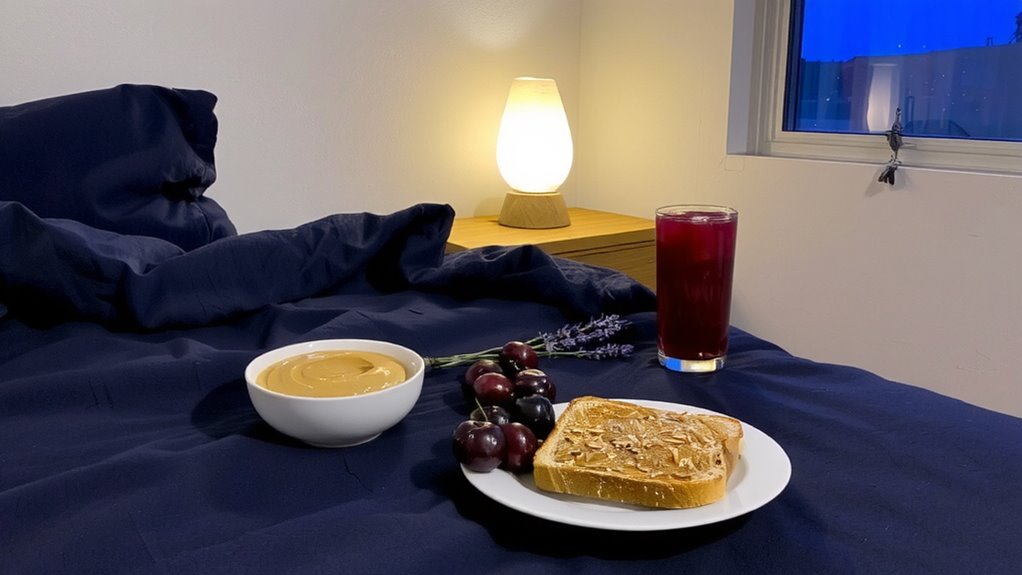
Ever wonder why you toss and turn at night or wake up feeling unrested? Your food choices play a key role. What you eat influences your blood sugar levels, which can either support or disrupt sleep. Spikes and crashes in blood sugar during the night may wake you without notice, reducing overall sleep duration. Meals high in refined carbs or sugar, especially late in the day, make this more likely. At the same time, your circadian rhythm-your body’s internal clock-relies on consistent eating patterns to stay aligned. Irregular meal times can confuse this rhythm, making it harder to fall or stay asleep. Choosing balanced meals with fiber, protein, and healthy fats helps stabilize energy and supports natural sleep cycles. Adjusting when and what you eat doesn’t require drastic changes, just mindful timing and composition to improve rest over time. Including best sleep-promoting foods in your evening routine can further enhance sleep quality and duration.
Top Sleep-Promoting Foods (Backed by Science)
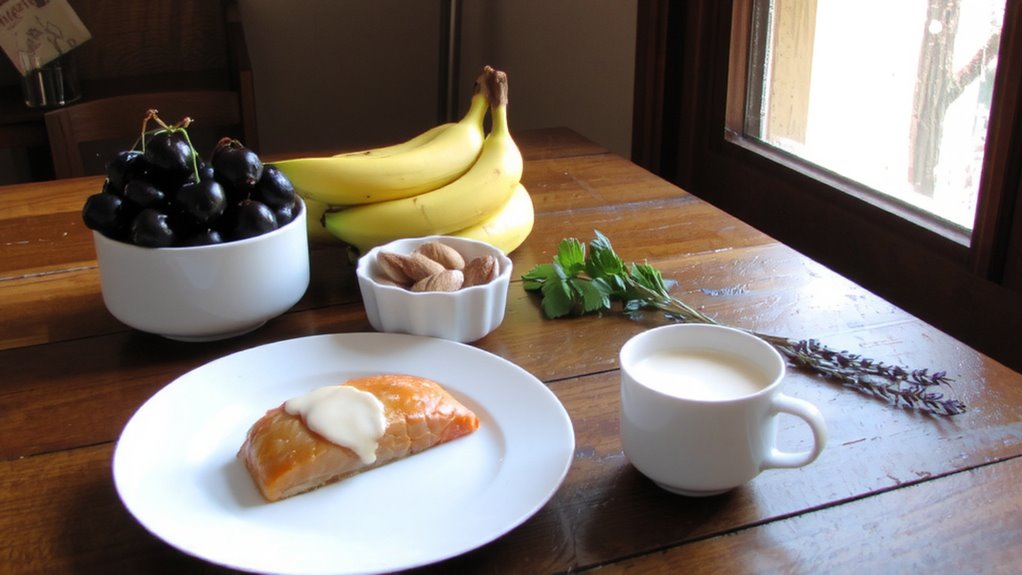
Why do some foods help you fall asleep faster and sleep more soundly? They contain nutrients that support your circadian rhythm and boost melatonin production. Tart cherries, for example, are rich in natural melatonin, helping regulate your sleep-wake cycle. Fatty fish like salmon provide vitamin D and omega-3s, linked to better sleep duration and quality. Kiwis, packed with antioxidants and serotonin, may improve your ability to fall asleep and stay asleep. You might also consider sleep supplements like magnesium or valerian root, which studies suggest can aid relaxation. But whole foods offer a balanced way to support sleep without reliance on pills. Pair these foods with consistent bedtime habits to strengthen your circadian rhythm over time. They’re not instant fixes, but part of a strategy to improve sleep naturally. Always consult a healthcare provider before starting supplements.
Worst Foods for Sleep (and Why They Keep You Awake)

What keeps you tossing and turning at night might be on your plate. Foods high in caffeine effects-like coffee, dark chocolate, and some sodas-can delay sleep onset and reduce sleep quality, even hours later. You’re likely feeling wired because caffeine blocks adenosine, the chemical that promotes drowsiness. Heavy, spicy meals also disrupt rest by causing indigestion or heartburn. Then there are sugar spikes from sweets, white bread, or sugary snacks. These cause quick energy surges followed by crashes, interfering with stable sleep cycles. Highly processed carbs act similarly, raising blood glucose and waking you mid-sleep. Alcohol may make you drowsy at first, but it fragments sleep later. Avoiding these foods in the evening supports steadier sleep. Knowing how foods affect rest helps you make informed choices-vital for managing sleep disorders or deciding when sleep aids might be necessary. Small dietary shifts can improve performance and recovery.
When to Eat for Optimal Sleep
Eating at the right time can make a noticeable difference in how easily you fall asleep and how well you stay asleep. Your body’s internal clock responds best when meal timing aligns with natural energy dips-ideally, finish your last big meal 2–3 hours before bed. This gives digestion time to settle, reducing nighttime disruptions. A large portion size too close to bedtime can cause discomfort or acid reflux, making it harder to stay asleep. Instead, if you’re hungry late, opt for a small, balanced snack. Keep portion size modest-think half a banana or a few almonds-to avoid spiking energy when your body should wind down. Consistent meal timing also supports stable blood sugar overnight, which helps maintain uninterrupted sleep. You don’t need perfection, just mindful adjustments that work with your schedule. These small shifts may improve sleep duration without extra effort.
Easy Diet Tweaks for Better Sleep Tonight
A light evening snack built around sleep-supportive nutrients might be the simplest change you make for better rest. Pairing complex carbs with tryptophan-rich foods-like a banana with almond butter-can quietly signal your brain it’s time to wind down. This small shift fits easily into your bedtime routine and supports overall sleep hygiene. Consider these tweaks tonight:
| Food Choice | Emotion Evoked | Benefit for Sleep |
|---|---|---|
| Warm milk | Comfort, nostalgia | Contains tryptophan, calcium |
| Oatmeal (small) | Calm, fullness | Raises melatonin naturally |
| Walnuts | Reassurance, care | Omega-3s and melatonin |
| Chamomile tea | Relaxation, ease | Mild sedative effect |
These practical additions require no overhaul. They enhance your current habits, support natural sleep patterns, and can reduce reliance on sleep aids. Try one tonight as part of a consistent, calming bedtime routine. For those interested in optimizing their chamomile tea experience, choosing the best chamomile tea can make a noticeable difference in flavor and effectiveness.
On a final note
You can improve sleep by choosing foods like tart cherries, nuts, and whole grains, while avoiding heavy, spicy, or sugary meals near bedtime. Timing matters-eat dinner at least 2–3 hours before sleep for better digestion. Small changes, like swapping coffee for herbal tea or adding magnesium-rich greens, may boost sleep quality. Track what works, since individual responses vary, and consult a provider if sleep issues persist.