What Causes Night Terrors in Adults With Depression or Anxiety Disorders
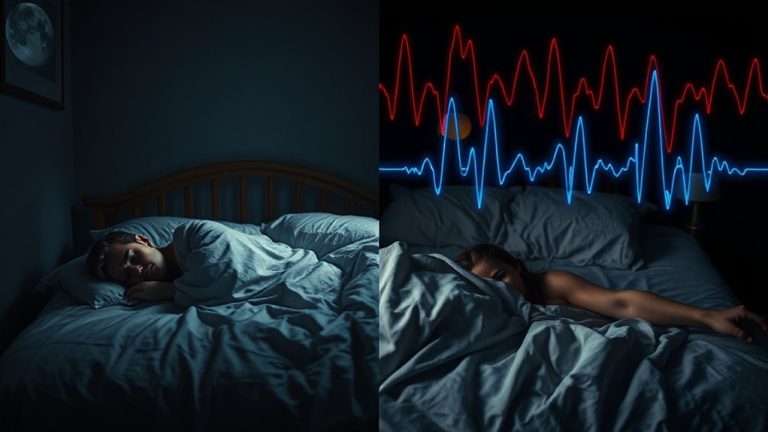
If you have depression or anxiety, your brain’s sleep cycles can become disrupted, making night terrors more likely. These episodes often happen during non-REM sleep and involve fear, screaming, or confusion without full awareness. Emotional stress and poor sleep quality increase your risk by affecting brain chemistry and arousal systems. Treating the underlying condition with therapy or medication may reduce episodes. For better results, combine care strategies and consider how sleep habits impact your symptoms-adjustments could lead to noticeable improvements over time.
Notable Insights
- Depression disrupts sleep regulation, increasing the risk of night terrors during non-REM sleep.
- Anxiety maintains a hyperalert brain state, interfering with smooth sleep stage transitions.
- Emotional suppression in mood disorders leads to unprocessed stress emerging during partial arousals.
- Sleep cycle disruptions from depression or anxiety can trigger sudden, confused awakenings with intense fear.
- Neural hypersensitivity due to anxiety or depression amplifies fear responses during vulnerable sleep phases.
What Are Night Terrors in Adults?
Envision waking up drenched in sweat, heart racing, and screaming-yet you’re not fully awake. That’s a night terror. Unlike nightmares, you won’t recall details, and you may not even remember the episode. These events typically happen during non-REM sleep, often in the first half of the night. You might experience sleepwalking episodes, bolt upright, or move aggressively without awareness. Some people report paranormal perceptions-feeling a presence or seeing shadowy figures-though these aren’t signs of mental illness. Night terrors can affect adults, even without a history in childhood. Episodes vary in frequency and intensity. While not always dangerous, they can disrupt your sleep cycle and impact daytime function. Monitoring sleep patterns helps. Consider a sleep study if they continue. Safety measures, like securing doors or using motion alarms, reduce injury risk during sleepwalking episodes. Discuss symptoms with a sleep specialist to explore treatment.
How Depression Increases Night Terror Risk
During periods of depression, your brain’s regulation of sleep can become disrupted, increasing the likelihood of night terrors. This disruption often stems from emotional suppression, where unprocessed feelings build up and interfere with restful sleep. You might not realize how much this internal pressure affects your sleep cycles. Neural hypersensitivity also plays a role-your brain becomes overly reactive to stimuli, even during sleep, making it harder to stay in stable sleep stages. These factors can trigger sudden arousals characteristic of night terrors. Addressing sleep hygiene helps, like keeping a regular bedtime and limiting screen use before bed. Some find value in tracking sleep patterns using wearable devices or journals. While not a cure, certain sleep aids may reduce disruptions, but always consider consulting a professional first to understand risks and benefits. Treating depression often improves sleep quality over time.
Anxiety and Night Terrors: Why the Link Exists
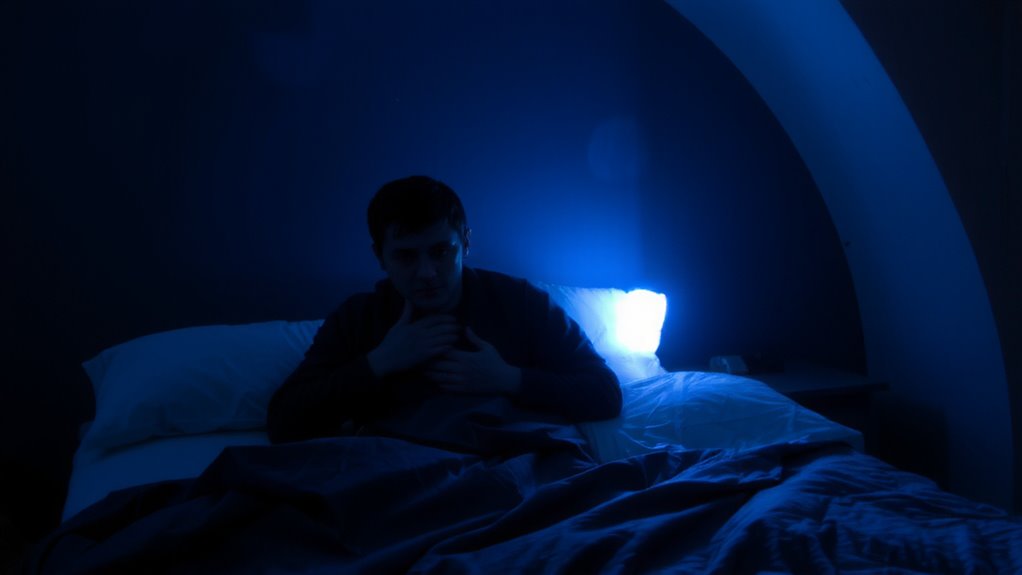
Anxiety keeps your mind on high alert, even when you’re trying to rest, and that state of constant readiness can set the stage for night terrors. Your brain struggles to shift into deep sleep, often stuck in a loop of neural hyperactivity, which disrupts normal sleep cycles. This overactivity feeds emotional dysregulation, making it harder to manage fear or stress-even during sleep. When your nervous system stays this reactive, nightmares can escalate into full night terrors, complete with screaming, panic, or confusion. You might not remember the episode, but your body feels the strain. Recognizing this link helps you choose better sleep strategies. Tools like consistent routines, relaxation techniques, or professional guidance can ease the mental load. Some consider supplements or sleep aids after consulting a doctor, especially if symptoms persist. These steps don’t offer instant fixes but support long-term stability when paired with careful observation and patience.
Sleep Disruption’s Role in Night Terrors and Mood Disorders
While your body tries to heal and reset during sleep, even minor disruptions can throw the whole process off, worsening both night terrors and mood disorders. When your REM cycles become irregular, your brain doesn’t shift smoothly between sleep stages, increasing the chance of night terrors. This instability affects brain chemistry, altering serotonin and cortisol levels, which can heighten anxiety and deepen depressive symptoms. Poor sleep quality doesn’t just leave you tired-it actively interferes with emotional regulation. Things like inconsistent bedtimes, screen use before bed, or untreated sleep apnea can all contribute. Over-the-counter sleep aids may help short-term but often don’t support healthy REM cycles. Prescription options should be discussed with a doctor to weigh effectiveness and side effects. Monitoring your sleep patterns and addressing disruptions early can help stabilize both sleep and mood over time.
Treating Night Terrors Through Mental Health Care
You’ve seen how sleep disruptions can feed into night terrors and worsen depression or anxiety, but improving your mental health may also be one of the most effective ways to reduce these intense episodes. Cognitive therapy helps you recognize and shift negative thought patterns that contribute to both anxiety and disrupted sleep, making it easier to stay calm at bedtime. When combined with medication management, especially for underlying mood disorders, symptoms often improve over time. You’ll work with a provider to find the right medication type and dosage, with regular check-ins to monitor side effects and effectiveness. Some find relief by addressing chemical imbalances that affect both mood and sleep cycles. Treatment rarely works overnight, but with consistent care, many see fewer night terrors. Always discuss risks and benefits of any sleep aid or medication with your doctor to make informed choices tailored to your needs.
On a final note
You can manage night terrors by addressing underlying depression or anxiety with professional care. Improving sleep habits-like keeping a consistent schedule and reducing screen time before bed-helps stabilize your sleep cycle. While sleep aids might offer temporary relief, they should be used cautiously and under medical guidance. Cognitive-behavioral therapy and medication, when needed, provide strong support. Check warranty and trial options if considering devices or apps, and always prioritize treatments backed by clinical evidence for long-term results.