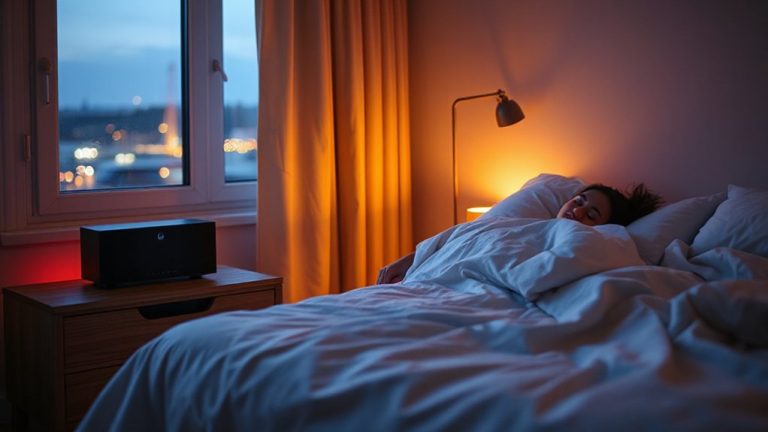
Creating A Safe, Comfortable Bedroom Environment For Optimal Sleep Hygiene
Keep your bedroom cool, ideally between 60 to 67 degrees, using breathable cotton bedding or an adjustable electric blanket with auto shut-off. Block light with blackout curtains and reduce noise with soundproof windows or heavy drapes. Choose a medium-firm mattress-memory foam, latex, or innerspring-based on your sleep position, and pick bedding with a tight weave over high thread count. Try washable blue-toned linens and a timed lavender diffuser to gently ease into restful nights. More details on optimizing each element follow.
Notable Insights
- Maintain a bedroom temperature between 60 to 67°F using fans, ventilation, or HVAC systems for optimal thermal regulation.
- Minimize light and noise with blackout curtains, soundproof windows, or heavy drapes to support uninterrupted sleep cycles.
- Choose a supportive mattress with medium firmness and breathable bedding like cotton or bamboo for comfort and temperature control.
- Reduce clutter by clearing surfaces, storing items out of sight, and using organizers to create a calming, stress-free sleep environment.
- Use calming colors like soft blue and scents like lavender via diffusers to promote relaxation and improve sleep quality.
Keep Your Bedroom Cool for Better Sleep
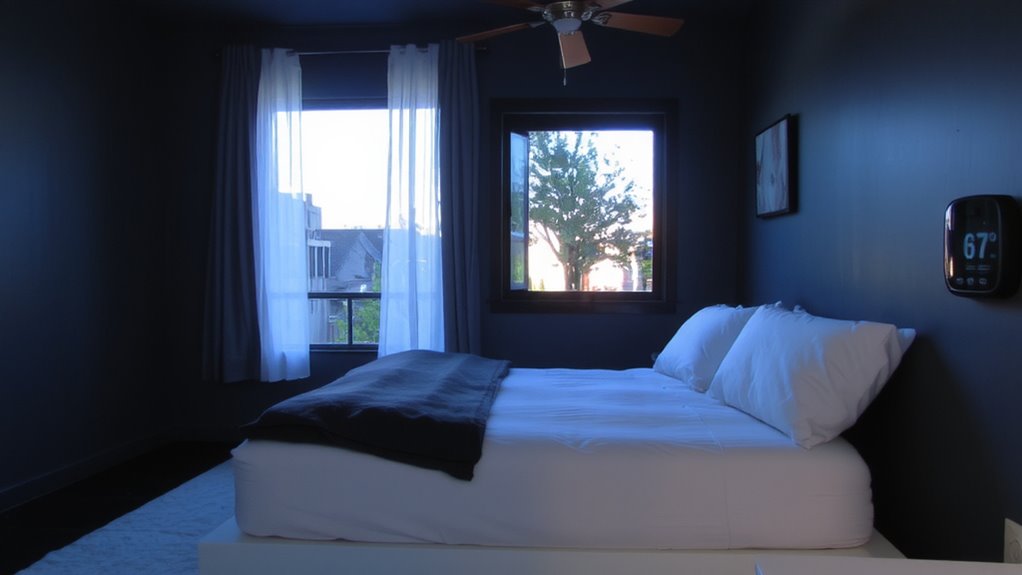
While your body naturally cools down as bedtime approaches, keeping your bedroom at the right temperature can make a real difference in how quickly you fall asleep and how well you stay asleep. Most adults sleep best in a cool room, typically between 60 and 67 degrees Fahrenheit. Proper bedroom ventilation helps maintain this by allowing fresh air to circulate and excess heat to escape. Good airflow also supports thermal regulation, preventing night sweats or chills. Consider using fans, open windows, or HVAC systems with programmable settings to stabilize the climate. Breathable bedding materials like cotton or moisture-wicking fabrics can enhance thermal regulation. If you use sleep aids like electric blankets, opt for models with adjustable heat and automatic shut-off. A well-ventilated, consistently cool environment reduces disruptions and aligns with healthy sleep patterns, especially for those managing sleep disorders. For more targeted climate control, consider investing in the best sleep temperature regulators, which actively manage bed or room temperature for optimal cool comfort.
Reduce Light and Noise for Deeper Rest
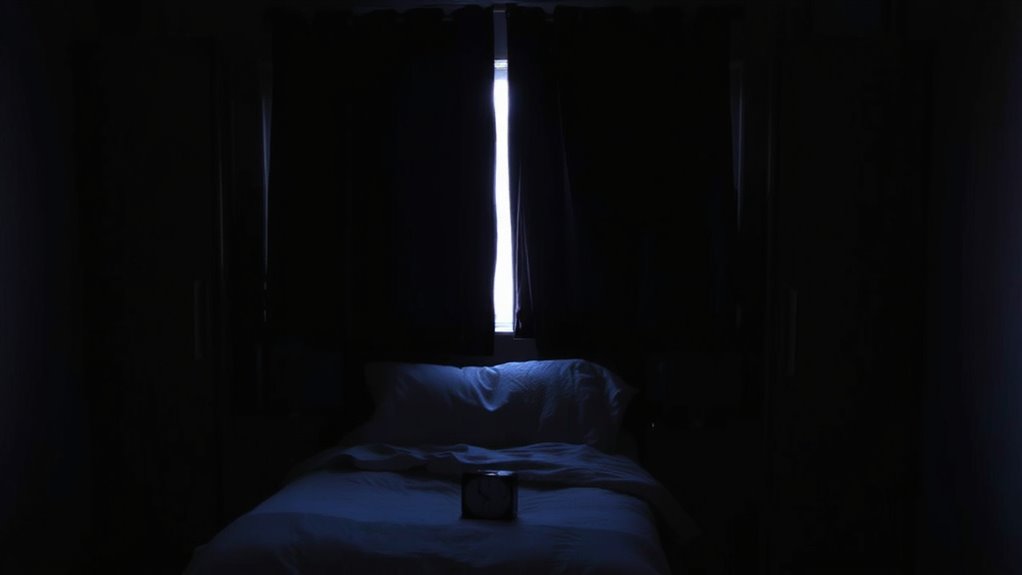
How well do you sleep when streetlights bleed through your curtains or a neighbor’s dog barks at 2 a.m.? Light and noise disrupt sleep cycles, making it harder to reach deep, restorative stages. To minimize disturbances, consider installing blackout curtains-they block nearly all outside light and add a thin layer of insulation. For noise, look into soundproof windows; their tight seals and layered glass markedly reduce outside sounds. While they cost more upfront, their long-term impact on sleep quality can make them worth it. Some brands offer trial periods or warranties, letting you test performance risk-free. You don’t need to eliminate all sensory input, but reducing excess helps. Even partial improvements, like heavy curtains or window inserts, can make a measurable difference in how rested you feel. Try one change at a time to see what works best for your space. For maximum darkness and noise reduction, choose high-quality best blackout curtains designed with dense, multi-layered fabric.
Pick a Supportive Mattress and Cozy Bedding

A good night’s sleep often starts with the foundation beneath you-a mattress that supports your body and bedding that keeps you comfortable. Your choice in mattress firmness matters: too soft may not support your spine, while too firm could create pressure points. Medium firmness often works well for most sleepers, but your preferred position-side, back, or stomach-should guide your pick. Memory foam contours closely, while latex offers responsive support; innerspring models add airflow but may feel less cushioned. Consider trial periods and warranties when buying, so you can test comfort risk-free. For bedding materials, opt for breathable fabrics like cotton or bamboo, which help regulate temperature. Avoid synthetics that trap heat. Thread count isn’t everything-focus on fabric quality and weave. High-quality bedding complements your mattress, enhancing comfort without distracting from support. For sleepwear that enhances nighttime comfort, consider the best pajamas for sleep, which are designed with soft, breathable fabrics to support restful sleep.
Declutter Your Bedroom to Clear Your Mind
You’ve picked a supportive mattress and cozy bedding that suit your sleep style, but comfort doesn’t stop at what’s under you-it also depends on the space around you. Cluttered surfaces and crowded floors can overwhelm your senses, making it harder to relax. By removing unnecessary items, you create room for mental clarity and emotional calm. Start by clearing nightstands, tucking cords, and storing clothes out of sight. Use bins or drawers to organize small items-this reduces visual noise and supports focus. A tidy space improves your ability to wind down, which is especially helpful if you struggle with sleep onset or restlessness. Research links organized environments to lower stress and better sleep quality. Think of your bedroom as a retreat, not a storage zone. You don’t need a full renovation-small, consistent changes offer real benefits. Give yourself the chance to rest in a space that supports both physical and mental recovery.
Calm Your Senses With Sleep-Boosting Colors and Scents
The colors and scents in your bedroom do more than set the mood-they can shape your body’s readiness for sleep. Opt for blue hues on walls or bedding, as studies show they slow heart rate and cue relaxation. Complement this with a lavender scent using a diffuser or pillow spray; research links it to improved sleep quality and reduced anxiety. These sensory choices support natural circadian rhythms without dependency risks.
| Feature | Benefit |
|---|---|
| Blue hues | Lower stress, promote calm focus |
| Lavender scent | Enhance slow-wave sleep, ease tension |
| Essential oil diffusers | Adjustable intensity, no residue |
Choose washable linens in soft blue tones and a diffuser with timer settings for consistent use. Most quality diffusers come with a 1-year warranty. Try this combo for at least two weeks to assess improvements in sleep onset and depth.
On a final note
You can improve sleep by adjusting your bedroom’s temperature, light, and noise levels. Choose a supportive mattress and soft bedding that suit your comfort needs, and keep the space tidy to reduce mental clutter. Soft colors and calming scents may help relax your senses. Consider trying different options-many products offer trial periods or warranties-so test what works best for your sleep routine and needs.