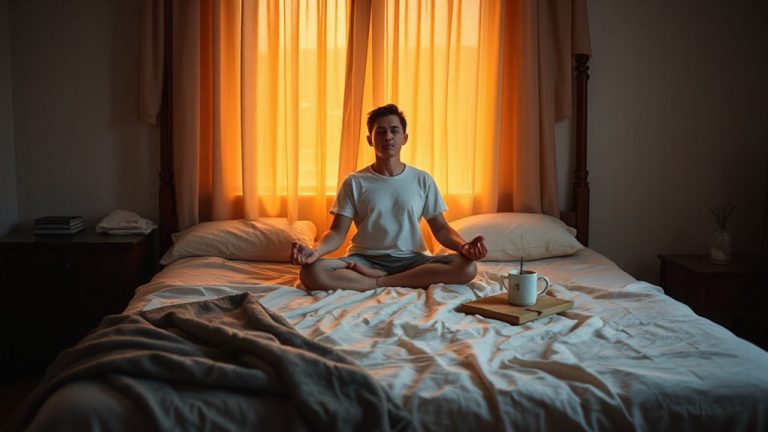
Create a Bedtime Routine That Works: Practical Tips for Managing Insomnia Naturally
Set a consistent bedtime and wake time, even on weekends, to stabilize your body clock. Avoid screens an hour before bed to prevent melatonin disruption-use night settings if needed. Reserve your bedroom for sleep and intimacy, keeping it cool, dark, and quiet. Practice deep breathing or guided imagery to quiet your mind. Avoid late snacks, stress, and intense content at night. Stick to these habits to naturally support better sleep. There’s more to discover about fine-tuning your routine for lasting results.
Notable Insights
- Stick to a consistent sleep schedule by going to bed and waking up at the same time daily, even on weekends.
- Get morning sunlight within an hour of waking to regulate your circadian rhythm and stop melatonin production.
- Avoid screens one hour before bed to minimize blue light exposure that suppresses melatonin.
- Use your bedroom only for sleep and intimacy, keeping it cool, dark, and free of electronics.
- Practice relaxation techniques like deep breathing or guided imagery to calm your mind before sleep.
Reset Your Body Clock With a Consistent Sleep Schedule
While your body’s internal clock can shift over time, sticking to a consistent sleep schedule helps reset it more effectively. Going to bed and waking up at the same time every day, even on weekends, builds a reliable rhythm. This consistency improves sleep quality and makes it easier to fall and stay asleep. Exposing yourself to morning sunlight within an hour of waking supports this process by signaling your brain to end melatonin production and increase alertness. Natural light exposure helps fine-tune your circadian rhythm. Though some bedtime flexibility is possible-like shifting by 30–60 minutes on special occasions-large variations disrupt progress. Prioritizing regularity over occasional convenience leads to better long-term results. There’s no warranty on quick fixes, but consistent habits offer reliable performance. Give this approach at least three weeks to assess its effect.
Ditch Screens an Hour Before Bed to Ease Insomnia
Since your brain responds strongly to light exposure, turning off screens an hour before bed helps signal that it’s time to wind down. Blue light from phones, tablets, and TVs suppresses melatonin, the hormone that regulates sleep, making it harder to fall asleep. By reducing screen use, you support better sleep hygiene and allow your body to shift naturally into rest. You don’t need to cut out all evening tech-just shift to activities like reading or light stretching. If you rely on devices at night, consider blue light filters or apps with night settings, though these aren’t a full substitute. This small change is easy to try, with no cost or side effects. Over time, it may improve how quickly you fall asleep and how well you stay asleep. Ditching screens is a simple, evidence-based step to manage insomnia and strengthen your routine.
Make Your Bedroom a Sleep-Only Zone
Why does your bedroom feel more like a multitasking hub than a restful escape? Your brain links spaces to habits, so if you work, scroll, or argue in bed, it won’t expect sleep there. To improve sleep hygiene, make your bedroom environment dedicated to rest only. Remove desks, TVs, and exercise gear when possible. Use the bed only for sleep and intimacy-this strengthens mental cues for rest. Keep the space cool, dark, and quiet. Even small changes train your brain over time. Consider the table below to assess your space:
| Item | Good for Sleep? | Switch To |
|---|---|---|
| Laptop on bed | No | Desk in another room |
| Bright alarm | No | Dim, red-light display |
| Workout gear | No | Closet or living area |
| Reading light | Yes (warm) | Bedside with warm bulb |
Incorporating sleep-friendly room decor can further enhance your bedroom’s ability to promote restful sleep.
Quiet Your Mind With Simple Relaxation Habits
What happens when your thoughts race just as you’re trying to fall asleep? You’re not alone-many people with insomnia struggle to quiet their minds. Simple relaxation habits can make a real difference. Try deep breathing: inhale slowly through your nose for four counts, hold for seven, then exhale through your mouth for eight. This technique helps calm your nervous system. Guided imagery is another tool-picture a peaceful scene, like waves gently rolling on a beach, and focus on the details. Doing this regularly trains your brain to shift from alertness to relaxation. These methods are easy to learn, require no special equipment, and have no side effects. You can find free guided audio tracks online or through trusted apps. With consistent practice, deep breathing and guided imagery may help you fall asleep faster and reduce nighttime wakefulness. Give them a try for a week or two to see what works for you.
Stop These Nighttime Habits That Worsen Insomnia
How often do you scroll through your phone or sip caffeine late into the evening, not realizing these habits could be keeping you awake? Small choices like late night snacking or ignoring emotional stress disrupt your body’s ability to wind down. These behaviors interfere with sleep onset and reduce sleep quality over time.
| Habit | Effect on Sleep |
|---|---|
| Phone use before bed | Suppresses melatonin, delays sleep |
| Late night snacking | Causes digestion issues, nighttime wakefulness |
| Ignoring emotional stress | Increases racing thoughts, prolongs sleeplessness |
| Watching intense TV | Raises alertness, heightens anxiety |
| Irregular bedtime | Confuses internal clock, reduces deep sleep |
Recognizing these patterns helps you make informed adjustments. You don’t need sleep aids if you address root causes. Start by replacing harmful habits with neutral or rest-supportive ones. Consistent small changes improve sleep resilience. Adding a best sleep mask to your routine can further enhance darkness and signal your brain that it’s time to rest.
Eat and Drink Smart in the Evening for Better Sleep
Ever wonder why you toss and turn shortly after dinner? What you eat and drink in the evening directly affects your sleep quality. Caffeine timing matters-avoid it at least 6 to 8 hours before bed since it lingers in your system and can delay sleep onset. You don’t have to give it up completely, just plan it earlier in the day. Heavy meals and spicy foods close to bedtime may trigger indigestion, so aim to finish dinner 2–3 hours before sleeping. Consider herbal tea choices like chamomomile or passionflower, which some studies suggest may support relaxation. Not all herbal teas are equal, so check ingredients and opt for caffeine-free blends. Alcohol might make you drowsy at first, but it disrupts sleep later in the night. Smart evening choices support steadier sleep cycles and better overall rest. For a natural way to wind down, try sipping one of the best sleep teas known for promoting restful sleep.
On a final note
Stick to a regular sleep schedule, even on weekends, to strengthen your body’s clock. Limit screen time before bed and keep your bedroom quiet, cool, and screen-free. Relax with deep breathing or light reading to quiet your mind. Avoid late meals, caffeine, and alcohol, which can disrupt sleep. Try these changes for several weeks-consistency matters most. If insomnia persists, talk to a doctor to review possible sleep disorders or safe options for support.