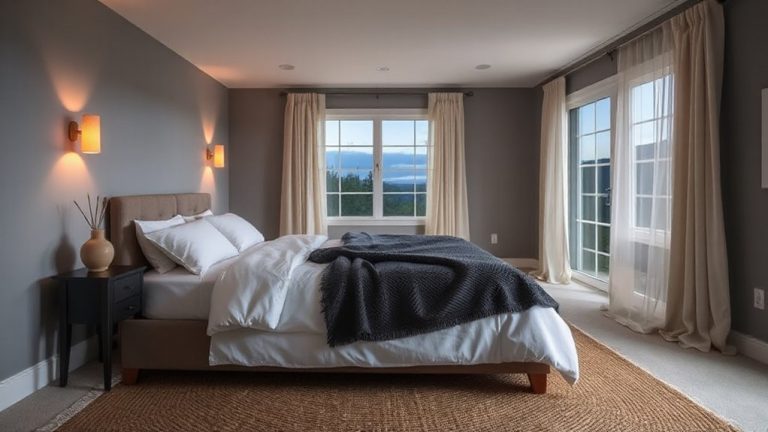
How To Create the Perfect Bedroom Layout For Optimal Sleep Hygiene And Maximum Restfulness
Position your bed with the head against a solid wall, centered opposite the door but not in direct line with it, and avoid placing it under a window or sharing a wall with noisy appliances. Use blackout curtains with side seals to block light completely, and keep the room between 60–67°F with breathable, natural bedding. Reduce noise with heavy rugs and weatherstripping, and move electronics like phones and routers away from the bed to limit EMFs. Choose calming colors like soft greens or warm grays, and incorporate wood tones and natural materials such as cotton or wool. Keep surfaces clutter-free and opt for battery-powered alarms. A well-designed space supports deeper rest and helps regulate your sleep cycle over time-small changes can make a noticeable difference in how you feel each morning.
Notable Insights
- Position the bed centered on the wall opposite the door, avoiding alignment with the door and placement under windows.
- Maintain symmetry with matching nightstands and lamps on both sides of the bed for visual balance and function.
- Use blackout curtains with side tracks to eliminate light leaks and ensure complete darkness for better melatonin production.
- Keep the bedroom between 60–67°F using a programmable thermostat and breathable, natural-fiber bedding for optimal comfort.
- Reduce noise and EMF exposure by removing electronics, using sound-absorbing materials, and choosing battery-powered alarms.
Place Your Bed for Better Sleep (Avoid These Layout Mistakes)
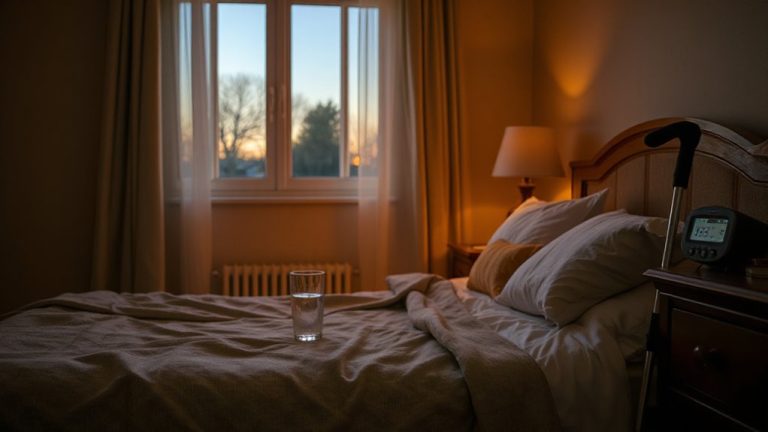
You’d be surprised how much your bed’s position affects your sleep quality, and avoiding a few common layout mistakes can make a real difference. Proper bed placement helps support consistent rest and may reduce discomfort linked to poor sleep posture. Ideally, center your bed on the wall opposite the door, but not directly in line with it-this promotes a sense of safety and balance. Aim for bedroom symmetry by placing nightstands and lamps evenly on both sides, which creates visual harmony and reduces mental clutter. Avoid positioning your bed under a window, where drafts or light can disrupt rest, or sharing a wall with noisy appliances. Keep space around all sides for easy movement, and guarantee your headboard is against a solid wall. These practical adjustments support better sleep hygiene without requiring costly sleep aids or major renovations.
Block Light Completely for Natural Sleep Cycles
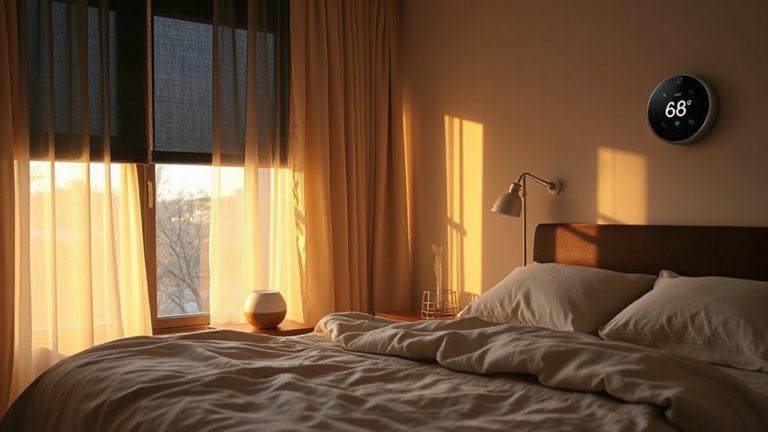
Once your bed is in the right spot, attention to light exposure becomes the next step in shaping a restful environment. Light affects your sleep cycle, so blocking it completely supports natural melatonin release. Blackout curtains are a top choice-they’re designed with dense, layered fabric that stops outside light. For better performance, pair them with light sealing techniques like side tracks or wall-mounted rails that close gaps. Even small leaks from windows or doors disrupt sleep quality over time. Consider your room’s layout when selecting options, since window size and direction matter. Top-performing options often include best bedroom curtains with integrated blackout technology and thermal insulation.
| Feature | Benefit |
|---|---|
| Blackout curtains | Reduce streetlight and dawn glow |
| Light sealing | Prevents gap light, boosts consistency |
| Thermal lining | Adds insulation, improves performance |
Set the Ideal Temperature for Deep, Restful Sleep
Most adults sleep best when the bedroom stays between 60 and 67 degrees Fahrenheit, a range that supports natural drops in core body temperature needed for deep, restful sleep. You can maintain this zone by setting your ideal thermostat before bed, ensuring consistency night after night. Cooler air helps regulate your body’s sleep cycle, potentially improving both sleep duration and quality over time. If you live in a climate with seasonal shifts, consider a programmable thermostat to automatically adjust temps. For those sensitive to cold or heat, breathable bedding and moisture-wicking fabrics offer flexibility without changing the room setting. Research links stable, cooler environments to fewer nighttime disruptions and better recovery during sleep stages. Even small adjustments-just a few degrees-can influence how deeply and long you sleep. Experiment over a week to find your personal sweet spot. For enhanced climate control, consider using best room temperature devices designed specifically to promote optimal sleep conditions.
Reduce Noise and Limit Sleep-Disrupting EMFs
What if the sound of a humming refrigerator or the glow of a digital clock were secretly disrupting your sleep? Noise and electromagnetic fields (EMFs) can quietly interfere with your rest. To reduce unwanted sound, consider adding sound insulation like heavy curtains, rugs, or weatherstripping around doors-simple upgrades that block outside noise. For low-frequency hums, check nearby appliances or electrical panels. Limit EMF exposure by moving electronics away from your bed, especially Wi-Fi routers, cell phones, and smart devices. Use emf shielding materials, such as special paint or fabric, if you live near power lines or have high readings. Opt for battery-powered alarms instead of plug-in clocks near your head. These changes support healthier sleep cycles by reducing disruptions. Try one adjustment at a time and track how you feel-small steps often lead to better rest over time. For persistent noise issues, consider using best noise-masking picks to create a more consistent and soothing sleep environment.
Use Calming Colors and Natural Materials in Your Bedroom
A well-chosen color palette and natural materials can make your bedroom feel more restful, supporting better sleep over time. You’ll want to choose calming colors like soft greens, warm grays, or Earthy tones, which help lower stress and prepare your mind for sleep. These shades mimic natural environments and work well with natural light, reducing visual stimulation at night. Pair them with wooden textures in your flooring, bed frame, or nightstands to add warmth and stability to the space. Solid wood furniture, especially from sustainably sourced materials, tends to last longer and off-gas less than synthetic alternatives. Wool, cotton, and linen bedding further support a natural, breathable sleep environment. You don’t need a full renovation-start with small changes, like paint or a wooden accent piece, and observe how your sleep responds over a few weeks.
Remove Electronics and Clutter for a Peaceful Sleep Space
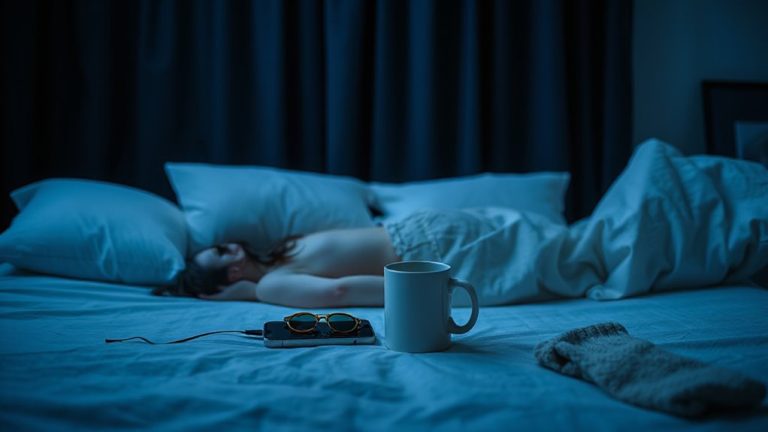
While you might be tempted to keep your phone nearby or leave the TV on low, removing electronics from the bedroom can make a noticeable difference in how quickly you fall asleep and how deeply you rest. Screens emit blue light, which interferes with melatonin production, making it harder to wind down. Committing to a digital detox at least an hour before bed supports better sleep hygiene. Likewise, clutter disrupts focus and increases stress, so embracing minimalist décor helps create a calm environment. Clear surfaces, simple storage solutions, and only essential furniture reduce visual noise. Choose a space free of work materials, laundry piles, or unused gadgets. This layout strategy supports your body’s natural sleep cycle and minimizes disruptions. Over time, fewer electronics and cleaner spaces can improve both sleep onset and quality. Consistency matters-make the bedroom a dedicated rest zone. Try these changes for at least two weeks to evaluate their effect on your restfulness.
On a final note
You’ll sleep better when your bed faces away from the door and windows, reducing subconscious stress. Blackout curtains and cool temperatures help maintain natural sleep cycles. Use soft, natural materials and calming colors to support relaxation. Unplug electronics to cut down on noise and EMFs. A tidy space improves airflow and mental calm. Try small changes first-test one adjustment for a week before adding another. Most sleep aids work best alongside these habits, not instead of them. Look for products with trial periods so you can return what doesn’t suit your rest.