Sleep Apnea: Understanding the Link Between Breathing Disorders and Cardiovascular Health
You’re more likely to strain your heart when sleep apnea causes breathing to stop repeatedly at night. Each pause drops oxygen, raises blood pressure, and stresses your cardiovascular system without you knowing. This strain increases risks for hypertension, heart attacks, and strokes over time. Treatments like CPAP machines keep your airway open, improving oxygen flow and reducing harm. Recognizing symptoms like snoring or gasping can guide you toward testing and solutions that protect your heart health-especially when used consistently throughout sleep. Learning how treatment works could help you act sooner.
Notable Insights
- Sleep apnea causes repeated breathing pauses during sleep, leading to oxygen drops that strain the cardiovascular system.
- Intermittent hypoxia from apnea events triggers sympathetic activation, increasing heart rate and blood pressure repeatedly overnight.
- Chronic sleep apnea is linked to hypertension due to disrupted nocturnal blood pressure dipping and elevated stress hormones.
- The condition raises heart attack and stroke risk through arterial damage, inflammation, and clot formation from low oxygen levels.
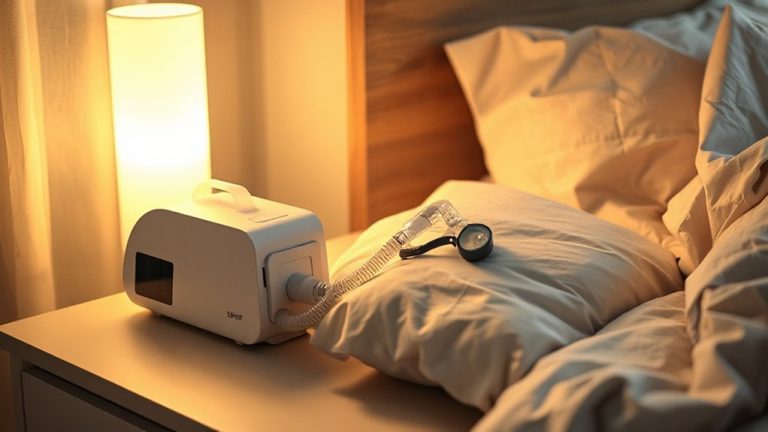
- CPAP therapy reduces cardiovascular strain by maintaining airway patency, stabilizing oxygen, and lowering nighttime blood pressure spikes.
What Sleep Apnea Is and How It Disrupts Breathing
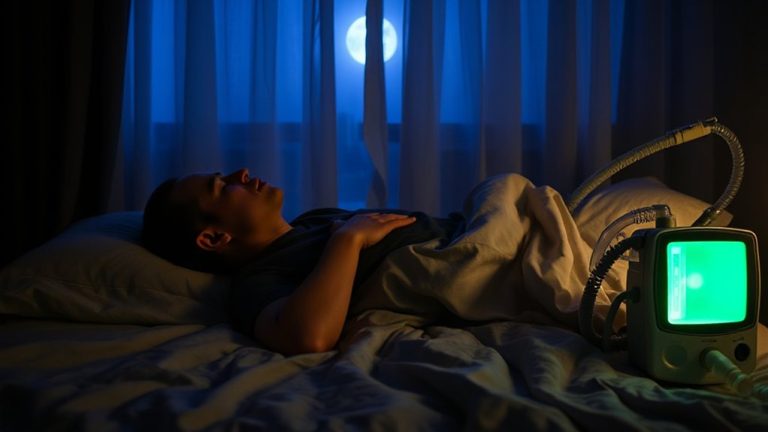
Sleep is supposed to restore your body, but with sleep apnea, that rest can turn into a cycle of interrupted breathing. You might not realize it, but those breathing interruptions happen when your airway collapses or gets blocked during sleep. Each pause can last seconds to minutes, often followed by gasps or snorts as you start again. These cycles can occur dozens of times per night, disrupting sleep quality. More importantly, each pause causes oxygen drops, straining your body’s systems. Over time, untreated symptoms affect focus, energy, and health. Recognizing the pattern-snoring, choking sensations-is key. Sleep studies help confirm it. Treatments like CPAP machines keep airways open, improving breathing and oxygen levels. Many devices offer adjustable pressures, comfort settings, and trial periods. Warranties and sleep coaches often come included, making it easier to adapt. You’ll want to weigh comfort, noise, and ease of use when choosing. For some, best mouth guards for sleep apnea can be an effective alternative or supplement to traditional therapy.
How Sleep Apnea Strains Your Heart
Every time your breathing stops during the night, your heart feels the impact. Oxygen fluctuations stress your cardiovascular system, forcing it to work harder. These abrupt changes can lead to heart rhythm interruptions, disrupting normal function over time. Your heart endures repeated strain, even if you’re unaware. Below are key effects linked to this stress:
| Factor | Effect on Heart | Frequency in Sleep Apnea |
|---|---|---|
| Oxygen fluctuations | Increases workload | Occurs with each apnea event |
| Heart rhythm interruptions | Alters normal beats | Common, especially at night |
| Sympathetic activation | Raises heart rate | Repeated nightly |
| Intrathoracic pressure shifts | Impacts chamber function | With every breathing pause |
| Chronic intermittent hypoxia | Contributes to remodeling | Over months or years |
Recognizing these patterns helps guide choices about screening, lifestyle changes, or using tested interventions. Understanding your risk supports informed decisions about sleep aids or medical follow-up.
Sleep Apnea and High Blood Pressure
When breathing interruptions occur through the night, your blood pressure doesn’t get the usual chance to dip-that gentle nightly reset your body relies on. Instead, breathing pauses repeatedly jolt your system, keeping blood pressure elevated. These disruptions throw off normal sleep patterns, reducing restorative deep sleep and increasing stress hormones. Over time, this strain can contribute to chronic high blood pressure. You might not notice every pause, but your cardiovascular system feels the impact. Treating sleep apnea often helps stabilize both breathing and blood pressure. Devices like CPAP machines keep airways open, improving sleep patterns and reducing nighttime spikes. Consistent use leads to better outcomes, and many models now include comfort features, adjustable settings, and built-in humidifiers. Most come with a trial period and warranty, letting you test effectiveness. Monitoring changes in your sleep and blood pressure helps gauge progress.
Sleep Apnea’s Heart Attack and Stroke Risk
Because your breathing repeatedly stops and starts during the night, oxygen levels in your blood can drop, putting extra strain on your heart and blood vessels. This ongoing oxygen deprivation makes your heart work harder, increasing your risk for a heart attack. Each time your breathing pauses, your body reacts with stress, raising blood pressure and heart rate. Over time, this strain can damage arteries and promote clot formation. Also, low oxygen levels may trigger brain inflammation, which is linked to stroke. Chronic brain inflammation can affect blood flow and weaken vessel walls. You don’t have to accept this risk-many people see improvement using CPAP therapy, which keeps airways open. Devices like nasal masks or oral appliances are built for comfort and consistent use. Most come with trial periods and warranties, so testing one is low-risk. Treating sleep apnea helps reduce these dangers and supports long-term health. For those who travel frequently, portable options like best CPAP travel machines ensure therapy continuity without disruption.
Common Signs You Might Have Sleep Apnea
You may not realize you’re struggling to breathe at night, but your body shows signs-often loud ones. Frequent snoring episodes, sometimes followed by gasping or choking sounds, are key warnings. Your partner might notice pauses in your breathing while you sleep. These interruptions, even if brief, reduce oxygen flow and disrupt sleep quality. You may then face persistent daytime fatigue, no matter how long you sleep. That tiredness can affect focus, mood, and reaction time. Other signs include morning headaches, dry mouth upon waking, and restless sleep. High blood pressure or heart issues might worsen, given the stress these breathing lapses place on your body. Recognizing these symptoms early helps you decide whether to explore sleep studies or discuss concerns with a doctor. Tracking sleep patterns and symptoms gives you clearer information for next steps. A custom-fitted sleep apnea mouthpiece can be an effective treatment option for managing mild to moderate obstructive sleep apnea.
Diagnosis and Treatment to Reduce Heart Risk
How do you know if your symptoms point to something serious? If you’re often tired, snore loudly, or wake up gasping, it might be more than poor sleep-these could be signs of sleep apnea, which raises your heart risk. Seeing a doctor for a sleep study is the best way to confirm it. Once diagnosed, treatment focuses on keeping your airway open. CPAP therapy is a common choice; it uses gentle air pressure to prevent breathing lapses, improving both sleep and heart health. Most machines are quiet and come with masks that fit snugly but comfortably. You’ll usually get a trial period to adjust. Alongside CPAP therapy, lifestyle changes like losing weight, avoiding alcohol at night, and sleeping on your side can make a real difference. Combining both approaches gives you the best chance to lower cardiovascular strain and feel more alert daily.
On a final note
You’re at a better starting point once you recognize sleep apnea’s impact on your heart. It strains your cardiovascular system and raises blood pressure, increasing risks for heart attack or stroke. If you snore loudly or feel tired despite full sleep, talk to your doctor. Diagnosis involves a sleep study, and treatment often includes CPAP therapy or oral devices. Many find relief quickly, with improved energy and heart health. Most devices offer trial periods, so test options to see what works.