Managing Jet Lag With Melatonin: a Practical Guide for Frequent Travelers
Take 0.5 to 3 mg of melatonin 30 to 60 minutes before bedtime at your destination to help reset your internal clock, especially when flying east. Your body responds best when you pair it with smart light exposure-seek morning sunlight and avoid bright screens at night. Stick to a consistent dose, stay hydrated, and keep your sleep space dark and cool. Lower doses often work just as well with fewer side effects. There’s more to fine-tuning your approach for smoother trips.
Notable Insights
- Take 0.5–3 mg of melatonin 30–60 minutes before bedtime at your destination to align your internal clock.
- For eastward travel, start taking melatonin earlier in the evening a few days before departure.
- Use morning sunlight exposure at your destination to reinforce circadian rhythm reset, especially after eastward flights.
- Avoid bright and blue light at night; use dim, warm lighting to enhance melatonin’s effectiveness.
- Combine melatonin with hydration, dark sleep environments, and consistent timing for optimal jet lag relief.
How Melatonin Fights Jet Lag
While your body’s internal clock struggles to adjust after crossing time zones, melatonin can help signal when it’s time to sleep. It supports your biological rhythm by mimicking the natural rise of melatonin that occurs at dusk, helping your body recognize nighttime in the new time zone. When taken correctly, it can reduce the time needed for sleep onset, making it easier to fall asleep earlier if you’re traveling east, or adjust to a delayed schedule when going west. Melatonin doesn’t act as a sedative but instead gently guides your internal clock. This makes it different from many sleep aids that target brain receptors more forcefully. For jet lag, low doses (0.5–3 mg) are often effective. Most tablets dissolve quickly, with effects starting in about 30 minutes. Look for brands with third-party testing to guarantee purity. Always check with a healthcare provider if you have existing sleep disorders or take other medications.
When to Take Melatonin for Jet Lag
How do you know when to take melatonin for jet lag? The key is ideal timing-take it about 30 to 60 minutes before your target bedtime in the destination’s time zone. This helps signal to your body that it’s time to wind down, aligning your internal clock with local time. If you’re traveling east, start adjusting a few days before departure by taking melatonin earlier in the evening. For westward trips, delay intake closer to nighttime. Maintain dosage consistency each night during travel and after arrival to support rhythm stabilization. Avoid bright light after dosing, as it can interfere with melatonin’s effect. Shift gradually if crossing multiple time zones, and continue use for a few nights until sleep feels natural. Consistent scheduling enhances effectiveness, making adjustment smoother without abrupt changes. For best results, choose a high-quality melatonin supplement for jet lag.
How Much Melatonin to Take When Traveling
You’ve got the timing down-knowing when to take melatonin makes a real difference in syncing your body to a new time zone. Now, let’s talk about melatonin dosage guidelines. Most adults start low, around 0.5 to 1 mg, because even small amounts can support sleep onset. Higher doses aren’t always better and may lead to grogginess. Below are common dose ranges and effects to help you decide:
| Dose (mg) | Onset Time | Best For |
|---|---|---|
| 0.5 | 30–45 min | Mild jet lag, sensitive users |
| 1.0 | 30 min | General use, first-time travelers |
| 3.0 | 20–30 min | Stronger effect, eastward travel |
| 5.0 | 20 min | Stubborn sleep onset, under guidance |
| 10.0 | 15–20 min | Not recommended for routine use |
Follow ideal timing strategies and adjust based on your response. Always consult a provider if you have sleep disorders.
Use Light to Beat Jet Lag Faster
What if you could reset your body clock without a pill? You can-through smart light exposure. Bright light is one of the strongest signals your brain uses to set its internal clock. When you travel across time zones, adjusting your light exposure can speed up circadian alignment. If you arrive in the morning, get outside in natural sunlight right away. That tells your body it’s time to be awake. If you land at night, avoid bright lights, especially blue light from screens, to help ease into sleep. Use dim, warm lighting instead. Morning light after eastward flights and evening light after westward flights helps your body adapt faster. Even on planes, adjusting screen brightness and choosing window shading helps. Combined with timing, light exposure gives you practical control over jet lag. It’s accessible, free, and works alongside your body’s natural rhythms. For situations when natural light isn’t available, a Top Light Therapy Lamps for Every Need can effectively simulate the required brightness to shift your circadian rhythm.
Pair Melatonin With These Jet Lag Habits
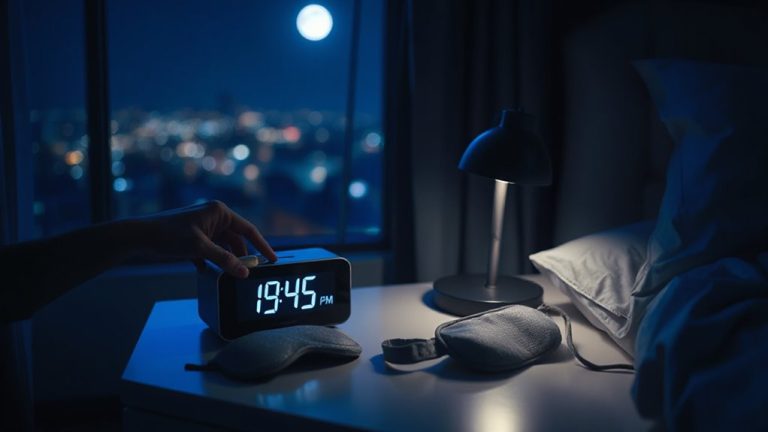
While light helps set your body’s clock, combining it with melatonin can improve your adjustment to a new time zone more effectively. You’ll want to time your melatonin dose properly-typically 30 to 60 minutes before your target bedtime at your destination. Pair this with smart hydration timing; staying well-hydrated during travel supports alertness and helps prevent fatigue, but reduce fluids close to bedtime to avoid disruptions. Consider your sleep environment, too: keep the room cool, dark, and quiet to support melatonin’s effects. Use earplugs or an eye mask if needed. Even slight changes in lighting or noise can delay sleep onset, so prepare the space ahead of time. These habits together-melatonin, light exposure, hydration timing, and a consistent sleep environment-create a reliable routine that eases the shift across time zones and improves sleep quality without relying solely on supplements. For even better results, consider combining melatonin with other effective sleep supplements backed by research.
Common Melatonin Mistakes to Avoid While Traveling
If you’re relying on melatonin to beat jet lag, taking it at the wrong time can delay your adjustment instead of helping. Getting the dosage timing right is critical-take it too early or too late, and your body’s internal clock won’t reset as intended. Most travelers benefit from taking melatonin 30 to 60 minutes before bedtime at their destination, but timing varies based on direction and time zones crossed. Avoid high doses; 0.5 to 3 mg is usually enough, and lower doses often work better with fewer side effects. Also, don’t overlook supplement quality-products vary widely in purity and accuracy of label claims. Look for third-party tested brands to guarantee consistency and safety. Poor-quality supplements may contain fillers or inconsistent melatonin levels, reducing effectiveness. Start with a low dose, monitor how you feel, and adjust carefully. Good habits and the right melatonin use improve sleep alignment without dependency.
On a final note
You can manage jet lag effectively by using melatonin wisely. Take 0.5 to 3 mg a few hours before bedtime at your destination, starting the day before or upon arrival. Combine it with smart light exposure-seek bright light in the morning and avoid it at night. Pair with good sleep habits: stay hydrated, stick to local time, and avoid caffeine. Most people find relief within a few days. Try melatonin for a short time, stop if side effects occur, and check with your doctor if you have concerns. There’s no long-term safety data, so use it as a short-term aid.