Harnessing Data From Wearable Devices to Improve Insomnia Treatment Outcomes
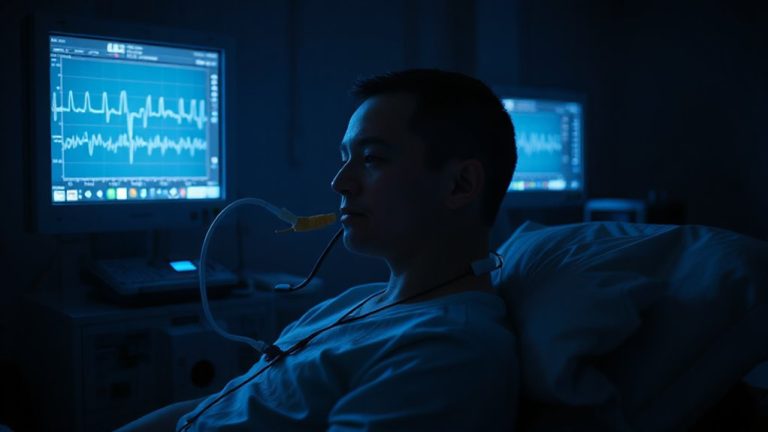
Your wearable tracks heart rate, movement, and temperature to spot insomnia triggers like stress or late screen use. It logs melatonin delays and sleep disruptions, helping tailor therapy to your patterns. While sleep scores give trends, they’re not perfect-use them alongside clinical advice. Sync data with CBT-I to adjust bedtimes and routines. High sleep efficiency and improving REM latency often signal progress. See how consistent tracking sharpens treatment over time.
Notable Insights
- Wearable devices track sleep metrics like heart rate variability and movement to identify insomnia triggers such as stress and delayed melatonin release.
- Continuous sleep data enables personalized therapy by revealing patterns like prolonged sleep onset and frequent nighttime awakenings.
- Sleep scores from wearables offer trend insights but lack polysomnography-level accuracy and should complement clinical evaluations.
- Integrating wearable data with CBT-I supports behavioral adjustments by linking objective sleep patterns to treatment progress.
- Key metrics like sleep efficiency and REM latency predict treatment success and guide timely therapy refinements.
How Wearable Devices Detect Insomnia Triggers
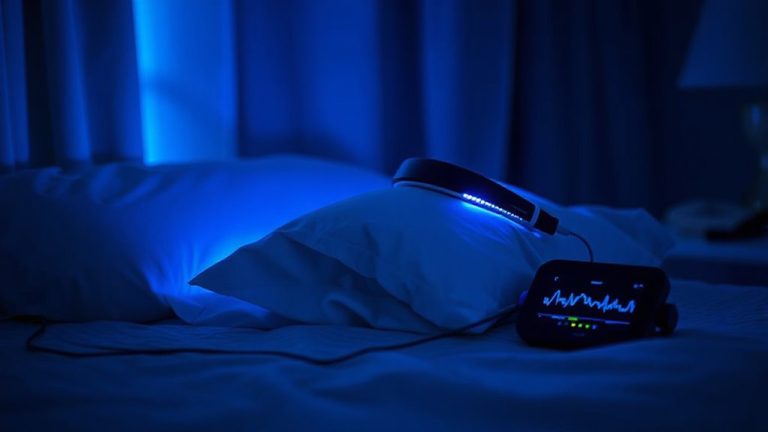
While you sleep, your wearable device quietly tracks key signals like heart rate variability, body movement, and skin temperature, using these to spot patterns linked to insomnia triggers. You can see how late light exposure-like from screens or bright room lighting-delays melatonin release, which the device logs alongside restlessness. Over time, it correlates high stress levels, detected through elevated heart rate and skin temp, with trouble falling asleep. Some wearables even sync with apps to map your daily routine, showing how afternoon caffeine or evening workouts might affect your rest. The data isn’t perfect, but with consistent use, trends become clear. Most devices offer a 30-day trial and waterproof construction, so you can wear them nightly. Performance varies by model, but many provide reliable baseline insights. This info helps you make informed choices about sleep aids, lifestyle changes, or when to consult a specialist. For those seeking accurate insights, choosing one of the best sleep-tracking smartwatches can significantly enhance data reliability and overall sleep analysis.
Using Wearable Data to Personalize Insomnia Therapy
What if your sleep data could help tailor a treatment plan just for you? Wearable devices track your sleep patterns nightly, offering insights that support therapy customization. When data accuracy is high, clinicians can adjust treatments based on your actual rest cycles, not just回忆. You might learn you wake often after midnight or take too long to enter deep sleep-details that shape better interventions. This personalized approach can guide choices about sleep aids, behavior changes, or therapy timing. Some devices even sync with apps your doctor uses, streamlining care. While not all wearables offer medical-grade tracking, those with validated sensors provide useful, consistent metrics over time. You’re able to see trends, test adjustments, and measure progress. With reliable input, therapy customization becomes more precise, helping you make informed decisions. It’s not a fix, but a tool-adding clarity to your path toward better rest. For those exploring options, the best sleep trackers combine accuracy and user-friendly features to support long-term sleep monitoring.
Are Wearable Sleep Scores Reliable for Insomnia?
How much can you really trust your wearable’s sleep score when dealing with insomnia? While these devices offer convenient insights, their data accuracy varies. Most track movement and heart rate to estimate sleep stages, but they can’t match clinical sleep studies. You might see trends over time, but don’t assume the numbers are exact. Data accuracy depends on how well the sensor reads your body signals, and sweat, fit, or movement can affect results. Plus, device variability means your sleep score on one brand might look very different on another. Some models are better tested than others, and updates can change how scores are calculated. If you’re using a wearable to monitor insomnia, treat the scores as general guides, not diagnoses. They may help you spot patterns, but they shouldn’t replace professional assessment or define your treatment path. For those considering a device, reviewing the best sleep tracking devices can help identify options with more reliable sensors and validated algorithms.
Integrating Tracker Data With CBT-I for Better Results
If you’re using a wearable to track your sleep, pairing that data with cognitive behavioral therapy for insomnia (CBT-I) can help you make more informed decisions about your sleep habits. Sleep tracking gives you objective insight, while CBT-I strengthens cognitive engagement through structured routines and thought patterns. Together, they create a clearer picture of progress and setbacks.
| Component | Role in Treatment | Benefit |
|---|---|---|
| Wearable Data | Tracks sleep duration, awakenings | Identifies patterns over time |
| CBT-I Techniques | Improves sleep drive, reduces anxiety | Builds long-term habits |
| Combined Use | Links behavior to sleep tracking | Enhances cognitive engagement |
You can adjust bedtime or routines based on real trends, not guesswork. This fusion supports personalized, evidence-based choices-helping you decide when to persist, adapt, or seek further support-all without promoting specific devices or therapies.
Which Sleep Metrics Predict Insomnia Treatment Success?
You’re already using wearable data alongside CBT-I to see how your habits influence sleep, but not all tracked metrics are equally helpful in predicting treatment outcomes. Sleep efficiency-the percentage of time in bed actually spent sleeping-consistently correlates with improvement. Higher sleep efficiency after a few weeks of therapy often signals better long-term response. REM latency, or the time it takes to enter REM sleep from sleep onset, also matters. Shorter REM latency may reflect deeper sleep regulation and often improves with successful treatment. While wearables estimate these values using movement and heart rate patterns, they’re not as precise as lab polysomnography, but useful for tracking trends over time. Don’t focus on single-night data; look for weekly averages. Pairing these metrics with symptom logs helps clarify what’s working. Use this feedback to refine bedtime routines and therapy adherence without overreacting to minor fluctuations.
On a final note
You can use wearable data to spot patterns linked to your insomnia, like restlessness or irregular sleep timing. These insights, when shared with a clinician, help tailor treatments such as CBT-I. While sleep scores offer guidance, they’re best combined with professional evaluation. Choose devices with clinically validated metrics and consider warranty or trial options. Track consistently for several weeks to gather useful trends, and always weigh device feedback alongside how you feel during the day.