Smart Mattresses That Monitor Spinal Alignment: Sleep Number vs Eight Sleep
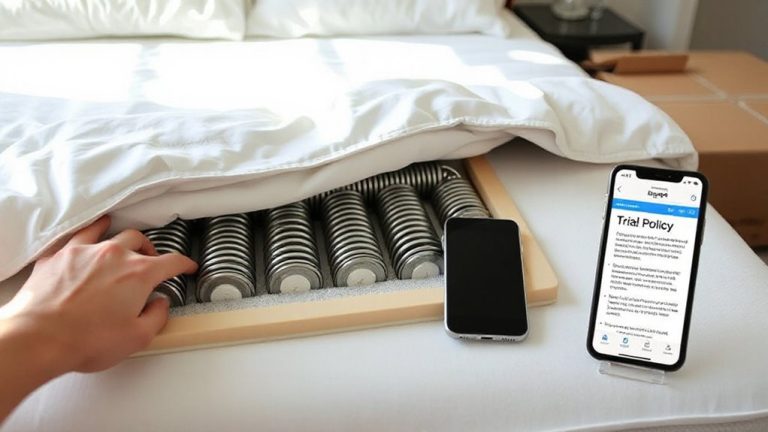
Your spine needs proper alignment all night, and smart mattresses with built-in sensors help by tracking your back position in real time. They adjust firmness in specific zones to support your spine, reduce pressure, and limit tossing and turning. Models like Sleep Number 360 iLE and Eight Sleep Pod Pro use motion and biometric sensors to respond to your movements, sync data to an app, and offer 100-night trials with 10–15 year warranties-giving you time to see how well they work for your sleep. You’ll find details on how each system adapts to your body’s needs just ahead.
Notable Insights
- Smart mattresses use built-in sensors to monitor real-time spinal alignment during sleep.
- Sensors detect posture changes and automatically adjust firmness to support a neutral spine.
- Real-time data syncs to apps showing sleep posture trends and breathing patterns.
- Models like Sleep Number 360 iLE and Eight Sleep Pod Pro offer dynamic spinal support.
- Mattresses combine pressure-relieving materials with sensor technology for personalized comfort.
Why Spinal Alignment While You Sleep Actually Matters
Why does how you lie at night matter so much? Because your spine doesn’t just rest when you do-misalignment can worsen spinal health over time. If you wake with stiffness or aches, poor posture during sleep may be the cause. Proper spinal alignment keeps your back in a neutral position, reducing strain on muscles and joints. This supports long-term posture correction, especially if you spend hours seated during the day. A mattress that encourages alignment helps distribute weight evenly, easing pressure points. You don’t need medical issues to benefit-many people improve sleep quality simply by adjusting their sleep posture. Look for designs that specifically support the natural curve of your spine. Some models even offer trial periods, so you can test comfort and support risk-free. Check warranty length and construction details when comparing options. Good spinal support at night isn’t a luxury-it’s a practical step toward better overall well-being.
How Smart Mattresses Monitor Your Back Position at Night
While you sleep, smart mattresses use built-in spinal sensors to track your back’s position in real time, adjusting support where needed. These sensors continuously monitor your sleep posture, detecting subtle shifts in alignment throughout the night. Using advanced motion detection, the mattress identifies when you change positions and responds by firming or softening specific zones to maintain proper spinal balance. The system works quietly beneath you, embedded within layers of responsive foam or adjustable air chambers. Data collected overnight can sync to an app, showing patterns in your movement and posture over time. This feedback helps identify possible issues like prolonged strain or restless sleep. Some models offer trial periods and warranties, so you can test comfort and performance risk-free. With reliable motion detection and consistent posture tracking, smart mattresses give you actionable insights to improve sleep quality without disrupting your rest.
Must-Have Features for Real Spinal Support and Adjustment
You’re already getting real-time feedback on your back position thanks to spinal sensors and responsive materials, but for long-term support, certain features make a bigger difference in how well your mattress adapts to your body. Look for an ergonomic design that maintains natural spinal alignment whether you sleep on your back, side, or stomach. This kind of structure supports your spine’s curves without forcing it into awkward positions. Pressure relief is just as critical-high-density memory foam or adaptive latex layers cushion hips and shoulders, reducing strain. Together, these features help prevent discomfort and improve sleep quality over time. A solid warranty and sleep trial let you test these benefits risk-free. Make sure the mattress balances responsiveness with enough give, so it adjusts smoothly to your shape night after night. Back sleepers with chronic pain may benefit most from models specifically designed for best mattresses for back sleepers with back pain.
How Your Mattress Uses Sensor Data to Personalize Comfort
Since your sleep patterns shift throughout the night, a smart mattress with spinal sensors tracks your movements and body position in real time, using that data to fine-tune support where you need it most. Sensor integration allows the mattress to respond automatically, adjusting firmness zones to keep your spine aligned whether you’re on your back, side, or stomach. As pressure points change, the system adapts subtly, helping reduce tossing and turning. All your personal sleep data is protected with strong data encryption, so your privacy stays secure while the mattress learns your preferences. Over time, this personalized response can help improve sleep quality, especially if you wake up with back pain. Many models offer adjustable firmness settings paired with sleep tracking apps, letting you review trends and make informed choices about sleep aids or positional adjustments. Trial periods and warranties let you test the tech risk-free.
Compare the Best Smart Mattresses With Spinal Tracking Tech
How do you choose the right smart mattress when so many claim to support spinal health? You’ll want to compare models like the Sleep Number 360 iLE, which uses biometric sensors to adjust firmness and align your spine in real time. The Eight Sleep Pod Pro monitors your position and regulates temperature, helping improve sleep quality by reducing motion disturbances. Tempur-Pedic’s TEMPUR-Ergo+ combines pressure-relieving foam with spinal tracking via its SmartBase, offering detailed sleep reports. All three provide app-based feedback on posture and breathing, useful if you’re managing mild sleep disorders. Each allows at-home trials-Sleep Number’s 100-night, Eight Sleep’s 100-night, Tempur-Pedic’s 90-night-so you can test how well they support your spinal health. Warranties span 10 to 15 years. Consider sensor accuracy, ease of setup, and whether adjustments happen automatically. These features directly influence long-term sleep quality and comfort.
On a final note
You’ll sleep better when your spine stays aligned, and smart mattresses with built-in sensors help make that happen. They track your position all night, adjust firmness where needed, and use real data to support your back. Look for models with wireless connectivity, zoned support, a solid warranty, and a long trial period so you can test comfort safely. These features give you clear insight and control, helping you decide what works best without guesswork.