Using Ashwagandha to Reduce Sleep Fragmentation in Older Adults
You may find ashwagandha helps reduce sleep fragmentation by calming your nervous system and supporting more stable sleep cycles. It works over time to regulate stress responses linked to nighttime awakenings. A daily dose of 300–600 mg of standardized root extract, taken at night, can improve sleep continuity. Capsules with KSM-66 or Sensoril offer reliable results. It’s generally safe for long-term use, with mild side effects possible. Choosing third-party tested brands guarantees quality. There’s more to reflect on when matching it to your sleep pattern.
Notable Insights
- Ashwagandha may reduce sleep fragmentation by improving sleep continuity and decreasing nighttime awakenings in older adults.
- It helps regulate stress pathways, which can disrupt sleep cycles and contribute to fragmented sleep in aging populations.
- Standardized root extracts like KSM-66 or Sensoril, taken nightly at 300–600 mg, are commonly used for sleep support.
- Improvements in sleep quality typically emerge after several weeks of consistent use, not immediately.
- Ashwagandha is generally safe for long-term use in seniors but should be sourced from reputable, third-party-tested brands.
Why Older Adults Struggle With Sleep at Night

Why does sleep seem harder to come by as the years go by? You might notice your sleep cycles shifting-lighter stages dominate, and you wake more often. This is common as circadian rhythms naturally weaken with age, causing you to feel tired earlier in the evening and wake before sunrise. Your body produces less melatonin, and the internal clock regulating sleep isn’t as sharp. These changes don’t mean poor health, but they do affect rest quality. You may rely on daytime naps or sleep aids, though not all supports suit everyone. Consider how light exposure, bedtime routines, or a quiet sleep environment could help re-sync your circadian rhythms. Tracking sleep patterns can reveal what adjustments work best. Small changes often improve continuity and comfort without immediate need for supplements or medications. It’s about finding balance through observation and consistency. Some research suggests that taking high-quality organic ashwagandha supplements may help support better sleep regulation in older adults.
What Science Says About Ashwagandha and Sleep in Seniors
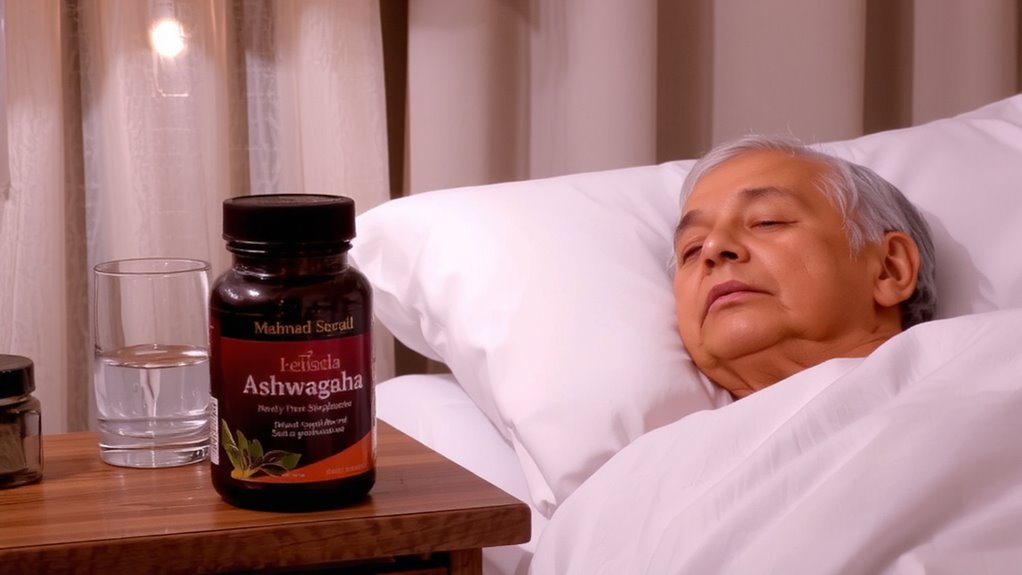
You’ve likely noticed how sleep changes with age, from frequent nighttime awakenings to earlier bedtimes and mornings that start before you’re ready. Research suggests ashwagandha may support better sleep quality in seniors, especially by improving sleep onset and stabilizing the REM cycle. Studies show people taking ashwagandha fall asleep faster and report more restful nights, though results vary. It appears to work by modulating stress pathways, which often interfere with healthy sleep patterns. While not a sedative, it may help your body prepare for rest naturally. Clinical trials typically use root extract over several weeks, with modest improvements noted in sleep continuity. It’s generally well-tolerated, but effectiveness depends on dosage, formulation, and individual health. You should consider it as part of a broader sleep strategy, not a standalone fix. Talk with your provider before starting any new supplement.
How Ashwagandha Helps You Sleep More Soundly
While you may not feel drowsy after taking ashwagandha, it can help your body ease into rest by calming the nervous system over time. It works by supporting balanced brain chemistry, which plays a key role in managing stress and relaxation. When your stress response is steadier, your sleep cycles can become more regular and less disrupted. Ashwagandha doesn’t act like a sedative, so you won’t rely on it to knock you out. Instead, it gently helps improve the quality of your sleep by encouraging deeper, more continuous rest. Over weeks, many older adults notice fewer nighttime awakenings and feel more refreshed in the morning. It supports natural rhythms rather than forcing them. This makes it a practical option if you’re looking to improve sleep without strong medications. Always consider how it fits with your overall health plan.
Best Ashwagandha Forms and Doses for Senior Sleep
When choosing ashwagandha for better sleep as you age, the form and dose matter most for consistent results. You’ll find it in powders, capsules, and liquid extracts-capsules are easiest to dose, while extracts offer faster absorption. For sleep quality and stress reduction, most studies use 300–600 mg daily of a standardized root extract, taken once at night. This range supports relaxation without harsh sedation. KSM-66 and Sensoril are well-researched forms; KSM-66 is full-spectrum and potent, often better for deeper sleep, while Sensoril acts gently and suits sensitive systems. Start at 300 mg to assess tolerance, then adjust after two weeks. Look for third-party tested products with clear labeling-avoid fillers that reduce effectiveness. Though results vary, many notice improvement in sleep quality and stress reduction within four to six weeks. Always check the supplement facts to compare potency and ingredients when choosing what works best for your routine.
Using Ashwagandha Safely for Long-Term Sleep Support
Though long-term use of ashwagandha is generally well-tolerated, it’s wise to take into account safety factors before making it a nightly habit. You should consider long term safety, especially if you have underlying health conditions or take other medications. Studies show most older adults tolerate ashwagandha well over months, but occasional mild digestive upset or fatigue may occur. Sticking to dosage consistency helps maintain steady levels in your system and supports reliable sleep benefits. Typical doses range from 300–600 mg daily of a standardized root extract, taken at the same time each night. It’s best to choose a reputable brand that tests for purity and potency. You might start with a lower dose to assess response before increasing. Regular check-ins with your healthcare provider can help monitor progress and make adjustments as needed, ensuring both safety and effectiveness over time.
On a final note
You might find ashwagandha helps reduce sleep fragmentation, especially if stress or cortisol levels disrupt your rest. Research suggests it can improve sleep quality in older adults when used consistently. Choose a standardized extract, like KSM-66 or Sensoril, at doses between 300–600 mg daily. It may take a few weeks to notice effects. Talk to your doctor first, especially if you take medications. While not a quick fix, it’s a well-tolerated option worth discussing for long-term sleep support.