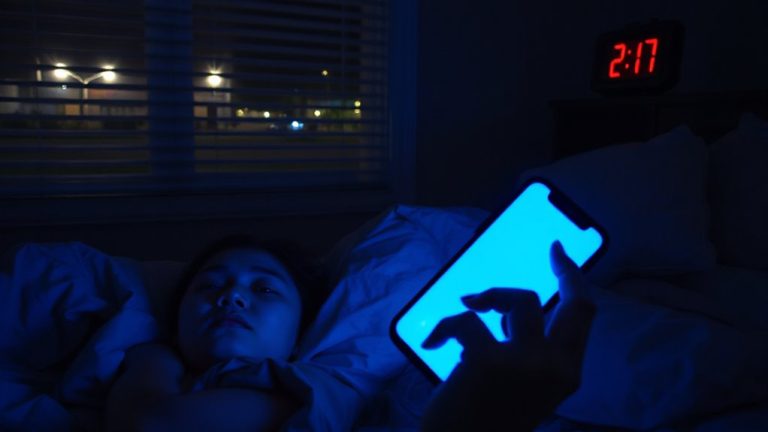
Understanding Delayed Sleep Phase Disorder: Causes, Symptoms, and Diagnosis
You’re not lazy-your internal clock runs later than typical, making it hard to fall asleep before 2 or 3 a.m. or wake up on time. DSPD, caused by delayed melatonin release and genetic factors, leads to persistent sleep delays despite effort. Symptoms include nighttime alertness and morning fatigue. Diagnosis uses sleep logs, actigraphy, or melatonin testing. If your schedule consistently clashes with daily demands, exploring tailored strategies could help you find better alignment.
Notable Insights
- Delayed Sleep Phase Disorder (DSPD) shifts the internal clock later, making it hard to fall asleep and wake up at typical times.
- People with DSPD often can’t fall asleep until 2–3 a.m. and struggle to wake up on time for work or school.
- DSPD is caused by delayed melatonin release and circadian rhythms, often influenced by genetics and evening light exposure.
- Diagnosis requires a persistent sleep delay confirmed by sleep logs or actigraphy over one to two weeks.
- Unlike poor sleep habits, DSPD is a biological condition where early sleep attempts fail despite feeling tired.
What Is DSPD?
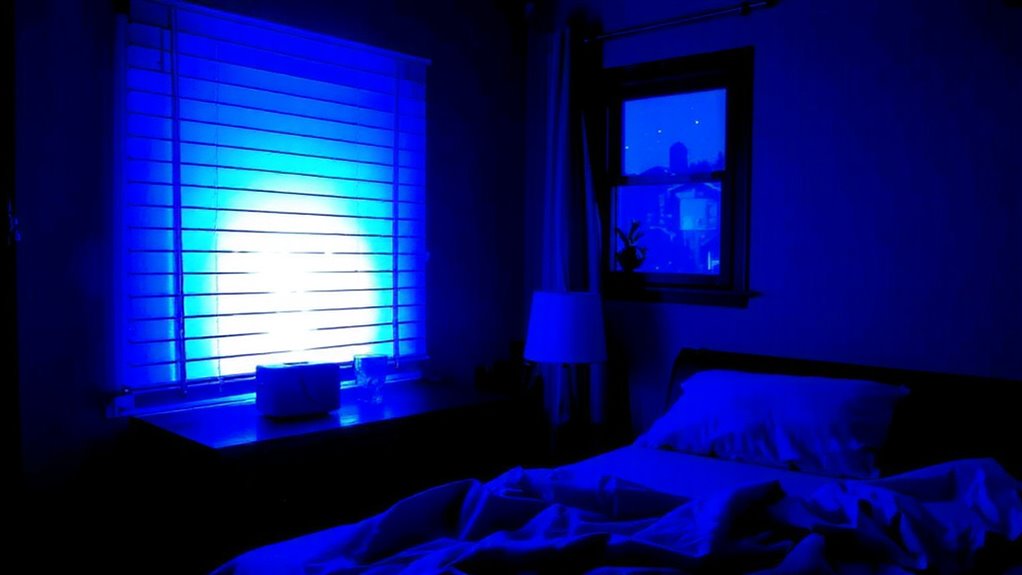
While your body typically follows a 24-hour sleep-wake cycle, delayed sleep phase disorder (DSPD) shifts that rhythm later-sometimes by hours-meaning you naturally feel alert when most people are winding down and sleepy well after midnight. This isn’t just a preference-it’s a medical condition where your internal clock runs markedly behind the standard schedule. The root lies in a chronotype mismatch: your natural sleep pattern clashes with social or work demands. Key factors include altered melatonin timing, with the hormone releasing much later at night than average. This shift makes falling asleep early nearly impossible, even if you try. Diagnosis usually involves sleep logs or actigraphy to track your rhythm over days. Understanding DSPD helps you evaluate treatment options, like timed light exposure or melatonin supplements, based on evidence, not guesswork.
Common DSPD Symptoms
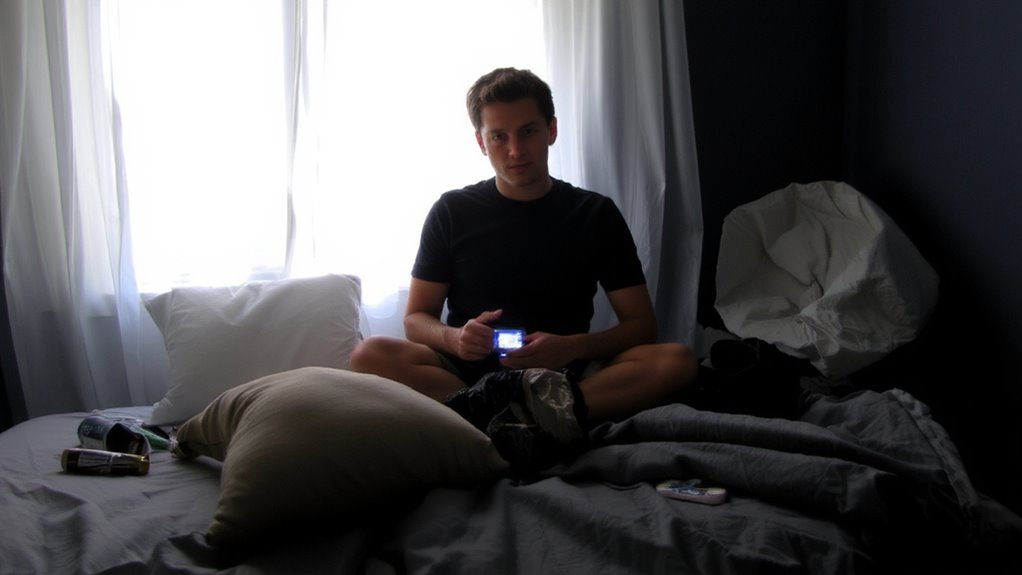
What does it feel like to live with a body that won’t fall asleep until 2 or 3 a.m., no matter how tired you are? You might lie in bed for hours, wide awake while the world sleeps. This shift isn’t laziness-it’s your circadian rhythm running on a delayed schedule. Your natural sleep patterns make falling asleep early nearly impossible, even when you want to. Then, mornings become a battle. Waking up for work or school feels brutal, leaving you groggy and unfocused. But if you could sleep later, you’d feel more refreshed. That’s a clue it’s DSPD, not poor habits. Sleep doesn’t come on the usual timeline, and forcing it often fails. Recognizing these signs helps you seek better routines or professional guidance. Understanding your body’s timing is the first step toward managing it well. Using best adult sound machines may help support better sleep hygiene by promoting a consistent sleep environment.
What Triggers DSPD?
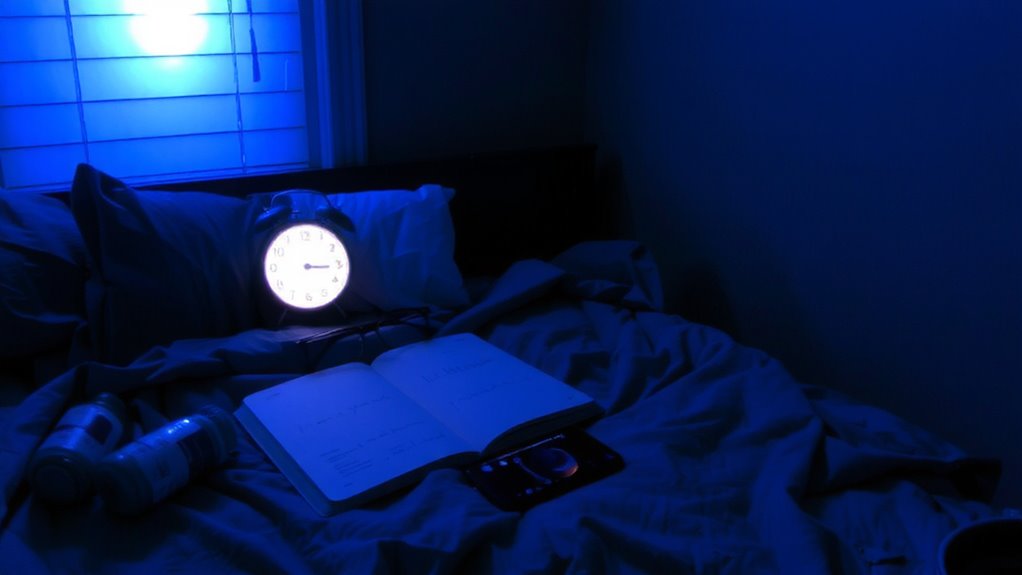
Why does your body resist sleep long after dark, even when you’re exhausted? It might not be poor habits-it could be delayed sleep phase disorder (DSPD), often triggered by genetic predisposition. If a close relative has a similar sleep pattern, you’re more likely to experience it too. Your internal clock runs longer than 24 hours, causing circadian misalignment. Instead of syncing with daylight and darkness, your body delays sleep onset, sometimes by hours. Light exposure, especially at night from screens, worsens this shift. Melatonin release and core body temperature rhythms also follow this delayed schedule. While it’s not your fault, recognizing these triggers helps you choose appropriate strategies. Some people benefit from light therapy or melatonin supplements, used at specific times. Treatment focuses on gradually resetting your rhythm, supported by consistent timing and medical guidance.
How DSPD Affects Daily Life
How would your daily routine change if you couldn’t fall asleep until 2 or 3 a.m., no matter how tired you felt? You’d likely struggle to wake up on time, making mornings stressful and productivity low. School or work demands often clash with your natural rhythm, leading to academic challenges and missed deadlines. Even if you try to adjust, your body resists falling asleep earlier, leaving you tired during the day. Social events in the evening might feel harder to attend when you’re exhausted, increasing social isolation. Simple plans can fall through, straining relationships. These ongoing disruptions affect focus, mood, and overall well-being. While sleep aids or schedule shifts may help, they don’t always align with your internal clock. Understanding your patterns is key to finding practical solutions that work with, not against, your body’s timing.
How DSPD Is Diagnosed
Ever wonder why you can’t seem to fall asleep until the early morning hours, even when you’re exhausted? Doctors diagnose Delayed Sleep Phase Disorder (DSPD) by closely examining your sleep patterns over time. You’ll likely be asked to keep a sleep diary for one to two weeks, noting when you go to bed, wake up, and feel sleepy. This helps identify shifts in your circadian rhythms. Some specialists may use actigraphy, a small device worn on the wrist that tracks movement and sleep-wake cycles. In certain cases, melatonin levels are tested to confirm misaligned circadian rhythms. Diagnosis relies on consistent delays in sleep timing, not just occasional late nights. You must show that your sleep pattern happens regularly and affects daily functioning. The process is thorough but simple, helping confirm whether DSPD or another sleep issue is at play.
When to See a Sleep Specialist
Could your nightly struggle to fall asleep be more than just a habit? If your sleep patterns consistently push bedtime hours later-say, past midnight or into the early morning-you might have a delayed circadian rhythm. When this becomes a long-term issue that disrupts daily life, work, or school, it’s time to see a sleep specialist. They can assess whether Delayed Sleep Phase Disorder (DSPD) or another condition is affecting your rhythm. You’ll likely track your sleep for days or weeks, wear a wrist monitor, or keep a log. Shift work, light exposure, or genetics could all play a role. A specialist helps pinpoint causes and guides you toward solutions-behavioral changes, light therapy, or timing adjustments. Don’t wait years; getting support early improves outcomes. Expert advice helps you make informed choices about managing your sleep health effectively.
On a final note
You might feel more alert at night and struggle to wake up early, but recognizing DSPD’s signs helps you take action. Doctors diagnose it through sleep logs and sometimes actigraphy, ruling out other issues. Light therapy, consistent schedules, and melatonin under guidance can help adjust your rhythm. Consider discussing options with a sleep specialist if symptoms persist, especially when daily tasks or mood are affected. A proper diagnosis means better, personalized choices for managing your sleep.