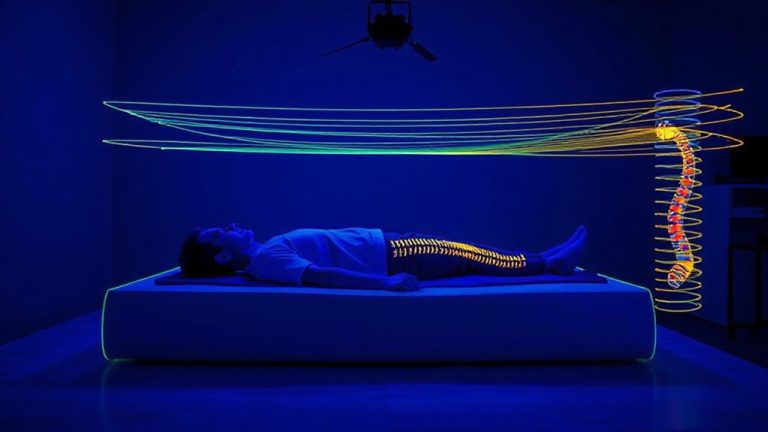
How Light Exposure at Night Worsens Delayed Sleep Phase Disorder
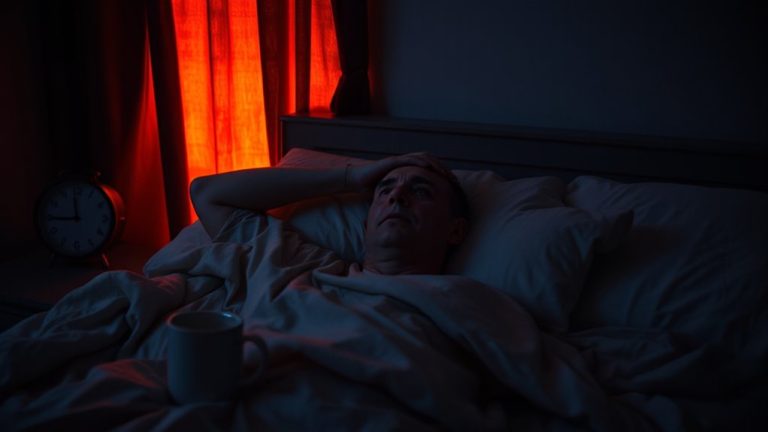
You feel tired at night, but bright light-especially blue light from screens-delays your melatonin release, pushing your sleep time even later. This worsens delayed sleep phase disorder by reinforcing a cycle where your internal clock stays out of sync. Even dim light at night can disrupt your rhythm, making mornings harder. Using warm, dim lighting and blue light filters helps reduce this effect. Small changes now can support better timing over time, and there’s more to explore on improving your nightly pattern.
Notable Insights
- Evening light exposure delays melatonin release, worsening the natural sleep delay in DSPD.
- Blue-rich light from screens strongly suppresses melatonin, pushing circadian rhythms later.
- Nighttime light mimics daytime signals, keeping the brain alert and inhibiting sleep onset.
- Persistent evening light exposure reinforces a delayed sleep cycle, making morning wake-ups harder.
- Reducing blue and bright light at night helps prevent phase delays and supports rhythm alignment.
What Is Delayed Sleep Phase Disorder (DSPD)?
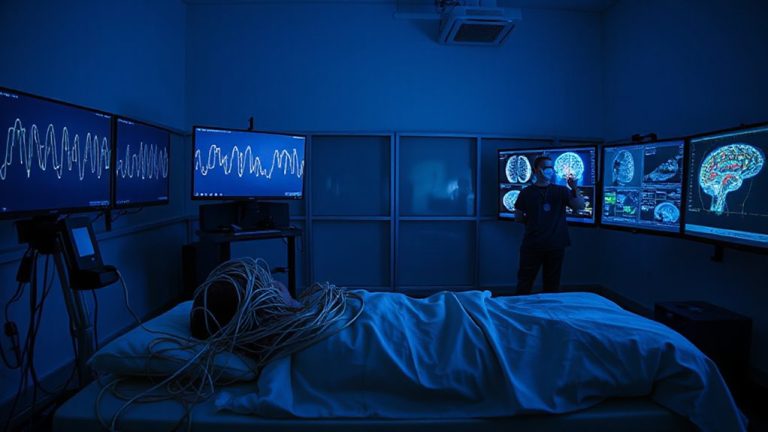
Delayed Sleep Phase Disorder, or DSPD, isn’t just a habit of staying up late-it’s a real circadian rhythm disorder that shifts your sleep schedule hours behind what’s typical. Your biological clock runs on a delayed cycle, making it hard to fall asleep at conventional times, even when you’re tired. You might not feel sleepy until midnight or later, and mornings become a struggle. This delay isn’t by choice-it’s embedded in your sleep patterns and regulated by internal body rhythms. While some think it’s laziness, DSPD is medically recognized and affects daily functioning. You might find school, work, or social commitments harder to manage due to misaligned timing. Diagnosis usually involves tracking your sleep for one to two weeks, sometimes with a sleep diary or actigraphy monitor. Treatment options exist, such as timed light exposure or melatonin, but they require consistency. Talking to a sleep specialist can help you explore what works.
How Light Disrupts Circadian Rhythm in DSPD
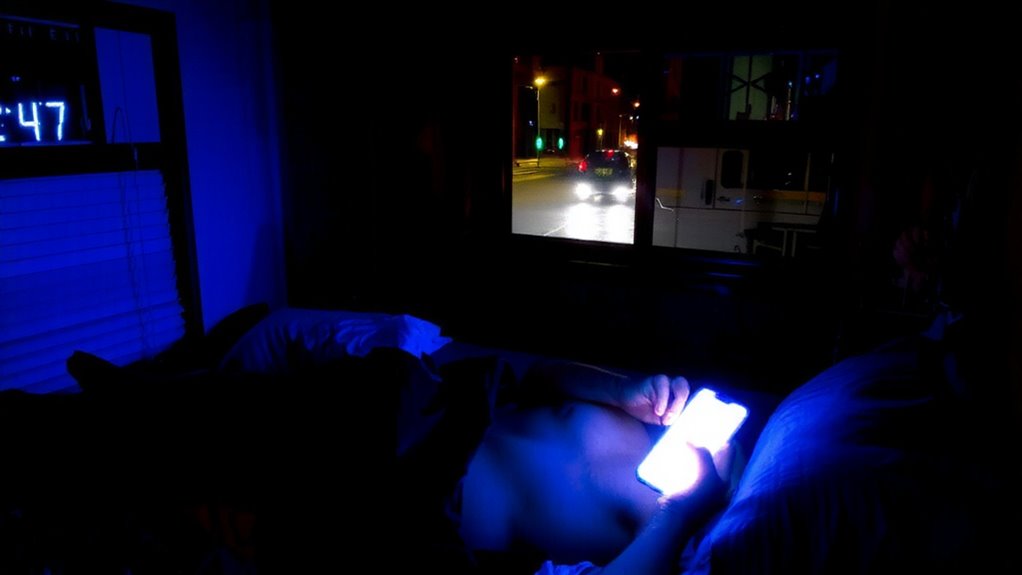
Though your body relies on light to set its internal clock, too much exposure at the wrong times can throw off your sleep cycle even more if you have DSPD. Bright light in the evening, especially blue-rich light from screens, triggers melatonin suppression, delaying sleep onset. This worsens circadian misalignment, shifting your natural rhythm later when you already struggle to fall asleep early. Your sensitivity to light is heightened, making timing essential. Morning light helps, but nighttime exposure counteracts it. Using dim, warm-toned lights at night and wearing blue-blocking glasses may reduce suppression. Automated apps that filter screen color or smart bulbs with scheduling features can support consistent routines. Even small changes in light timing can improve alignment over time. Consistency matters more than perfection-aim for gradual adjustments supported by tools you can test and adjust as needed.
Why Nighttime Light Worsens DSPD Symptoms
Because your internal clock is especially sensitive to light at night, even small amounts of evening exposure can deepen the challenges of DSPD. Your brain’s neural sensitivity to light signals tricks it into thinking it’s still daytime, which delays melatonin release and disrupts sleep timing. This delay contributes to a hormonal imbalance, making it harder to fall asleep and wake at desired times. Nighttime light doesn’t just shift your rhythm-it reinforces the cycle, worsening symptoms over time. You might find yourself staying up later without effort, yet struggling to rise in the morning. Reducing evening light exposure helps restore natural timing. Consider dimming lights, using warm-toned bulbs, and avoiding screens close to bedtime. These changes support circadian alignment and may reduce reliance on sleep aids. Consistency matters-small, sustained adjustments often offer more lasting benefit than short-term fixes.
Why Blue Light Is Especially Harmful for DSPD
While all light at night can disrupt your sleep cycle, blue light hits your brain’s clock the hardest, especially if you’re dealing with Delayed Sleep Phase Disorder. Devices like phones and tablets emit a strong blue spectrum that mimics daylight, tricking your brain into staying alert. This causes intense melatonin suppression, delaying your natural sleep signal even further. Since your internal clock already runs late, this makes it harder to fall asleep at a typical hour. Exposure in the evening worsens your phase delay, reinforcing a cycle that’s tough to break. Even dim screens contribute considerably due to their blue-rich LEDs. You don’t need to eliminate screen use entirely, but recognizing how blue light impacts melatonin gives you control. Consider this when choosing bedtime routines or evaluating light-blocking options. Small changes in light exposure can meaningfully influence your sleep timing and overall rhythm. For those seeking relief, wearing best blue light glasses can significantly reduce evening light intrusion and support healthier sleep onset.
Strategies to Reduce Evening Light Exposure
You can take clear steps to minimize evening light exposure and support a more stable sleep schedule, especially if you’re managing Delayed Sleep Phase Disorder. Use screen filters on phones and tablets to reduce blue light after sunset. These filters are easy to enable and can be scheduled automatically. Consider investing in smart lighting that adjusts color temperature in the evening-warmer tones help signal your body it’s time to wind down. Dim overhead lights and rely on low-angle lamps when possible. Pairing these strategies with wearing blue light blocking glasses can further protect your circadian rhythm from disruptive light exposure.
| Strategy | Feature | Benefit |
|---|---|---|
| Screen filters | Built-in or app-based | Reduces blue light without extra devices |
| Smart lighting | Adjustable color and brightness | Syncs with natural light cycles |
| Evening dimming | Manual or automated | Lowers overall light intensity |
Building an Effective Evening Routine for DSPD
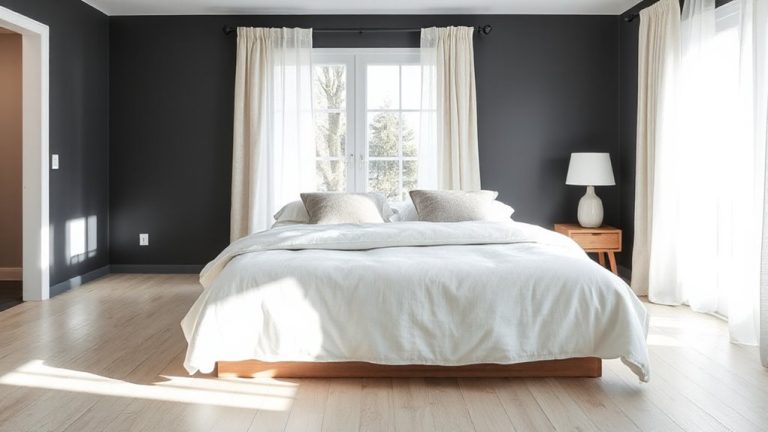
What if shifting your sleep schedule started with the choices you make each evening? Building a consistent routine helps signal your body that sleep is coming. Start by reducing screen time at least an hour before bed, since blue light contributes to melatonin suppression, making it harder to feel sleepy. Dim the lights, switch to warm-toned bulbs, and consider amber-tinted glasses if you must be in bright environments. Pair this with solid sleep hygiene-keep your room cool, quiet, and dark, and avoid caffeine or heavy meals late in the day. A wind-down period with calming activities like reading or light stretching supports your body’s natural rhythm. You don’t need special gadgets, but some find timed melatonin supplements helpful under medical guidance. Test small changes first, track what works, and allow a few weeks to see results. Consistency matters more than perfection. For optimal results, choose lighting that minimizes circadian disruption, such as best light bulbs for better sleep.
On a final note
You can manage DSPD better by limiting light at night, especially blue wavelengths from screens. Dimming lights and using filters or glasses helps shift your rhythm gradually. Consistent routines signal your body to sleep earlier over time. These steps support natural circadian alignment without immediate fixes. Small changes, tried for several weeks, offer meaningful results. Check product warranties if buying aids, and track progress before deciding on long-term solutions.