How to Use Dim Light Evening Exposure for Delayed Sleep Phase Disorder
You can use dim evening light to help shift your sleep schedule earlier by reducing light exposure 2–3 hours before your target bedtime. This helps avoid delaying melatonin release, which is already late in DSPD. Use warm, low-wattage lights below eye level and pair this with morning bright light. Consistency strengthens results, and small changes add up over time-there’s more to explore about fine-tuning your rhythm.
Notable Insights
- Begin dimming evening lights 2–3 hours before desired bedtime to support earlier melatonin release.
- Use warm-colored, low-intensity lighting (2700K or lower) to minimize circadian disruption.
- Avoid bright or overhead lights; opt for shielded floor or table lamps below eye level.
- Apply blue light filters to screens during evening hours to reduce melatonin suppression.
- Combine dim evening light with morning bright light exposure to effectively shift circadian timing.
What Is Delayed Sleep Phase Disorder (DSPD)?
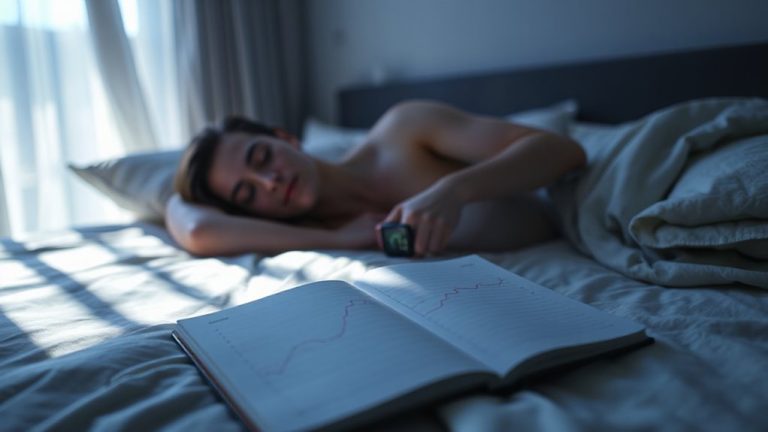
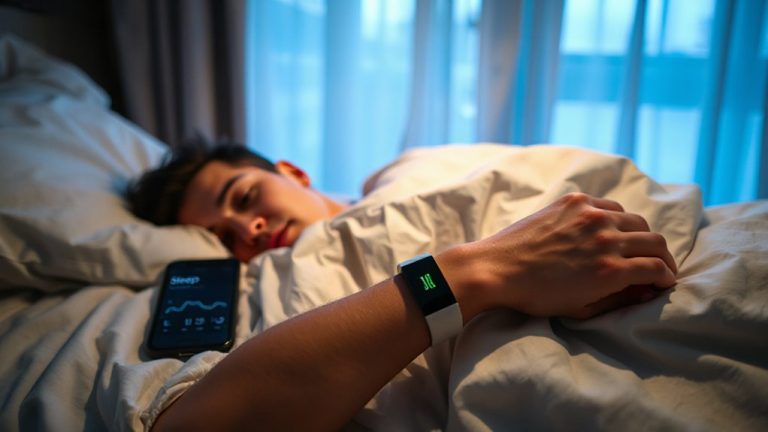
What if your body just won’t sync with the typical 9-to-5 world? You might have Delayed Sleep Phase Disorder (DSPD), a condition where your internal clock runs much later than society’s schedule. Your natural sleep onset often shifts past midnight, making morning alarms a struggle. Chronobiology research shows that people with DSPD have a mismatch between their circadian rhythm and environmental time cues. This delay isn’t laziness-it’s physiological. Melatonin suppression from daytime light helps regulate timing, but in DSPD, melatonin release occurs too late. Treatment options include timed light exposure, melatonin supplements, and behavioral adjustments. You’ll need consistency to retrain your rhythm. Some interventions require several weeks to assess. Most approaches are low-risk, though results vary. Tracking sleep patterns with a diary or wearable can guide your decisions.
How Evening Light Delays Sleep in DSPD
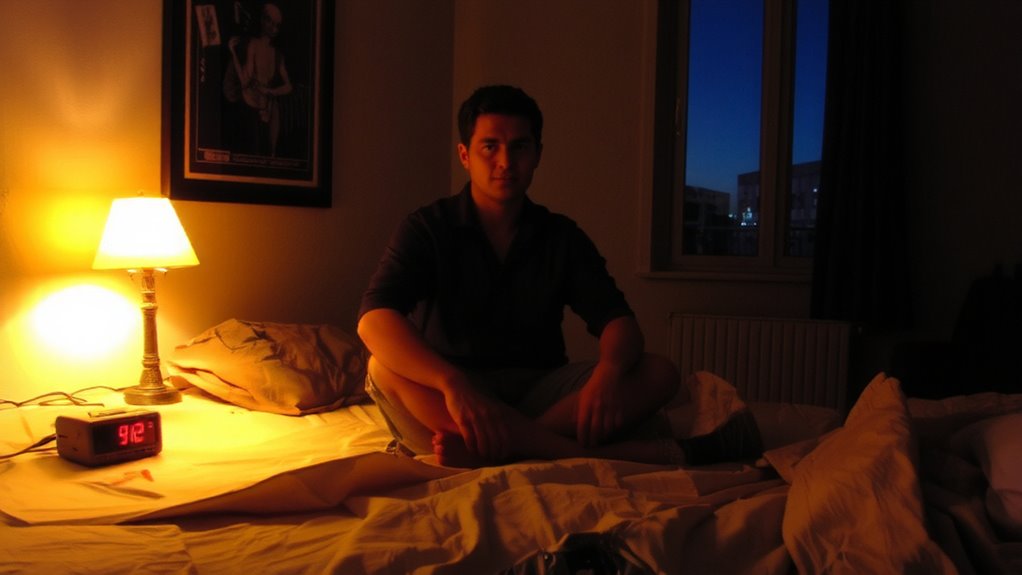
Even though you might feel drawn to winding down in a softly lit room at night, exposure to dim light in the evening can still push your internal clock later-especially if you have Delayed Sleep Phase Disorder. Your body’s light sensitivity remains high at this time, and even low-intensity light can signal your brain to delay melatonin release. This worsens circadian misalignment, making it harder to fall asleep at conventional times. The timing of light matters more than brightness-you’re particularly vulnerable in the hours before your natural bedtime. Consistent evening exposure, even to dim sources like lamps or screens, can shift your rhythm later, reinforcing the cycle of late sleep onset. Over time, this pattern deepens the misalignment between your internal clock and social schedules. Recognizing this effect helps you make informed choices about light use, supporting better timing of sleep without drastic lifestyle changes.
How Dim Light Resets Your Body Clock
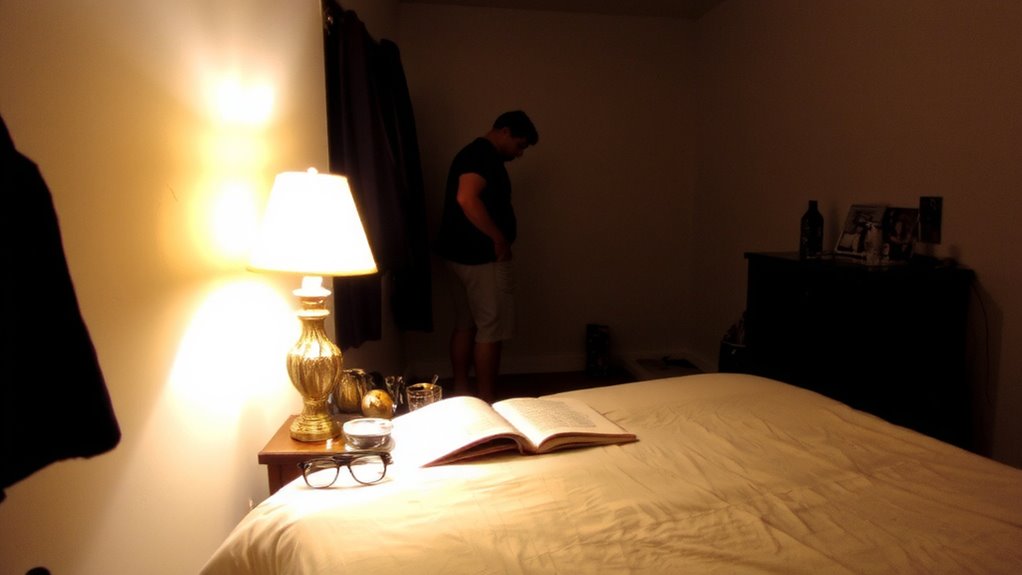
A dim light routine in the early evening can help shift your body clock forward if timed correctly. Your circadian sensitivity to light drops after sunset, making lower light intensity less disruptive than bright light. By reducing exposure to bright indoor lights and screens, you avoid sending signals that delay melatonin release. Instead, dim lighting supports natural circadian rhythms, gently preparing your body for earlier sleep. This approach uses your body’s built-in response to environmental light changes without medications or devices. You don’t need special equipment-just mindful control of lamps, bulbs, and screen brightness. The key is consistency and timing, aligning with your biological patterns. Over time, this simple shift in evening light intensity may help retrain your internal clock. It’s a low-risk strategy backed by sleep science, suitable for regular use.
When to Use Dim Light for DSPD Relief
When should you start dimming the lights to ease your delayed sleep phase? Begin 2–3 hours before your target bedtime, aligning with natural melatonin timing. This gradual shift supports your body’s internal clock and improves sleep onset. If your evening screen habits include phones or TVs, use blue light filters or switch to dim, warm lighting to reduce stimulation. Bright light too late delays melatonin release, making it harder to fall asleep. Dim lighting signals your brain that it’s time to wind down, especially when paired with consistent nightly routines. You don’t need special equipment-just lower the brightness of overhead lights or use lamps. Try this consistently for at least a week to assess changes in your sleep pattern. Adjust based on how easily you fall asleep and how you feel in the morning. It’s a simple, low-cost step that works with your biology.
Set Up a Soothing Evening Lighting Routine
You’ve already started timing your light reduction to match your body’s natural shift into sleep mode, and now it’s time to shape that dim period into something predictable and calming. A consistent evening lighting routine supports your circadian rhythm by signaling that it’s time to wind down. Your lamp choice matters-opt for fixtures that offer warm, indirect light. Aim for a color temperature of 2700K or lower to minimize blue light. Use dimmers to adjust brightness as bedtime nears. Try different setups for about a week to see what feels most relaxing. Incorporating sleep-friendly lighting can significantly improve both sleep onset and overall sleep quality.
| Feature | Why It Helps |
|---|---|
| Warm color temperature | Reduces alertness signals |
| Dimmable bulbs | Allows gradual light reduction |
| Floor or table lamp | Softer, indirect illumination |
| Shielded design | Prevents glare, soothes eyes |
| Low wattage | Maintains sleep-friendly ambiance |
Top Lights That Help DSPD and Early Sleep
Though not all lights are made equal when it comes to supporting sleep in delayed sleep phase disorder, a few key models stand out for their ability to mimic natural light patterns and adjust to your circadian needs. Look for bulbs and lamps offering adjustable color temperature, shifting from cooler tones in the morning to warmer hues (around 2700K) by evening. This supports melatonin release and signals your body it’s time to wind down. Proper light placement matters-position lights below eye level, like floor or desk lamps, to reduce glare and create a calming effect. Avoid overhead lighting at night. Models like the Philips SmartSleep or Beurer sleep lamps are designed with these features, offering gradual dimming and warm light tones. Many include trial periods, letting you test effectiveness. Prioritize ease of use and flexibility when choosing your setup. For optimal results, consider using best light bulbs for better sleep that are specifically engineered to support circadian health.
Combine Dim Light With Morning Light and Routine
Since your circadian rhythm responds best to consistent light cues throughout the day, pairing evening dim lighting with bright morning exposure can make a meaningful difference for delayed sleep phase disorder. You’ll want to get bright, preferably natural, morning light within an hour of waking-this helps reset your internal clock. Use a light box if sunlight isn’t available, aiming for 10,000 lux for 20–30 minutes. At night, avoid blue lighting from screens, since it suppresses melatonin. Adjust your screen habits by using night modes or wearing blue-light-blocking glasses after sunset. Combine this routine consistently-same wake time, same dim lighting schedule-even on weekends. This steady input helps your body anticipate sleep and wake times. Over time, you may see improved sleep onset and daytime alertness. It’s non-invasive, low-cost, and often covered under wellness benefits.
On a final note
You can use dim evening light to help shift your body clock earlier if you have DSPD. Try lowering light levels 2–3 hours before bed, using warm-toned, low-lumen bulbs or smart lights with scheduling. Combine this with bright morning light and consistent wake times for best results. Track changes over weeks, as responses vary. Many lighting products offer trials, so test what fits your space and routine without commitment.