Reinforcing Pillow Zipper Teeth With Nylon Stops to Prevent Unzipping Mid-Sleep
Your pillow zipper keeps failing because weak teeth and flimsy stitching can’t handle nightly movement. Reinforce it with nylon stops to prevent unzipping mid-sleep. Use pliers and heat to secure stops firmly in place, stopping slippage. Stronger stitching and durable materials help too. Look for pillows with warranties on zippers for added peace of mind. You’ll find better long-term performance by choosing reinforced designs that stand up to regular use. There’s more to examine if you want lasting comfort.
Notable Insights
- Weak zipper teeth can cause mid-sleep unzipping, especially with low-grade nylon or plastic materials.
- Reinforced stitching and durable fabrics help maintain zipper alignment and prevent separation during use.
- Installing nylon stops at both ends secures the slider and stops unintended zipper opening.
- Use pliers and heat to properly seal nylon stops onto the tape without damaging the fabric.
- Regular inspection and maintenance of stops and stitches prolong zipper life and prevent failures.
Why Pillow Zippers Come Unzipped at Night
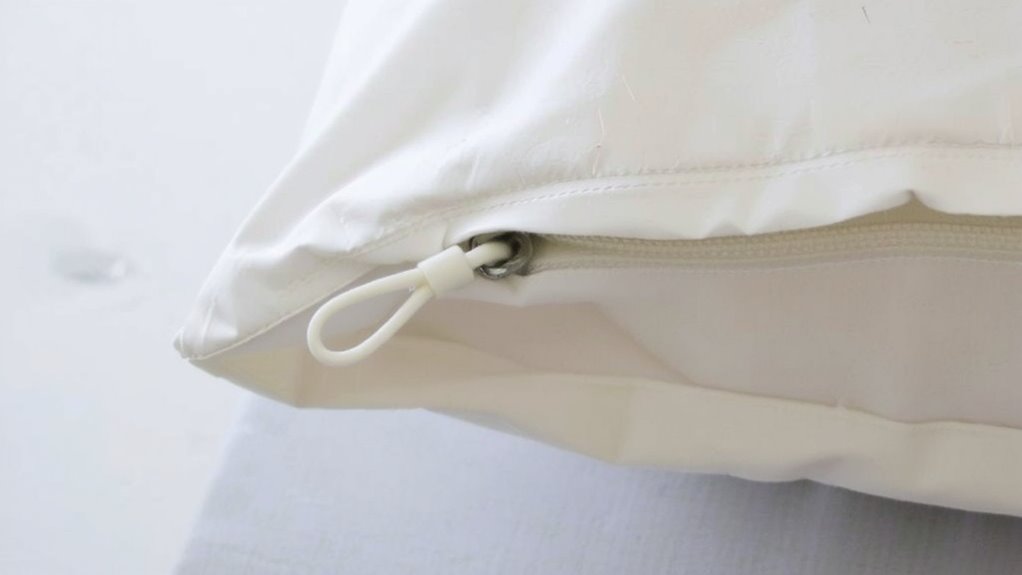
Why does your pillow zipper keep coming undone during the night? It’s likely due to weak zipper material or inconsistent stitching tension. Over time, the zipper material can degrade, especially if it’s made from lower-grade nylon or plastic that can’t withstand nightly friction. If the teeth aren’t securely formed or the slider wears down, even slight movement may cause separation. Poor stitching tension along the seam means the fabric around the zipper isn’t held tightly enough, allowing slippage. This isn’t just inconvenient-it can disrupt sleep and expose fill material, which may affect allergen control. Some manufacturers use reinforced stitching tension and durable zipper material to reduce failure, often detailed in product warranties. While not a direct sign of sleep disorders, repeated disturbances may impact sleep quality. Checking zipper construction helps you choose better sleep aids. Look for models that disclose material type and stitching quality-these details often predict long-term performance.
How to Stop a Pillow Zipper From Failing
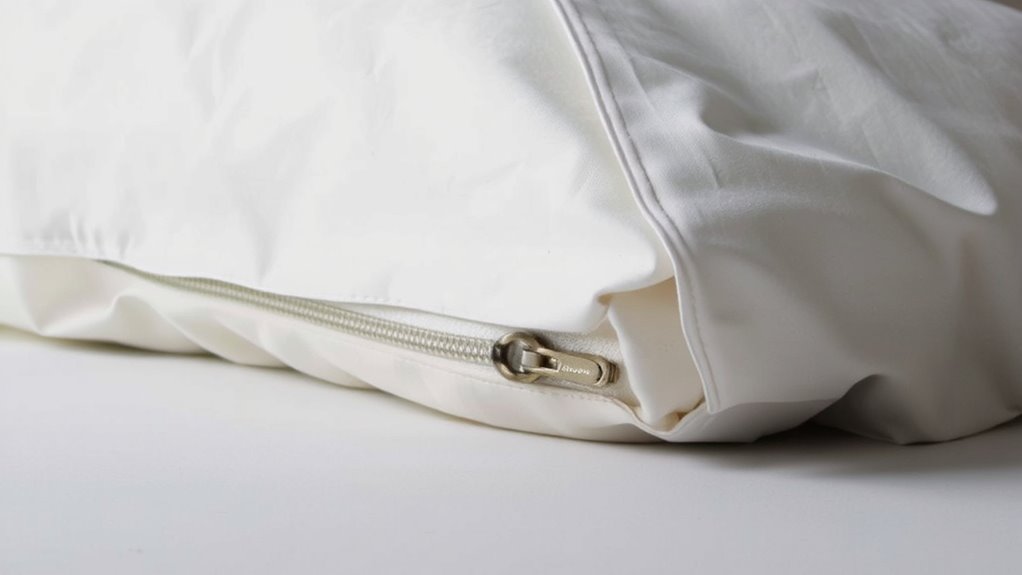
You can keep your pillow zipper from failing by choosing designs built with stronger materials and better stitching from the start. Look for reinforced pillow stitching and durable fabrics that resist fabric fraying over time. High-quality zippers often use thicker gauge nylon or metal teeth, which hold up better during nightly use. Check if the manufacturer includes stress-tested seams or double-stitched zones near the zipper ends. These areas take the most strain and benefit from extra support. Some models come with warranties covering zipper defects, allowing you to trial them risk-free. Smooth zipper operation matters, too-rough pulls increase wear. Avoid sharp tugging that can lead to early breakdowns. Well-built pillows may cost slightly more, but their longevity helps prevent nighttime disruptions linked to discomfort or shifting fill. Good construction supports uninterrupted sleep, especially if you move a lot.
Tools You Need for Nylon Stops
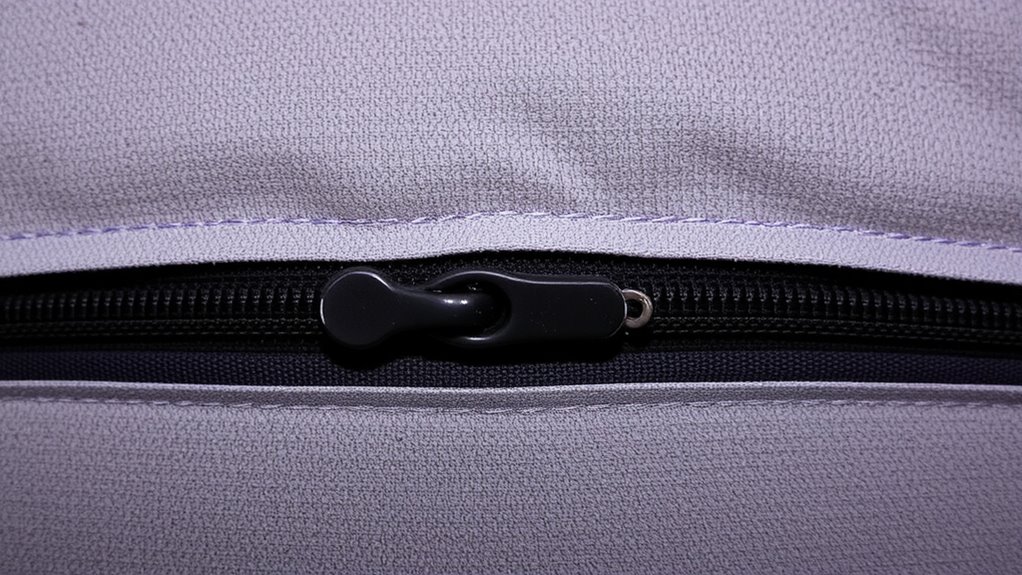
A reliable toolkit makes all the difference when securing nylon stops on pillow zippers. You’ll need fine-tipped pliers for precise bending, sharp fabric scissors to trim excess, and a small ruler for accurate placement. A heat-resistant surface protects your workspace when using a lighter to seal nylon ends, boosting zipper durability. Needle-nose pliers help press stops firmly into place, ensuring consistent material strength. A seam ripper might come in handy if repositioning is necessary. Use a magnifying glass for close inspection-tiny flaws can weaken performance over time. Keep cotton gloves handy to avoid fingerprints and oils. These tools, when used together, support secure, long-lasting results. Better zipper durability means fewer disruptions at night, helping maintain consistent sleep patterns. Consider products with trial periods or warranties for added confidence.
Install Nylon Stops in 5 Simple Steps
Start by positioning the zipper tape on a heat-resistant surface, making sure the end aligns neatly-this guarantees the nylon stop sits flush and prevents fraying. Use pliers to clamp the nylon stop securely over the zipper teeth, ensuring even pressure so fabric tension stays balanced. Apply a brief burst of heat with a soldering iron or lighter to melt the tip, sealing it in place without warping the teeth. Let it cool completely before testing the zipper alignment-it should glide smoothly but not pull loose. Repeat on the opposite end with the same precision. Proper installation helps maintain consistent fabric tension across the pillow cover, reducing stress on the zipper during sleep. This small step improves durability, minimizing mid-sleep disruptions. Well-installed stops hold up over time, especially with nightly movement.
Fixing Common Nylon Stop Issues
Sometimes even a well-installed nylon stop can develop issues over time, especially with regular use and shifting during sleep. If you notice zipper alignment problems, gently reposition the stop by loosening and re-securing it slightly forward or back-this often restores smooth function. Check for fabric fraying near the zipper base, as worn fibers can compromise performance and comfort. Trim loose threads carefully and reinforce the area with a thin heat-activated patch if needed. If the stop slips or feels loose, make certain it’s fully crimped and consider adding a drop of fabric-safe adhesive for extra hold. Regular inspection helps maintain durability and prevents mid-sleep disruptions. Choosing a model with washable, tightly woven fabric can reduce fraying and support longer zipper alignment. When in doubt, test replacements under your usual sleep conditions, and consult warranty options if failures persist. Small adjustments often extend the life and reliability of your pillow setup. For added security and ease of use, consider upgrading to duvet covers with zipper closures designed for durability and frequent washing.
On a final note
You can keep your pillow secure through the night by reinforcing the zipper with nylon stops. This simple fix prevents accidental unzipping, helping maintain fill integrity and comfort. The upgrade is easy, low-cost, and durable. If your pillow comes with a warranty, check if modifications affect coverage. Consider this tweak alongside other sleep aids to support consistent, uninterrupted rest.