Understanding Off-Gassing in Memory Foam Pillows and How to Minimize It Quickly
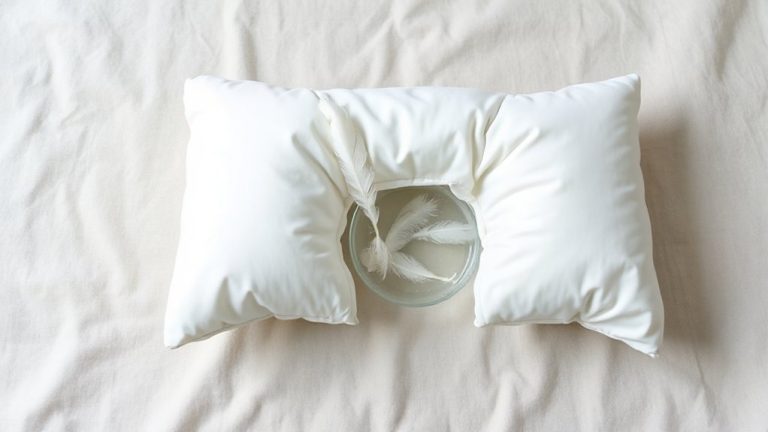
You might notice a faint chemical smell when you unbox your memory foam pillow-that’s off-gassing, caused by trapped gases escaping as the foam adapts to air. It’s normal and usually harmless, especially with CertiPUR-US® certified foams that limit VOCs. The odor typically fades in 24 to 72 hours. To speed things up, air it out in a well-ventilated room, use a fan, or place activated charcoal nearby. Choosing low-odor foams with plant-based materials can reduce this effect. There’s more to evaluate for long-term comfort and air quality.
Notable Insights
- Off-gassing in memory foam pillows is caused by trapped gases releasing from the foam’s open-cell structure after unboxing.
- The chemical smell comes from residual VOCs like alcohols or esters dissipating post-production, not toxic materials.
- Most odors fade within 24 to 72 hours when the pillow is aired in a well-ventilated space.
- Speed up odor removal by using fans, opening windows, and rotating the pillow to expose all sides to air.
- Choose CertiPUR-US® certified pillows for lower VOC emissions and reduced off-gassing due to stricter production standards.
What Causes Off-Gassing in Memory Foam Pillows?
A faint chemical smell when you unbox a new memory foam pillow isn’t alarming-it’s chemistry meeting the real world. That odor comes from off-gassing, a natural result of the pillow’s chemical composition breaking down slightly after production. During the manufacturing process, gases get trapped in the foam’s open-cell structure, and once exposed to air, they slowly release. You’re not smelling harmful pollutants, just residual compounds like alcohols or esters dissipating. This usually fades within hours or days. Choosing a pillow made with CertiPUR-US® certified foam means lower emissions and fewer volatile organic compounds. These details matter if you’re sensitive to smells or managing a sleep environment for better rest. Most quality brands offer trial periods, so you can assess comfort-and smell-over time. It’s just part of adapting new materials into your nightly routine.
Is Off-Gassing From Memory Foam Harmful?
You’ve probably noticed that new memory foam pillow smell-what we call off-gassing-and now you’re wondering if it’s more than just an odd scent. Most off-gassing comes from volatile organic compounds (VOCs) released as the foam cures, and while these levels are generally low and considered safe by U.S. standards, they can affect air quality in small or poorly ventilated spaces. If you have chemical sensitivity, you might experience mild headaches or irritation, especially at first. For people managing sleep disorders or sensitive to environmental triggers, this is worth considering when choosing sleep aids. Memory foam with CertiPUR-US® certification releases fewer VOCs, helping maintain better air quality. Still, you should air out the pillow in a well-ventilated room for a day or two. It’s a simple step that makes a noticeable difference. Check trial periods and warranties when buying, so you can test it without risk. A good best-selling beds choice can complement your pillow for a more restful, aligned sleep environment.
How Long Does Memory Foam Smell Last?
While the initial smell of a new memory foam pillow might be noticeable, it typically doesn’t last long if you let it air out properly. The odor comes from the chemical composition released during the manufacturing process, a normal result of off-gassing. Most people find the scent fades within 24 to 72 hours. Sensitivity varies, so consider timing placement in your bedroom around your sleep routine.
| Factor | Duration |
|---|---|
| Light odor | 1–2 days |
| Moderate smell | 3–5 days |
| Well-ventilated room | Faster dissipation |
| Enclosed space | Longer retention |
The pillow’s construction and materials influence how long odors linger. Since every brand follows a different manufacturing process, off-gassing time varies. Still, performance and comfort aren’t affected by the temporary scent. Check warranty details-many brands offer trials so you can test comfort without risk.
How Can You Get Rid of the Smell Fast?
What if the smell from your new memory foam pillow won’t fade as quickly as expected? You can speed things up with simple, effective methods. First, place the pillow in a well-ventilated area-good air circulation helps release trapped gases faster. Unwrap it and let it breathe near an open window or a fan, but avoid direct sunlight, which may degrade the foam. For stronger odor absorption, try putting the pillow in a sealed bag with activated charcoal for 24 to 48 hours. The charcoal pulls out volatile compounds without damaging the material. Rotate the pillow occasionally to expose all sides to fresh air. Most off-gassing diminishes within a few days using these steps. Though the scent isn’t harmful for most, reducing it improves sleep comfort. Always check the manufacturer’s trial period if sensitivity is a concern.
How to Speed Up Off-Gassing Safely at Home
A steady flow of fresh air works wonders for clearing out lingering odors from your memory foam pillow. You can speed up off-gassing safely by using simple ventilation techniques-unbox the pillow in a well-ventilated room, ideally near an open window or fan. Air circulation helps volatile compounds dissipate faster, usually within a few days. For added support, place activated charcoal nearby; it naturally absorbs odors without harsh chemicals. Avoid direct sunlight or excessive heat, as they may degrade the foam over time. Consider rotating the pillow to expose all sides to fresh air. These methods are safe, effective, and preserve the pillow’s structural integrity. Most quality memory foam pillows come with trial periods, so you can assess comfort and odor levels over time. Using smart ventilation techniques and activated charcoal lets you minimize off-gassing efficiently, helping you settle into restful sleep without irritation.
What Makes a Low-Odor Memory Foam Pillow?
If you’re sensitive to smells or just want a fresher sleep environment, you’ll find low-odor memory foam pillows are made with materials and processes that reduce volatile organic compounds (VOCs) right from the start. The key lies in the material composition-many use plant-based foams or gel infusions that emit fewer chemicals than traditional petroleum-based foams. A cleaner manufacturing process also helps, as some brands use controlled aeration or low-emission production methods to minimize off-gassing before the pillow even reaches you. These pillows often carry CertiPUR-US® certification, meaning they’ve been tested for low VOC levels. While they may cost a bit more, their performance in comfort and air quality can be worth it. Look for models with trial periods or warranties so you can test durability and scent response over time. Choosing one supports better sleep hygiene without strong initial odors.
On a final note
You might notice a chemical scent when unboxing your memory foam pillow, but this off-gassing usually fades within a few days to a week. Choosing models with CertiPUR-US® certified foam reduces odor and harmful emissions. Ventilate the room, use a fan, or air it outdoors to speed up the process. Most manufacturers recommend a 24–72 hour airing period. If sensitivities are a concern, consider low-odor brands or return policies allowing trial periods.