Cotton Moisture-Wicking in Bedding: How Hydrophilic Fibers Work
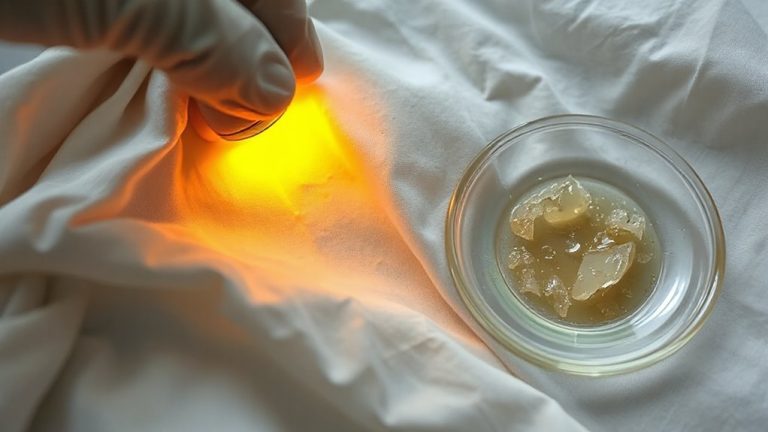
Cotton’s natural hydrophilic fibers pull moisture from your skin and spread it across the fabric, where airflow helps it evaporate. This process keeps you cooler and reduces that sticky feeling overnight. Unlike polyester, which traps sweat, cotton breathes well, especially in percale weaves with open structures. High-thread-count options add softness and durability without sacrificing airflow. Many brands offer trial periods, so you can test comfort and performance in your own home. You’ll discover which weaves and weights work best for your sleep habits.
Notable Insights
- Cotton absorbs moisture into its fibers due to hydrophilic hydroxyl groups that attract and bind water molecules.
- Moisture spreads across cotton’s surface through capillary action between fibers, enhancing evaporation.
- Airflow through cotton’s breathable structure aids in drying fibers and prevents dampness.
- Percale weave enhances cotton’s moisture management by promoting breathability and air circulation.
- Unlike polyester, cotton moves sweat away from skin by absorption and dispersion, not wicking.
Why Cotton Keeps You Cool on Sweaty Nights
Why do you wake up drenched yet still feel hot? Poor air circulation and disrupted thermal regulation could be why. Cotton helps balance your body’s temperature by allowing heat to escape and supporting steady airflow around your skin. Unlike synthetic fabrics that trap moisture, cotton’s natural fibers let air move freely, reducing the sticky, overheated feeling at night. Its breathable structure enhances thermal regulation, so your body doesn’t overcompensate with excess sweat. If you struggle with night sweats or disrupted sleep, consider how fabric impacts your sleep environment. Cotton bedding won’t eliminate sleep disorders, but it can improve comfort and support better sleep hygiene. Most high-thread-count cotton options are durable, machine-washable, and often come with trial periods or warranties. Testing a cotton sheet set might reveal tangible benefits for your sleep quality, especially if overheating is a frequent issue. Eucalyptus sheets are another excellent option for temperature regulation, with best eucalyptus sheets offering a cool, cozy sleep experience due to their natural breathability and moisture-wicking properties.
How Cotton Moves Moisture Away From Skin
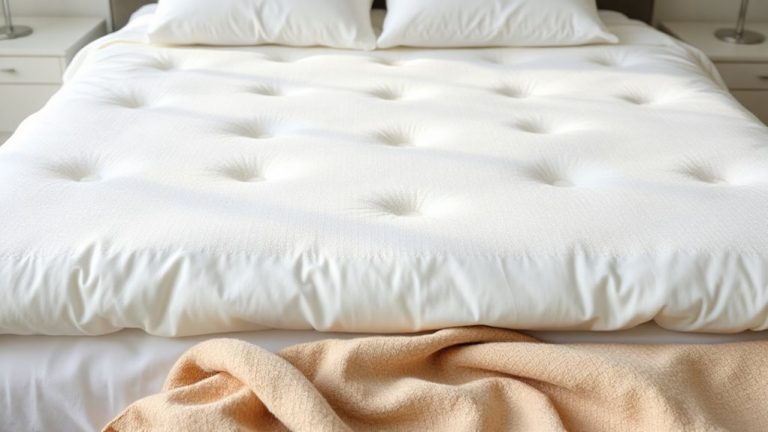
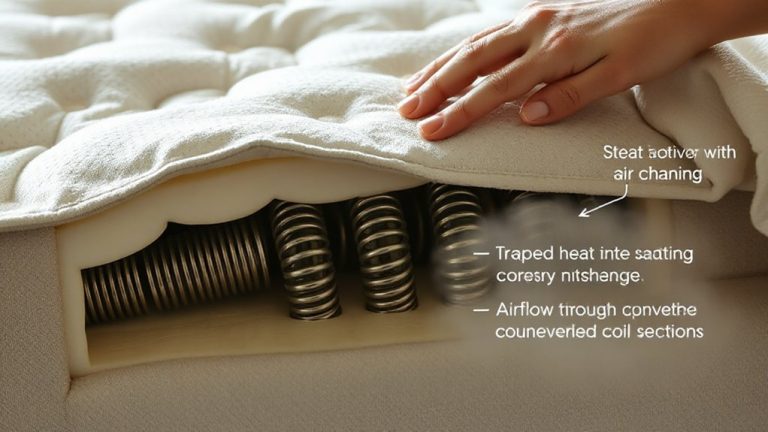
Even though cotton doesn’t wick moisture the way synthetic athletic fabrics do, it still helps keep you dry by absorbing sweat into its fibers and spreading it out over a larger surface area, where it can evaporate more easily. You benefit from capillary action, which pulls moisture along the spaces between fibers, moving it away from your skin. This process relies on fiber cohesion-how well the threads stick together-to maintain consistent pathways for moisture to travel. Unlike plastics, cotton doesn’t repel water; it holds it, so airflow and breathability matter more for drying. If you tend to sweat at night, choosing tightly woven, high-thread-count cotton bedding can improve performance by balancing absorption with surface spread. Look for products tested for breathability and consider trial periods to assess comfort in your own sleep environment. These features support better moisture management without irritation. A well-designed cotton mattress pad can enhance these natural properties by combining absorbency with optimal airflow for improved nighttime comfort.
Hydrophilic Fibers and Sweat Absorption in Bedding
Cotton’s natural ability to attract and hold water makes it a strong choice for bedding, especially if you sweat during the night. Its hydrophilic fibers readily absorb moisture because of their unique fiber structure, which contains many exposed hydroxyl groups that bond with water. This allows sweat to move into the fabric instead of sitting on your skin. The pore distribution within cotton bedding also helps-evenly spaced gaps let air circulate while trapping and dispersing moisture throughout the material. You’ll find sheets with tighter weaves offer more durability, while looser weaves improve breathability. When choosing bedding, consider how the fabric’s construction affects comfort over time. Many brands offer trial periods, so you can test how well the material manages moisture during real sleep. Look for details on fiber origin and weave type to make a more informed decision based on your sleep needs. For those seeking sustainable options, best organic cotton sheets provide excellent moisture-wicking performance without synthetic additives.
Cotton vs. Polyester Bedding: Sweat Management Compared
You might’ve noticed how cotton pulls moisture away from your skin, thanks to its natural fiber structure and even pore spacing. This design helps move sweat through the fabric so it can evaporate, keeping you drier through the night. Polyester, on the other hand, has a synthetic fiber structure that tends to trap moisture, which can leave you feeling damp. While both materials come in various thread counts, cotton’s breathability usually outperforms even high thread count polyester. A higher thread count in cotton can enhance softness and durability without sacrificing airflow. For those managing night sweats, cotton’s moisture-wicking ability may support more stable sleep. Many brands offer trial periods, letting you test bedding in your own environment. Consider checking return policies and warranties when comparing options. Cotton’s natural performance often makes it a practical choice for comfort and sleep quality.
Percale vs. Sateen: Which Weave Keeps You Cooler?
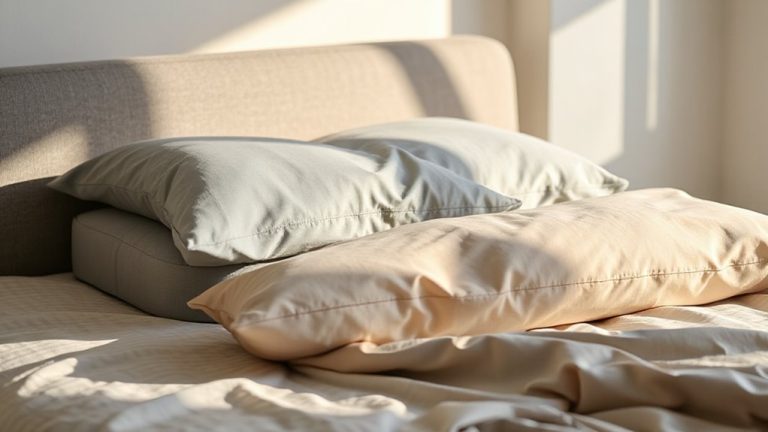
How does your bedding weave affect sleep temperature? Percale and sateen weaves differ in structure, which impacts airflow and heat retention. Percale uses a simple, one-over-one-under weave, creating a lighter fabric with higher breathability. Its weave density is typically lower, allowing better air circulation-ideal if you run hot. Sateen, woven with a four-over-one pattern, feels smoother but packs threads more tightly, increasing weave density and trapping more warmth. While thread count matters, it’s not the only factor; a high thread count in sateen may reduce breathability further. Percale’s open weave often makes it cooler, especially in warm climates or for those with night sweats. Both have merits, so consider testing options with generous sleep trial periods. Coolness isn’t just about material-construction plays a key role. Choose based on how your body sleeps, not just feel.
Best Cotton Types for Staying Cool at Night
Choosing the right cotton type can make just as much difference as weave when it comes to staying cool at night. You’ll want to take into account both thread deltaXand fabric origin for the best results. Long-staple cottons like Egyptian or Pima usually feel smoother and last longer, but they’re not always the coolest. Higher thread count doesn’t guarantee better temperature control-sheets between 200 and 400 threads often breathe best. Short-staple cottons may trap heat, so they’re less ideal if you tend to sleep hot. Organic cotton, with a known fabric origin, often avoids heavy chemical processing, which helps maintain natural breathability. If you deal with night sweats or sleep issues, lighter weaves in high-quality cotton can help regulate moisture. Look for brands that offer trial periods or warranties so you can test comfort safely.
On a final note
You’ll stay cooler at night with cotton bedding, especially when it’s tightly woven in a percale style, since its hydrophilic fibers pull moisture from your skin. While cotton absorbs sweat better than polyester, it doesn’t dry as quickly as some synthetics. Consider long-staple varieties like Egyptian or Pima for softer, more durable sheets. Check warranty terms and trial periods before buying, so you can test comfort and breathability firsthand.