Step-by-Step Breakdown of the Doctor’s Evaluation for Insomnia Diagnosis
You’ll start by tracking your sleep and daily habits, like screen time and caffeine use, often with a sleep diary for one to two weeks. Your doctor will review your sleep environment, stress levels, and medical history, checking for issues like anxiety, depression, or conditions such as asthma that could affect rest. If needed, they might recommend a home sleep study to rule out disorders like sleep apnea. Insomnia is confirmed when sleep disruptions happen three or more nights a week for at least three months and impact your daily life. Treatment usually begins with cognitive behavioral therapy for insomnia (CBT-I), while sleep aids are reserved for short-term use. Improving sleep hygiene and follow-up care are key to long-term progress, and there’s more to discover about managing your rest effectively.
Notable Insights
- Doctors begin by reviewing sleep patterns, daily habits, and potential lifestyle factors affecting sleep.
- A sleep diary is often recommended to track bedtime, sleep onset, awakenings, and morning alertness.
- The evaluation includes assessing sleep environment, caffeine use, screen time, and work schedules.
- Screening for mental health conditions, chronic pain, asthma, and medication side effects is conducted.
- Sleep studies are considered if other disorders like sleep apnea are suspected, not for routine insomnia diagnosis.
What Happens During an Insomnia Evaluation

While your doctor might start with a broad overview of your health, the insomnia evaluation quickly focuses on your sleep patterns and daily habits, so you can better understand what’s disrupting your rest. You’ll discuss your sleep environment-like room darkness, noise levels, and bed comfort-since these factors impact how easily you fall and stay asleep. Your daily routine also matters, including when you eat, exercise, and use screens, especially in the evening. These habits either support or interfere with your body’s natural sleep-wake cycle. The doctor may ask about caffeine or alcohol use, work shifts, or stress levels-all part of your routine that can affect sleep quality. Keeping a sleep diary for a week or two might be suggested to track patterns. This info helps identify possible causes and guides whether changes, therapy, or further testing are needed. High-quality cotton bedding sets can improve sleep comfort by regulating temperature and reducing irritation.
How Your Sleep Habits Help Diagnosis

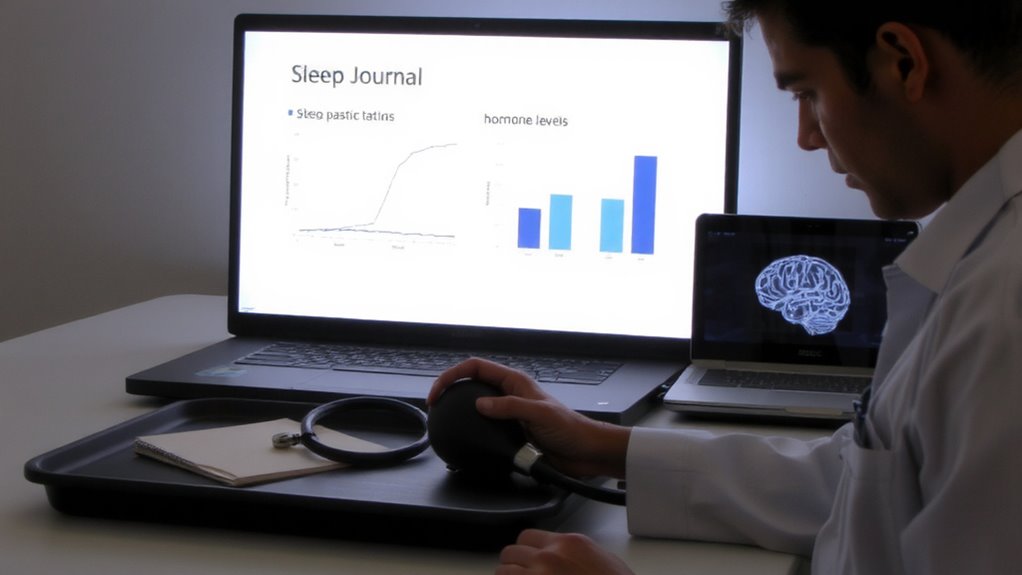
Your sleep habits give doctors clear clues about what’s affecting your rest, building on the daily routines and environment you’ve already discussed. Keeping a sleep diary for one to two weeks helps track patterns like when you go to bed, how long it takes to fall asleep, and how often you wake up. This record reveals inconsistencies in your bedtime routine that might be disrupting sleep. Maybe you’re scrolling on your phone too late or drinking coffee after noon-small habits with big impacts. Doctors look for regularity in your schedule, since inconsistent bedtimes can weaken your body’s sleep-wake cycle. A consistent bedtime routine, like brushing your teeth and reading at the same time each night, signals your brain that it’s time to wind down. These details from your sleep diary and routine help shape a clearer picture of your sleep health, guiding next steps without jumping to medications or assumptions.
Why Doctors Check for Health and Mental Health Issues
| Condition | How It Affects Sleep | What You Might Feel |
|---|---|---|
| Anxiety | Racing thoughts at night | Restless, overwhelmed |
| Depression | Waking too early | Tired, hopeless |
| Chronic pain | Discomfort through the night | Frustrated, achy |
| Asthma/COPD | Breathing trouble | Gasping, uneasy |
| Medication effects | Altered sleep patterns | Drowsy or unable to sleep |
When a Sleep Study Is Needed for Insomnia
A sleep study isn’t always necessary for diagnosing insomnia, especially if stress, anxiety, or depression explains your sleep troubles. But there are specific sleep study indications your doctor considers. If your history suggests another sleep disorder like sleep apnea, restless legs syndrome, or unusual nighttime behaviors, diagnostic testing necessity increases. You might need a sleep study if you snore loudly, gasp during sleep, or feel unrested despite enough time in bed. These signs suggest underlying issues a questionnaire alone can’t detect. The study records brain waves, oxygen levels, heart rate, and movement, helping pinpoint what’s disrupting rest. It’s painless and often done at home. Your doctor uses the results to decide the best approach, ensuring treatment matches your actual sleep patterns. This step clarifies whether insomnia stands alone or overlaps with other conditions needing separate care.
How Doctors Confirm Insomnia and What’s Next
What exactly turns restless nights into a formal diagnosis? When your sleep struggles last at least three nights a week for three months, and they affect your daily life, doctors can confirm insomnia. You’ll talk about your sleep patterns, stress levels, and any mood changes. They’ll check your sleep environment-things like light, noise, and your bedtime routine-since these often play a role. A medication review is key too; some drugs can disrupt sleep. Once confirmed, you’ll explore next steps, like cognitive behavioral therapy for insomnia (CBT-I), which helps retrain your sleep habits. Sleep aids might be considered, but usually only short-term. You’ll get guidance on improving sleep hygiene and tracking progress. Most find relief with structured plans, and many don’t need long-term medication. Follow-ups help adjust your approach, so you’re supported every step.
On a final note
You’ve now seen how doctors evaluate insomnia by reviewing sleep patterns, health, and mental well-being, and when a sleep study might help. Understanding your habits and possible causes guides accurate diagnosis. From there, treatment options can include behavioral changes, therapy, or short-term sleep aids-each with benefits and trade-offs. A follow-up checks progress and adjusts care as needed, ensuring solutions fit your life and improve rest safely over time.