The Impact of Diet Timing on Sleep Cycle Efficiency
Eating too close to bedtime slows digestion and disrupts your sleep cycle, making it harder to fall and stay asleep. Finishing dinner 2–3 hours before bed helps align your metabolism with your body’s internal clock. Time-restricted eating within an 8–12 hour daytime window can improve sleep efficiency and reduce nighttime awakenings. Consistent meal times support better insulin and melatonin balance. You’ll likely notice improvements in rest quality within a few weeks. There’s more to explore on how timing shapes rest.
Notable Insights
- Eating dinner 2–3 hours before bed supports deeper sleep by allowing time for digestion.
- Late-night eating disrupts melatonin and insulin, impairing sleep onset and increasing awakenings.
- Time-restricted eating within an 8–12 hour daytime window aligns metabolism with circadian rhythms.
- Consistent meal timing trains the body for efficient digestion and improves sleep cycle efficiency.
- Avoiding heavy, spicy, or high-fat foods at night reduces restlessness and supports uninterrupted sleep.
What Happens When You Eat Late at Night?
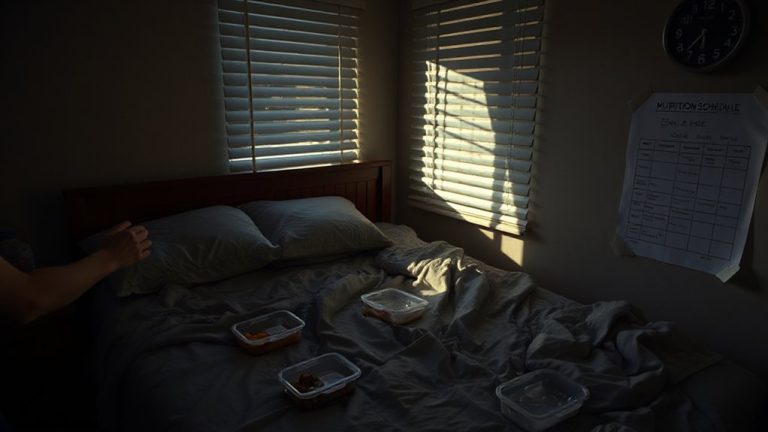
Why do you feel sluggish or struggle to fall asleep after a late-night meal? Your body isn’t designed to process food efficiently at night, and eating too close to bedtime can cause digestive disruption. As your stomach works harder, blood flow shifts toward digestion, making you feel heavy or restless. This strain often triggers a hormonal imbalance, especially in melatonin and insulin, which regulate sleep and energy. When these signals conflict, your sleep cycle suffers. You might toss and turn or wake frequently, reducing overall sleep quality. While occasional late meals won’t derail long-term health, repeated patterns may contribute to chronic sleep issues. Consider adjusting meal timing to give your body time to wind down. If problems persist, evaluate sleep aids carefully-look for options with trial periods and clear usage guidelines. Small changes now can support better rest without drastic trade-offs.
How Meal Timing Affects Your Sleep Schedule
When could the timing of your meals be affecting how well you sleep? It’s not just what you eat, but when you eat it that influences your sleep schedule. Poor meal timing can increase sleep latency and disrupt your natural cycle. Your body digests food differently depending on the time of day, and meal composition plays a role in how quickly you fall asleep. Eating heavy meals too close to bedtime may delay sleep onset, while going to bed hungry could also interrupt rest. Consider how your habits align with your sleep goals.
| Meal Time | Sleep Impact |
|---|---|
| 3+ hours before bed | Lower sleep latency |
| 1–2 hours before bed | Moderate disruption |
| Right before bed | Higher sleep latency |
| Skipping dinner | Possible restlessness |
| Balanced, early dinner | Supports stable sleep |
Best Times to Eat for Deeper, More Restful Sleep
Could timing your meals earlier in the evening actually help you sleep more soundly through the night? Yes-finishing dinner at least two to three hours before bed supports deeper rest. Your body needs time to digest, and late eating can disrupt your sleep cycle. Focus on meal composition: include lean proteins, complex carbs, and healthy fats to stabilize blood sugar overnight. Avoid heavy, spicy, or high-fat food choices close to bedtime-they may cause discomfort or indigestion. Opt instead for lighter options like yogurt with berries or a small turkey sandwich on whole grain. These support melatonin production without overloading your digestive system. Adjusting when and what you eat doesn’t replace sleep aids or medical treatment for sleep disorders, but it’s a practical step toward better rest. Small, informed changes in timing and food choices can make a noticeable difference in sleep quality over time.
How Time-Restricted Eating Supports Sleep Quality
Although you might not think of your eating window as a sleep strategy, limiting food intake to a consistent daytime schedule can help regulate your body’s internal clock. Time-restricted eating supports your gut brain axis by giving your digestive system a break, which promotes clearer communication between your gut and brain. This alignment can improve sleep onset and reduce nighttime awakenings. When you eat within a set window, typically 8–12 hours, you also support hormonal balance, especially insulin and cortisol, both tied to sleep quality. Without late-night snacks, your body moves into rest mode more smoothly. Over time, this routine may reduce reliance on sleep aids and improve overall sleep efficiency. You don’t need to cut calories-just compress when you eat. Start with a 10-hour window and adjust based on how you feel. Many notice better rest within two weeks.
Sync Your Meals With Your Body’s Natural Clock
If you’ve ever felt sluggish after a heavy lunch or struggled to fall asleep after dinner, it’s likely because your meals were out of step with your body’s natural rhythms. Your internal clock thrives on circadian alignment, meaning food intake works best when matched to your body’s metabolic peaks. Eating late disrupts this rhythm, potentially worsening sleep quality. To support better rest, aim for meal consistency-eating meals at roughly the same times each day trains your system to expect and process food efficiently. Front-loading calories earlier in the day aligns with natural energy use and may reduce nighttime digestive strain. This practice doesn’t require strict rules but benefits from steady patterns. Over time, syncing meals with your body’s clock can improve sleep cycle efficiency, offering a simple, non-invasive strategy to support rest-without relying on sleep aids or treatments for disorders.
On a final note
You’ll sleep better when meals align with your body’s natural rhythm. Eating late disrupts digestion and delays sleep onset, while earlier, consistent meals support deeper rest. Time-restricted eating-like finishing food by 7 p.m.-may improve sleep efficiency over time. Though results vary, shifting dinner earlier is a low-risk trial. No special tools or costs are involved, and adjustments can be reversed. Track changes for a few weeks to see what works for your sleep pattern.