Assessing Pillow Symmetry Regularly to Detect Uneven Compression Damage
You should check your pillow weekly for uneven compression by running your hand over its surface to feel for dips or lopsided firmness. Asymmetry in support can misalign your spine and lead to neck pain over time. Memory foam and latex resist wear better than down or polyester, while regular flipping helps maintain shape. Signs like discoloration or sagging seams mean it’s time to think about replacement, especially if fluffing no longer restores loft. A consistent sleep surface supports better spinal alignment-understanding material performance and wear patterns will help you make informed choices about when to rotate, replace, or adjust your pillow for long-term comfort.
Notable Insights
- Run your hand over the pillow surface to detect dips or inconsistent firmness indicating uneven compression.
- Check for one side sinking more than the other, a sign of asymmetrical support and potential spinal misalignment.
- Inspect for lumps or flattened areas, especially in memory foam or down pillows, which lose resilience over time.
- Feel along seams for loose fabric or tension changes, signaling internal wear and material breakdown.
- Rotate and flip the pillow weekly to identify developing asymmetry and delay localized compression damage.
Check for Uneven Pillow Compression
A pillow that’s lost its shape might be the reason you wake up with stiffness or discomfort. When you check for uneven pillow compression, you’re evaluating how well it maintains pillow alignment night after night. Flattened or lumpy areas disrupt the spine’s natural curve, reducing effective neck support. Run your hand over the surface-consistent firmness means better performance. Notice dips or one side sinking more? That asymmetry forces your neck into awkward angles, possibly worsening sleep quality. Memory foam often retains shape longer than down or polyester fills, but wear varies by use and care. Many quality brands offer trial periods, letting you test durability and support over time. A warranty can also protect against premature breakdown. Checking compression isn’t about perfection-it’s about recognizing when your pillow no longer supports your sleep health as designed. Side sleepers especially benefit from pillows with contoured shapes or adjustable loft, which help maintain spinal alignment, making best pillows for side sleepers a key consideration when replacing a worn-out pillow.
Spot Signs of Pillow Wear Early
How often do you really look at your pillow beyond tossing it back into place each morning? Taking a moment weekly helps you spot signs of wear before they affect sleep quality. Check for pillow discoloration patterns-yellowish spots or uneven shading often signal moisture buildup, dead skin, or uneven pressure over time. These aren’t just cosmetic; they can point to material breakdown beneath the surface. Also, run your fingers along the seams and surface to detect fabric tension changes. If the cover feels looser in some areas or pulls unevenly, the internal structure may be failing. Early detection lets you adjust sleep position, consider protective covers, or evaluate replacement timing. It also helps identify whether your pillow supports proper spinal alignment. Noticing these details early gives you time to test alternatives, review warranty options, or consult sleep specialists if discomfort arises.
Flip, Fluff, or Replace?
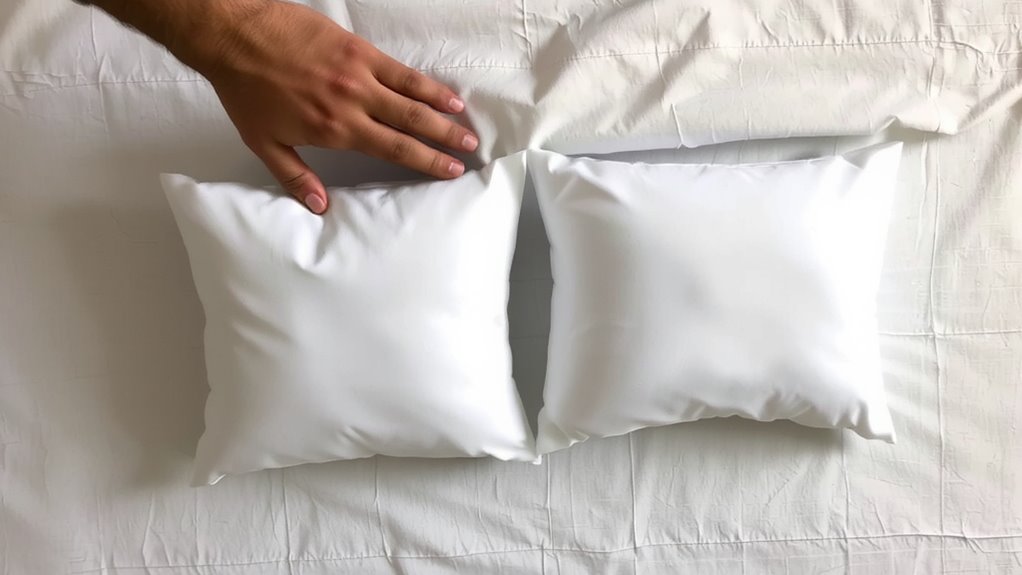
Spotting wear early gives you a head start, but now you’ve got to decide what comes next-flip it over, freshen it up, or let it go. Your pillow’s rotation frequency plays a big role here; flipping it weekly helps delay uneven compression. If it bounces back after fluffing, you’re likely okay for now. But if it stays flat or feels lumpy, you’re seeing clear material degradation patterns. Down, foam, and fiberfill all break down differently, so check for sagging, thin spots, or loss of support. Fluffing might help short term, but it won’t fix structural wear. A pillow that no longer keeps your neck aligned could affect your sleep quality over time. Most last 1–2 years, depending on use and care. If symptoms like stiffness or disrupted sleep persist, consider replacement. Read trial policies-many brands offer sleep trials-so you can test support and comfort risk-free before committing. A new mattress pad can also improve overall sleep comfort, especially if paired with proper pillow support, and considering the best full mattress pads may enhance both coziness and longevity of your sleep setup.
Pillow Materials That Resist Compression
Some pillow materials hold up far better over time, and knowing which ones resist compression can save you hassle-and sore necks-in the long run. Memory foam pillows mold to your head and neck, maintaining support by slowly springing back after use. High-density versions resist sagging longer than cheaper foams, making them a smarter long-term pick. Latex cores are even more resilient, bouncing back quickly and keeping their shape for years. They’re naturally breathable too, which helps regulate temperature. You can find both materials in adjustable or shredded forms, letting you tweak loft and firmness. Many brands offer trial periods, so you can test comfort and support risk-free. Look for warranties of five years or more-this often signals confidence in durability. When evaluating symmetry, these materials tend to show even wear, making compression damage easier to spot early. A well-chosen support system, like a twin trundle mattress, can also influence overall sleep alignment and spinal support.
Daily Habits for Pillow Longevity
Regularly flipping or rotating your pillow helps it wear evenly and maintain proper shape over time. Doing this daily prevents deep compression in one spot and supports consistent support. Pillow storage matters-keep it in a breathable cotton cover and avoid stuffing it under heavy items or in damp areas. Using a pillow protector can extend time between cleanings and reduce wear. Speaking of cleaning frequency, most pillows need washing every three to six months, depending on material and use. Down, memory foam, and synthetic fills each have specific care instructions, so check labels to avoid damage. A well-maintained pillow resists sagging and lasts longer. You’ll likely notice better performance and durability, especially when stored properly and cleaned on schedule. These small habits make a noticeable difference in how your pillow holds up over months and years.
How an Uneven Pillow Affects Sleep
If your pillow has lost its shape, you’re likely not getting the support your neck and spine need through the night, which can subtly disrupt your sleep quality over time. Poor neck alignment from an uneven pillow forces your muscles to compensate, increasing tension and discomfort. You might wake with stiffness or headaches, signs your pillow isn’t managing pressure points effectively. When one side compresses more than the other, it creates an imbalance that shifts your head into unnatural positions. This uneven support can worsen existing sleep disorders or contribute to chronic discomfort. Memory foam or latex pillows often maintain shape longer and distribute pressure more evenly. Consider models with removable, washable covers and trial periods-many offer 30-day guarantees-so you can test comfort and support. Replacing your pillow every 1–2 years helps maintain proper alignment and pressure relief, supporting deeper, more restful sleep.
On a final note
You can spot pillow wear early by checking for uneven compression each week. Flipping or fluffing helps, but some materials like memory foam or down keep shape longer. An uneven pillow may affect sleep quality, especially if you wake with neck discomfort. Look for pillows with trials or warranties so you can test support and comfort. Replacing a worn pillow improves alignment and rest. Choose based on how the material holds up and suits your sleep position.