How to Use Passionflower to Reduce Night Wakings in Anxiety Sufferers
Take 300–600 mg of passionflower extract 30–60 minutes before bed to ease nighttime anxiety and reduce wakefulness. It boosts GABA activity, calming overactive brain signals without heavy sedation. Capsules offer consistent dosing, while tinctures act faster. For lasting effects, try alcohol-based extracts or tea. Combine with good sleep habits-like a cool room and no screens-for better results. You’ll find more ways to support steady, restful sleep ahead.
Notable Insights
- Passionflower modulates GABA activity to calm nighttime anxiety and reduce sleep disruptions.
- Take 300–600 mg of passionflower extract 30–60 minutes before bed for optimal effect.
- Tinctures and liquid extracts offer faster absorption, helping ease early-night anxious thoughts.
- Use passionflower tea or capsules consistently at bedtime to support sustained sleep continuity.
- Combine with good sleep hygiene to enhance effectiveness in reducing night wakings.
Why Passionflower Calms Nighttime Anxiety

While you might be skeptical about herbal remedies, passionflower works by gently influencing your brain’s neurotransmitters to help quiet nighttime anxiety. It supports neurotransmitter balance, helping your mind stay calm without heavy sedation. Unlike stronger sleep aids, it doesn’t dull your senses but instead modulates your stress response, making it easier to relax when your thoughts race at night. You’ll find it especially useful if your wakeings are tied to stress or overthinking. Most clinical studies use 300–600 mg of passionflower extract, taken about 30–60 minutes before bed. Side effects are rare but may include mild drowsiness or dizziness. It’s not habit-forming, and many users report better continuity in sleep after a week of consistent use. Passionflower is available in capsules, teas, and tinctures, so you can choose based on convenience and absorption speed.
How Passionflower Boosts GABA to Reduce Wakefulness
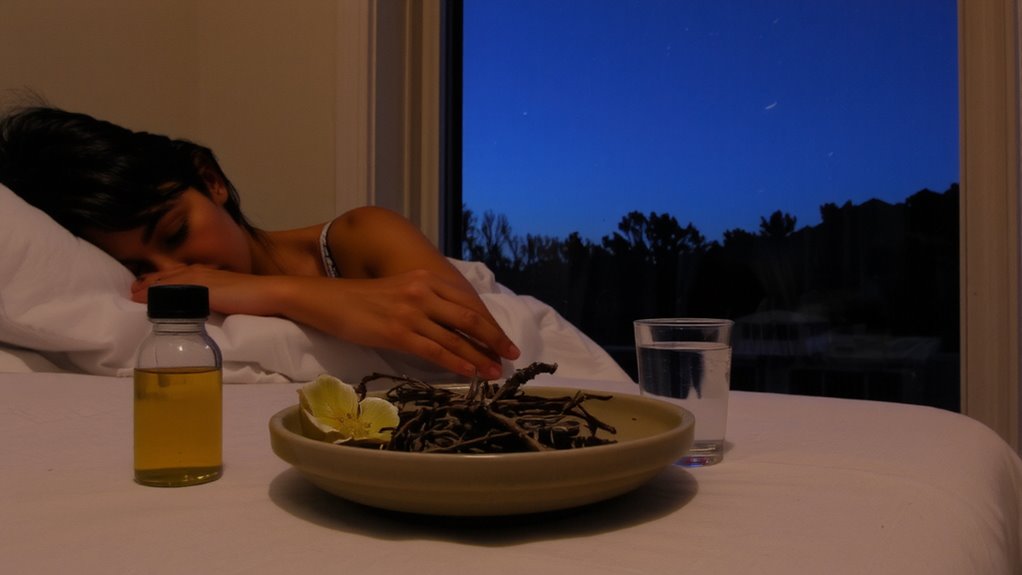
Because your brain relies on certain neurotransmitters to regulate calmness and sleep, passionflower helps reduce nighttime wakefulness by supporting the activity of gamma-aminobutyric acid, or GABA. This natural compound enhances GABA modulation, which means it helps GABA bind more effectively to its receptors, slowing excessive neural activity. When your brain’s overactivity quiets down, you experience deeper neural relaxation, making it easier to stay asleep after waking. Unlike some sleep aids that sedate, passionflower works with your body’s chemistry to promote balance, not dependency. You might notice fewer middle-of-the-night ruminations or physical restlessness. For those managing anxiety-related sleep disruptions, this subtle shift in brain signaling can make a practical difference. It won’t knock you out, but it creates conditions more favorable for uninterrupted rest. GABA modulation through herbal support like passionflower offers a gentler alternative worth considering when choosing sleep solutions.
Best Passionflower Forms for Staying Asleep
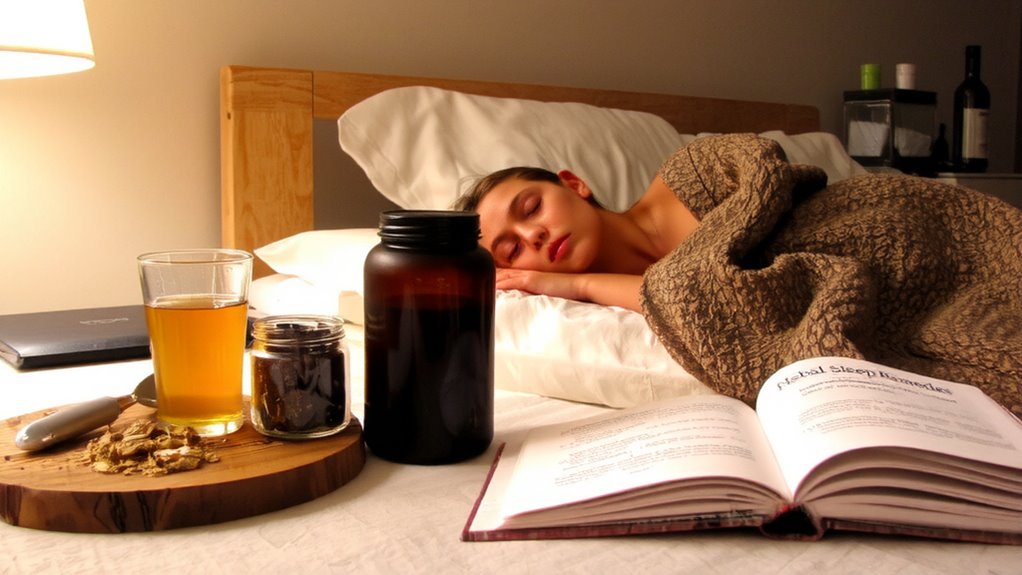
If you’re looking to stay asleep, the form of passionflower you choose can influence how well it works throughout the night. Teas and tinctures use gentle extraction methods that preserve calming compounds, making them effective for sustained release. Tinctures, taken in liquid form, absorb faster, while capsules offer consistent dosage timing and convenience. Whole herb powders in tablets may act slower but provide longer-lasting effects for some. Alcohol-based extracts tend to concentrate active ingredients better than water-only methods, which might affect performance. If ease of use matters, pre-measured capsules help with accurate dosage timing. For those sensitive to taste or digestion, odorless softgels might be worth trying. Most products list extraction methods on labels-look for “standardized extract” to guarantee reliable potency. Always check for third-party testing and trial periods in case adjustments are needed. Starting with a mid-range dose lets you assess effects without overdoing it.
When to Take Passionflower for Continuous Sleep
Choosing the right form of passionflower sets the stage for how well it supports your sleep cycle, but timing matters just as much when aiming for uninterrupted rest. For best results, you’ll want to align dosage timing with your body’s natural wind-down phase. Taking passionflower 30 to 60 minutes before bed allows compounds to peak when you’re settling in. Consistency enhances effectiveness-using it nightly builds ideal consistency in sleep support.
| Form | Time to Take | Onset Time |
|---|---|---|
| Tea | 60 min before bed | 45 min |
| Tincture | 30–45 min before bed | 20 min |
| Capsule | 60 min before bed | 50 min |
| Extract (liquid) | 30 min before bed | 25 min |
This routine helps regulate your response over time, gently guiding your nervous system toward sustained rest.
Pair Passionflower With These Proven Sleep Habits
What makes your nightly routine truly effective? It’s not just passionflower-it’s how you pair it with consistent, science-backed habits. Start by optimizing your sleep environment: keep the room cool, dark, and quiet, and remove screens at least 30 minutes before bed. Your bedtime routine should signal your brain that it’s time to wind down. Try gentle stretching, reading, or deep breathing alongside your passionflower dose. Avoid heavy meals or caffeine late in the day. Stick to a regular sleep schedule, even on weekends, to regulate your body’s clock. Include foods that help you sleep to further support restful, uninterrupted sleep. These habits don’t replace passionflower-they enhance its effects. Together, they reduce anxiety-related night wakings more reliably than any single method. With time and consistency, you’ll see what combination works best for your rest.
On a final note
You can use passionflower to help reduce night wakings if anxiety disrupts your sleep. It supports calmness by boosting GABA, a brain chemical linked to relaxation. Take it as a tea, tincture, or capsule about 30 to 60 minutes before bed. Pair it with consistent sleep habits like a set bedtime and limited screen time. Results vary, so try it for a few nights to assess effects. Always check with your doctor, especially if you take other medications.