How to Use Aromatherapy With Lavender and Chamomile to Reduce Musculoskeletal Pain at Night
You can use lavender and chamomile aromatherapy to ease nighttime muscle and joint pain by diffusing a few drops in a cold-air diffuser or adding them to a carrier oil for a soothing pre-bed massage. Their natural anti-inflammatory and calming properties help relax tense muscles and signal your body it’s time to rest. For best results, choose high-quality, pure oils verified by GC/MS testing and always dilute properly to avoid irritation-you’ll find even more ways to integrate these oils safely and effectively into your nightly routine.
Notable Insights
- Use lavender and chamomile in a diffuser before bed to promote relaxation and reduce nighttime muscle and joint pain.
- Apply diluted lavender or chamomile oil topically with a carrier oil for soothing bedtime massage.
- Place a few drops of essential oil on a cotton ball near your pillow for gentle, continuous inhalation.
- Take a warm bath with lavender oil or use a chamomile tea compress to ease sore muscles before sleep.
- Combine aromatherapy with heat therapy or stretching for enhanced nighttime pain relief and better sleep.
How Lavender and Chamomile Ease Night Pain
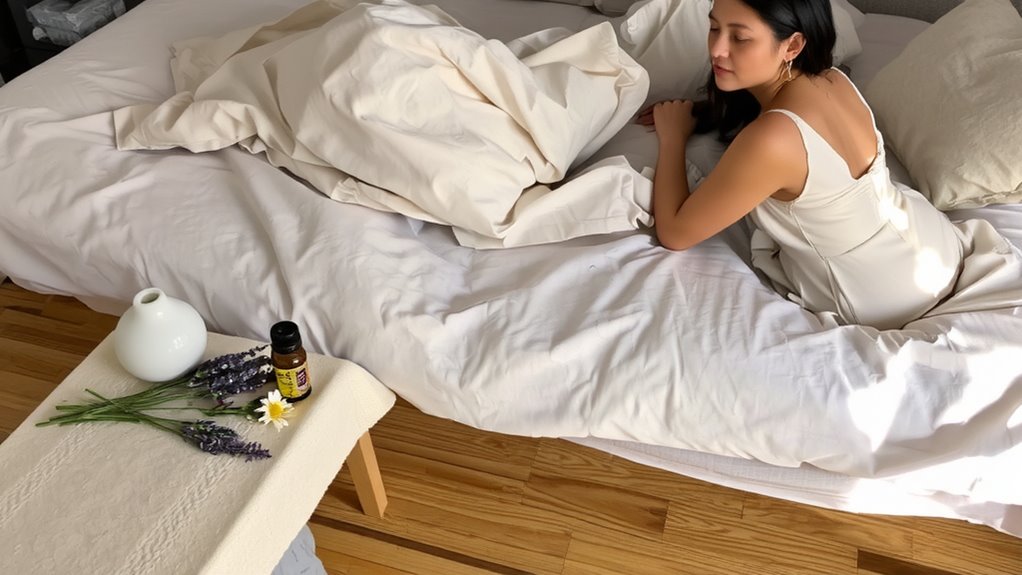
While you’re looking for ways to relieve nighttime muscle aches without relying on pills, essential oils like lavender and chamomile may offer a gentle option. Both oils have natural anti inflammatory properties that help reduce soreness in muscles and joints, easing discomfort without harsh side effects. When inhaled or applied topically (with a carrier oil), they support relaxation and signal your body it’s time to rest. You’ll likely notice improved sleep enhancement, as these oils help regulate nervous system activity, promoting deeper, more continuous rest. This can be especially helpful if pain interrupts your sleep cycle or makes falling asleep difficult. Though they won’t replace medical treatment, their calming effects offer a practical complementary approach. Using them nightly may help you assess their impact on pain levels and sleep quality over time, letting you make informed choices about long-term sleep aids. For optimal results, consider using a diffuser specifically designed for sleep, such as one of the best diffusers for sleep.
Choosing High-Quality Essential Oils for Pain Relief
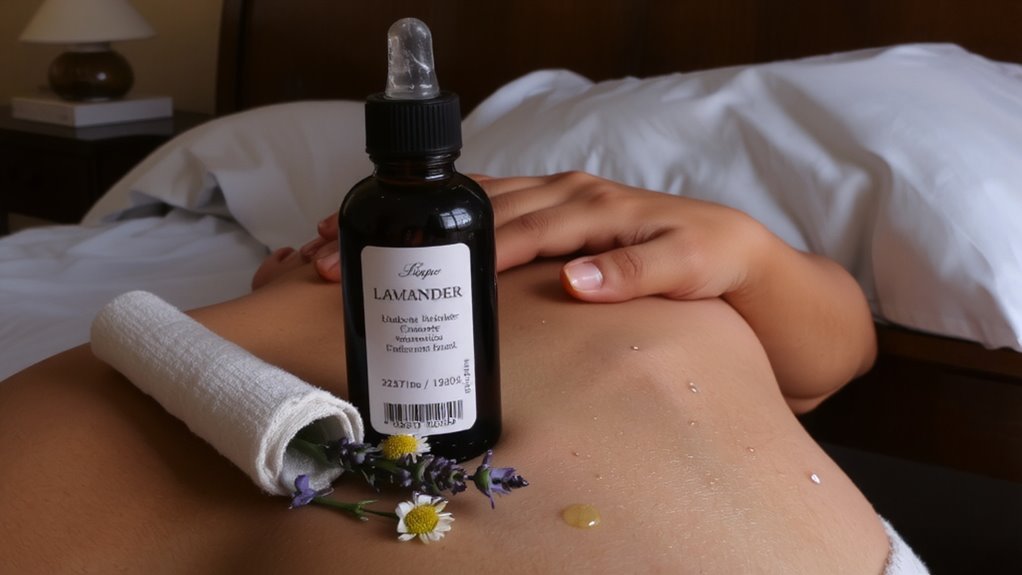
A high-quality essential oil can make a real difference when you’re using aromatherapy to manage musculoskeletal pain. You need to check both oil purity and source credibility to get the best results. Low-quality oils may contain fillers or synthetic additives that reduce effectiveness and could irritate your skin or lungs. Look for oils that come with GC/MS test reports, which confirm purity. Choose brands that clearly list the plant’s Latin name, country of origin, and distillation method. Reputable suppliers often share farming practices and offer transparency about sourcing. For the most effective aromatherapy experience, choose oils from brands recognized for their best essential oils quality and consistency.
3 Proven Ways to Apply Them Before Bed
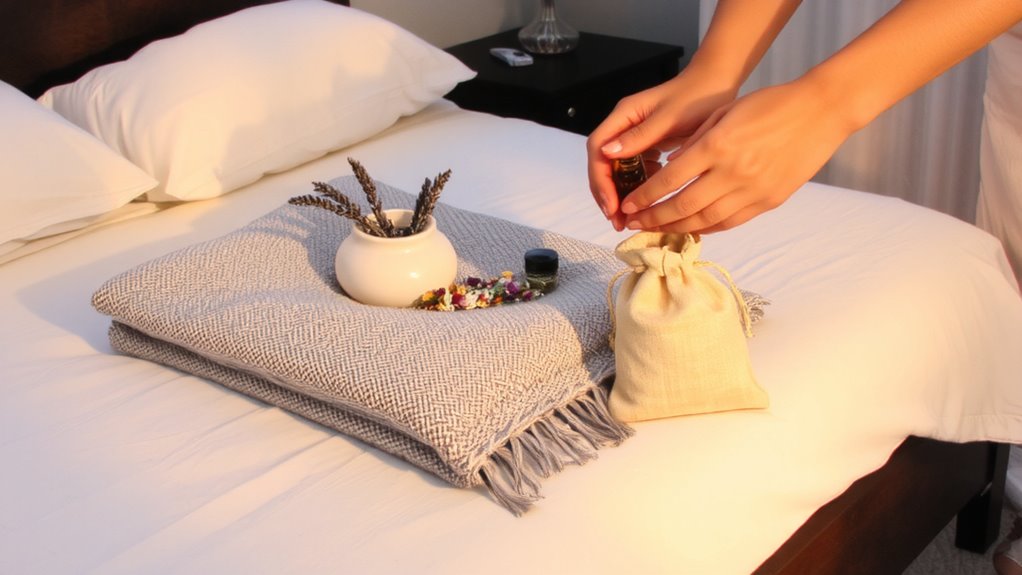
Since sleep plays a key role in recovery from musculoskeletal pain, how you apply essential oils before bed can affect both comfort and rest quality. You can use diffusion methods like a cold-air diffuser or ultrasonic humidifier to disperse lavender and chamomile into the air evenly. These devices work well for sustained inhalation techniques throughout the night. For quicker effects, place a few drops on a cotton ball near your pillow or use a personal inhaler. This gives targeted relief without overwhelming your space. Some people prefer steam inhalation-adding 2–3 drops to hot water and breathing in the vapor-for immediate muscle relaxation before sleep. Always test small amounts first to assess sensitivity. Consistent use over time may support better sleep patterns. These methods are non-invasive and integrate easily into bedtime routines, offering a gentle option among sleep aids. For optimal results, consider choosing a high-purity lavender oil for sleep that supports both aroma potency and therapeutic effectiveness.
DIY Blends for Nighttime Muscle Relief
What if you could ease aching muscles with a simple blend you make yourself? You can mix a few drops of lavender essential oil with a carrier oil for a gentle nighttime massage that supports relaxation. Try adding it to warm milk baths-lavender baths help soothe tension and may improve sleep quality. For targeted relief, chamomile compresses work well: steep chamomile tea, cool it, then apply the liquid with a soft cloth to sore areas. The anti-inflammatory properties may reduce discomfort without harsh chemicals. Combine both lavender and chamomile in a diffuser an hour before bed to create a calming environment. These DIY blends are easy, affordable, and customizable. They offer a natural option among sleep aids, letting you decide what supports your rest best.
Avoiding Skin Irritation: Safety First
Using essential oils safely means protecting your skin first-always dilute them properly before applying. Essential oils like lavender and chamomile are potent, so following correct dilution ratios is key. For most adults, a 2% dilution works well-that’s about 12 drops of essential oil per ounce of carrier oil. This keeps the blend strong enough for effect but gentle on the skin. Before regular use, try patch testing: apply a small amount of diluted oil to your inner forearm and wait 24 hours. Watch for redness, itching, or swelling, which suggest sensitivity. Even natural oils can irritate if used improperly. Skipping these steps might lead to discomfort that disrupts sleep instead of easing it. Patch testing and proper dilution are small efforts that support safe, consistent use. They help you avoid reactions that could interfere with your nighttime routine. Staying safe lets you focus on comfort and rest.
Combining Aromatherapy With Other Pain Relief
While aromatherapy can offer soothing support for musculoskeletal pain, you’ll often get better results by pairing it with other proven relief methods. Combining lavender and chamomile scents with complementary therapies like gentle stretching, heat application, or over-the-counter pain relievers may create synergistic effects that enhance overall comfort. These essential oils won’t replace medical treatments, but they can improve relaxation when used alongside them. For nighttime relief, consider diffusing the oils while using a heating pad or practicing deep-breathing exercises. You might notice improved sleep quality as pain reduces and your body unwinds. Always monitor how your body responds and adjust as needed. Some find that consistent use, combined with healthy sleep habits, leads to gradual improvement. This approach supports your body’s natural recovery without replacing necessary medical care, offering a balanced addition to your routine.
On a final note
You can use lavender and chamomile aromatherapy to ease nighttime musculoskeletal pain by choosing pure, therapeutic-grade oils and testing small amounts first. Try diffusing, applying diluted blends to skin, or adding to a bath before bed. These methods may support relaxation and mild pain relief, but results vary. Combine with good sleep habits and consult a doctor if pain persists, especially with diagnosed conditions. Always patch-test oils and discontinue if irritation occurs. A cautious, informed trial helps determine what works best for your comfort and sleep quality.