Advising Against Overstacking Pillows Which Causes Cervical Hyperextension
Stacking pillows elevates your head too high, forcing your neck into cervical hyperextension and straining muscles and spine. This misalignment disrupts your natural posture, often leading to stiffness, headaches, and poor sleep. Instead of layering pillows, choose one with proper loft and support-memory foam or adjustable-fill models maintain spinal alignment based on your sleep position. Quality materials and design matter, especially with trial periods and warranties letting you test comfort risk-free. Better support is within reach.
Notable Insights
- Overstacking pillows forces the neck into hyperextension, disrupting spinal alignment and increasing strain.
- Excessive pillow height can compress neck muscles and vertebrae, leading to stiffness and headaches.
- Proper pillow support maintains a neutral spine, keeping the head aligned with shoulders and hips.
- Use a single contoured or memory foam pillow to support natural neck curvature without overelevation.
- Choose pillow height based on sleep position: low for stomach sleepers, medium for back, high for side sleepers.
What Is Cervical Hyperextension and How Pillows Cause It

Cervical hyperextension happens when your neck bends too far backward, straining the spine and surrounding muscles. You might not realize it, but your pillow setup could be the cause. When you stack pillows without proper design, they often lead to cervical strain by forcing your head into an unnatural position. This improper support disrupts your spine’s natural curve, increasing tension over time. Instead of comfort, you’re inviting stiffness and discomfort, especially if you sleep in the same position all night. A well-constructed pillow, tailored to your sleeping style, maintains alignment and reduces risk. Memory foam or contoured models often perform best, cradling the neck without overelevation. Many come with trial periods, so you can test comfort safely. It’s not about having more pillows-it’s about choosing the right one. Look for features that emphasize support and spine neutrality, helping you avoid long-term strain while improving sleep quality. Choosing the correct pillow height is essential for maintaining proper spinal alignment during sleep.
How Stacking Pillows Strains Your Neck and Spine
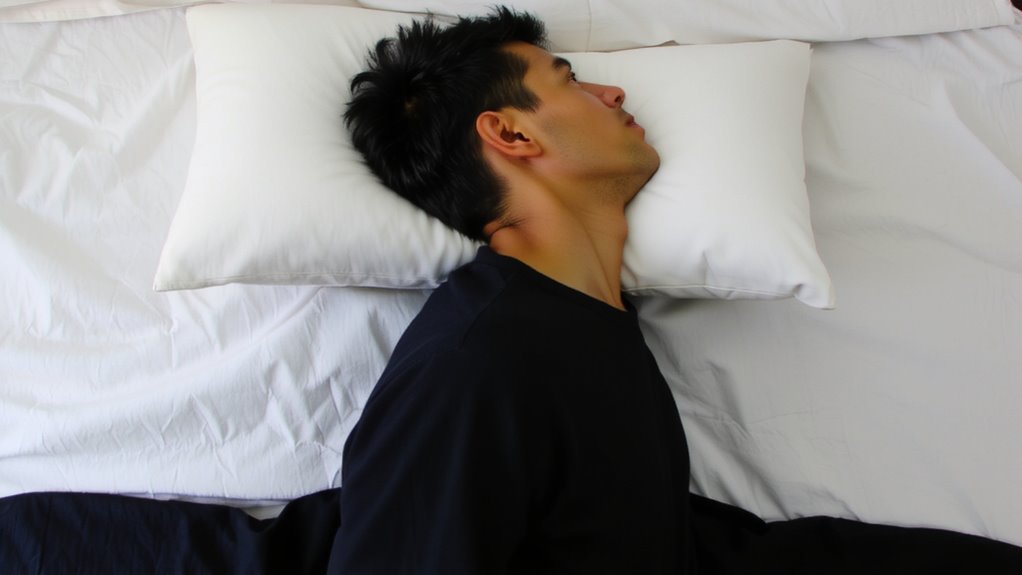
If you’ve been stacking pillows to get more comfort at night, you might actually be doing more harm than good. Excess pillows raise your head too high, forcing your neck out of alignment. This leads to neck compression and muscle fatigue, disrupting your spine’s natural curve. Over time, you may wake with stiffness, headaches, or worsened sleep quality. Even high-quality pillows can’t compensate for improper height. One effective solution is choosing a single pillow specifically designed for side sleeping, such as those with contoured shapes or adaptive foam, which help maintain proper alignment by supporting the space between your head and shoulder-a key feature highlighted in reviews of the best pillows for side sleepers.
| Symptom | Cause | Effect on Sleep |
|---|---|---|
| Neck pain | Neck compression | Waking mid-sleep |
| Shoulder tension | Misaligned spine | Restless turning |
| Headaches | Muscle fatigue | Morning discomfort |
| Poor sleep quality | Altered posture | Daytime drowsiness |
| Snoring | Restricted airway | Reduced oxygen flow |
Choosing one supportive pillow tailored to your frame helps maintain spinal alignment. Look for models with trial periods to test comfort risk-free.
How Sleep Position Determines Your Pillow Height

Why do you wake up with a stiff neck or sore shoulders? Your sleep posture plays a big role. Depending on how you sleep, your pillow height needs to match to maintain proper head elevation. If you’re a back sleeper, you need a medium pillow-too high strains your neck, too flat misaligns your spine. Side sleepers usually need a taller pillow to fill the gap between your shoulder and head, keeping your spine straight. Stomach sleepers should use a thin pillow, or none at all, since too much head elevation can overextend your neck. The right pillow balances support and comfort without forcing your head up. Consider pillows with adjustable fill or trial periods so you can test firmness and height. Matching pillow height to your sleep posture reduces strain, helping you avoid pain over time. Choosing the right pillow can also prevent numbness in arms and hands, especially with models designed for proper spinal alignment like the best pillows to prevent numb arms and hands.
How to Align Your Neck and Spine While Sleeping
While your body stays still at night, the right alignment of your neck and spine can make a real difference in how rested you feel. You want your spine to stay neutral, meaning your neck isn’t tilted too far up or down. Too much elevation from stacked pillows can cause spine misalignment, straining muscles and joints. Instead, pick a pillow that supports your head’s natural curve, keeping it in line with your shoulders and hips. This position helps avoid unnecessary neck traction, which may irritate nerves or lead to morning stiffness. Side sleepers often need a higher pillow, while back sleepers do better with medium loft. Memory foam or adjustable pillows let you fine-tune height and firmness. Look for models with trial periods so you can test comfort. A well-aligned spine during sleep supports better breathing and movement recovery, helping you wake with less stiffness and more ease.
Signs You’re Using Too Many Pillows
Using more than two pillows might seem like extra comfort, but it often leads to misalignment and disrupted sleep. If you regularly wake with neck stiffness or feel tension across your shoulders, your pillow stack could be pushing your head too far forward. This strain increases pressure on your cervical spine, often resulting in persistent shoulder pain by midday. You might also notice headaches starting at the base of your skull, or that you toss and turn more than usual. Breathing could feel restricted, especially if you sleep on your back, since excessive elevation can narrow airways slightly. These signs suggest your setup isn’t supporting neutral alignment. Reducing pillow count may improve sleep quality and reduce discomfort over time. Pay attention to how your body responds within the first few nights of adjustment-short-term discomfort often fades as your spine adapts to a healthier position.
Ergonomic Solutions That Replace Pillow Stacking
A well-designed sleep setup can offer the support you need without relying on stacked pillows. Memory foam pillows cradle your head and neck, maintaining neutral spinal alignment throughout the night. Their dense, responsive material reduces pressure points and keeps your cervical spine properly positioned. For greater customization, choose a model with adjustable loft-these let you add or remove fill to match your shoulder width and sleeping position. Some styles even include removable layers, making it easy to fine-tune height and firmness. Many ergonomic pillows come with trial periods and warranties, so you can test comfort risk-free. While memory foam retains heat, newer versions include cooling gels or open-cell structures to improve airflow. Look for breathable covers that wick moisture. These features enhance comfort without compromising support. With the right design, you’ll avoid strain and wake feeling refreshed.
How to Choose a Pillow for Spinal Alignment
Your spine’s natural curve matters most when picking a pillow, and getting it right means looking at how well the pillow supports your neck based on your sleep style. Choosing the right pillow material and ensuring proper neck support are key factors in maintaining alignment. Pillows that are too high or too soft can strain your neck, while the right fit keeps your head in line with your spine.
| Sleep Position | Ideal Height | Pillow Material |
|---|---|---|
| Back | Low-Medium | Memory foam, latex |
| Side | High | Memory foam, buckwheat |
| Stomach | Very Low | Down, soft fiberfill |
| Combination | Medium | Adjustable, shredded foam |
Look for models with trial periods or warranties so you can test comfort and neck support. Firmness and contour should match your posture, not override it.
On a final note
You’re better off choosing one supportive pillow than stacking multiples, which can push your neck too far forward. Look for a pillow that matches your sleep position-softer for side sleeping, firmer for back or stomach sleepers. Memory foam or latex models often provide balanced support and durability. Try options with trial periods to test comfort and alignment. A well-chosen pillow keeps your head level with your spine, reducing strain, helping you wake with less stiffness and more energy.