How to Transition From Sedentary Evening Habits to a Sleep-Promoting Routine
You can shift from sedentary evenings to a sleep-friendly routine by setting a digital curfew, like turning off screens by 9 p.m., to reduce blue light that delays melatonin release. Replace scrolling with calming habits such as journaling or using lavender aromatherapy. Keep your bedroom cool, dark, and quiet, and reserve your bed only for sleep. Stick to consistent bed and wake times-even on weekends-and track your progress with a sleep app or wearable to see what works best over time. More details follow on fine-tuning each step effectively.
Notable Insights
- Gradually shift screen use to earlier in the evening and establish a consistent digital curfew at least one hour before bed.
- Replace passive screen time with relaxing activities like journaling or aromatherapy to signal your body it’s time to wind down.
- Optimize your bedroom environment by keeping it cool, dark, and quiet to support faster sleep onset and better quality rest.
- Maintain a regular sleep schedule, waking up and going to bed at the same time every day, even on weekends.
- Track your sleep patterns weekly using apps or wearables to assess progress and adjust your routine for better results.
Why Screens Keep You Awake
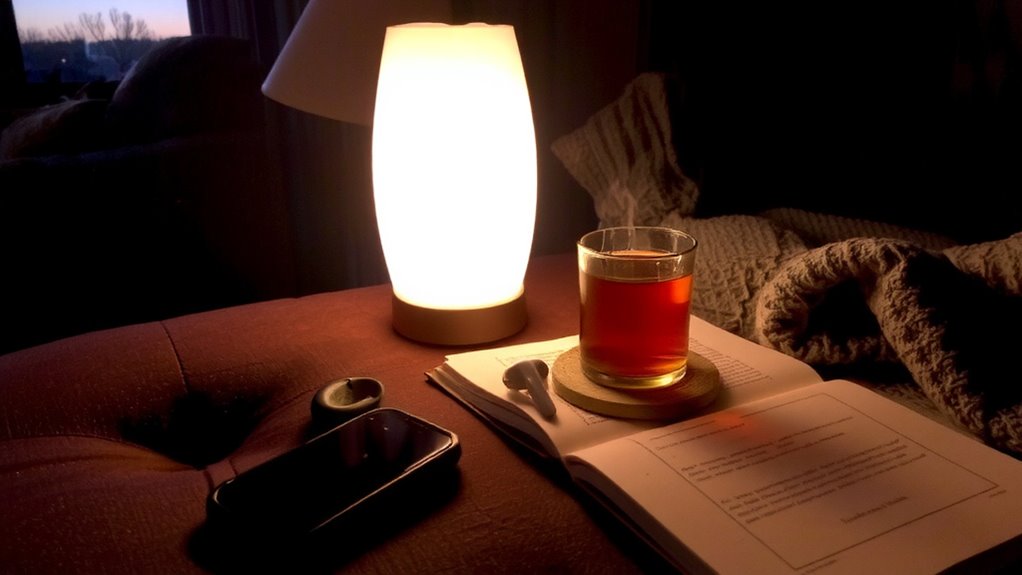
While you might feel relaxed scrolling through your phone or watching a show before bed, the truth is those screens are working against your sleep. The blue light exposure from devices suppresses melatonin, the hormone that signals it’s time to wind down. This delays sleep onset and reduces sleep quality over time. Your body relies on natural cues to regulate its cycle, but constant screen use confuses that system. Blue light exposure in the evening leads to circadian rhythm disruption, shifting your internal clock and making it harder to wake up feeling refreshed. Over time, this pattern can contribute to chronic sleep issues. Adjusting screen habits early may reduce reliance on sleep aids. Consider testing how your body responds when minimizing evening device use-you might notice improved alertness and mood. Evidence supports limiting screen time as a practical step toward healthier sleep, with no downside and measurable benefits.
Choose a Digital Curfew (And Make It Stick)
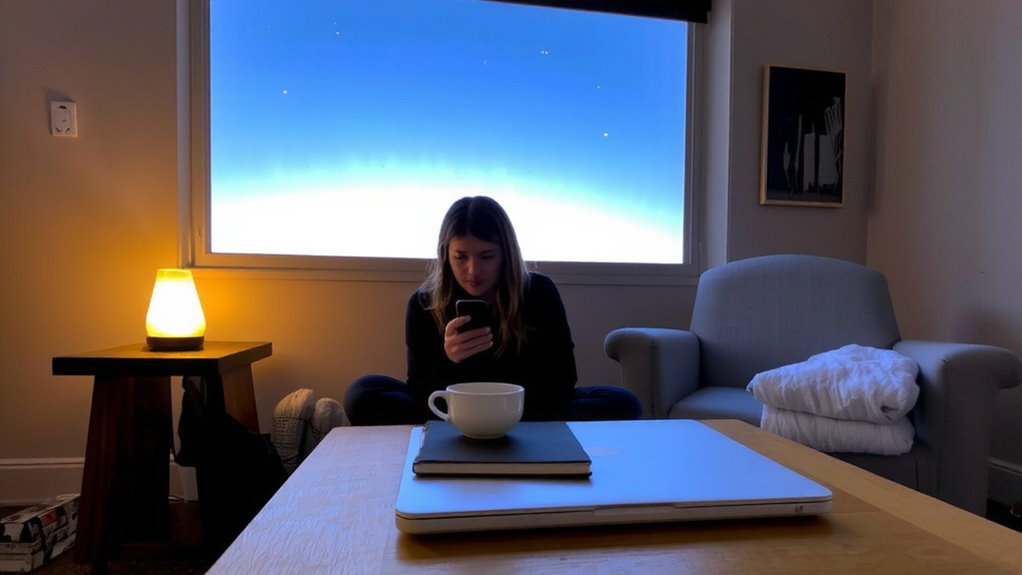
You can start reclaiming your sleep by setting a clear cutoff time for screen use each night-your digital curfew. This helps reduce device dependency and eases the mental strain of constant notification overload. Pick a time, like 9:00 p.m., when you’ll power down phones, tablets, and laptops. Doing this consistently trains your body to wind down. Use built-in tools like “Do Not Disturb” or screen time limits to stick with your plan. These features minimize distractions and support long-term habit formation. A digital curfew doesn’t fix everything overnight, but it creates space to assess your sleep patterns and consider whether changes-like adjusting routines or exploring non-medical sleep aids-might help. It’s a low-effort step with measurable benefits, especially if you’re dealing with mild sleep issues. Try it for a week and track how easily you fall asleep.
Build a Sleep-Friendly Evening Habit

What if the quiet moments before bed could actually work in your favor? You can shape them into a consistent, sleep-friendly evening habit that supports rest without pressure. Start with evening journaling-spending 5–10 minutes writing down thoughts or to-do lists helps clear mental clutter. Pair this with calming aromatherapy, like lavender essential oil in a diffuser, shown in studies to ease tension and support relaxation. These practices aren’t a quick fix, but when used regularly, they signal your body it’s time to wind down. There’s no one-size-fits-all method, so try different routines for at least a week to assess results. Over time, these habits may reduce reliance on sleep aids by addressing root causes of restlessness. Be patient-lasting change builds slowly, through small, repeatable choices that suit your lifestyle. For optimal results, consider using a high-quality essential oil diffuser that also functions as a humidifier to maintain soothing air moisture levels.
Make Your Bedroom a Sleep Zone
Because your bedroom is where you spend a third of your life, it’s worth shaping it into a space that actively supports sleep. Your bedroom environment should be cool, dark, and consistent-key factors in signaling your body it’s time to rest. Use blackout curtains or an eye mask if light is an issue, and aim for a temperature between 60–67°F. Noise control matters just as much; even low-level sounds can disrupt sleep cycles. Consider a white noise machine, earplugs, or a fan to mask disruptive sounds. Avoid using your bed for work or screen time, reinforcing it as a place solely for rest. These changes don’t require major effort but can improve sleep quality over time. Choose solutions with trial periods or warranties so you can test what works best for you, like adjustable lighting or certified quiet appliances. For enhanced light blockage, consider upgrading to best room-darkening curtains.
Follow a Simple Wind-Down Routine
A quiet bedroom sets the stage, but pairing it with a consistent wind-down routine strengthens your body’s expectation of sleep. Start by dimming lights and switching to warm lighting about an hour before bed-this signals your brain that it’s time to slow down. Avoid screens when possible, or use blue light filters if needed. Sip a cup of caffeine-free herbal tea, like chamomile or passionflower, which may support relaxation. Keep activities low-stimulus: try light stretching, reading, or quiet conversation. This routine doesn’t need to be long-20 to 30 minutes is often enough. The goal is predictability, not perfection. Over time, repeating these steps helps regulate your sleep-wake cycle. If you struggle with sleep despite trying, consider tracking patterns or talking with a healthcare provider to explore underlying causes or possible sleep disorders. For an even more soothing experience, try blending chamomile with best lavender chamomile teas known for their calming properties.
Stay Consistent: Even on Weekends
You’ll often find it easier to fall asleep and stay asleep when you go to bed and wake up at roughly the same time every day-even on weekends. While weekend flexibility might feel tempting, shifting your schedule by more than an hour can disrupt your body’s internal clock. This makes it harder to adjust when weekdays return. Habit anchoring helps by linking your bedtime routine to a consistent daily cue, like brushing your teeth or dimming the lights. Think of it as setting a reliable rhythm your body learns to follow. Minor variations are normal, but large deviations weaken sleep quality over time. Staying consistent supports deeper, more restorative rest and reduces grogginess. It also improves how well your wind-down routine works night after night. Over time, this consistency can help identify patterns tied to sleep disorders or the need for sleep aids. Trial periods with adjusted timings should be short and intentional, not habitual.
Track and Improve Your Sleep Routine
How do you know if your sleep routine is truly working for you? Start with sleep tracking to gather clear data on your patterns-things like how long it takes to fall asleep, how often you wake up, and total sleep time. You can use wearable devices or phone apps; most track movement, heart rate, and even sleep stages. Review the data weekly to identify trends. Are you getting enough deep sleep? Do screens before bed affect your rest? Use these insights for routine optimization: adjusting bedtime, reducing light exposure, or quieting your evening habits. Small changes, tested over time, support better outcomes. If problems persist, consider consulting a professional to explore possible sleep disorders. Some tracking tools offer sleep aid suggestions, but evaluate these carefully-look for ones with trial periods and clear performance data. Track, reflect, adjust-your ideal routine evolves with consistency and evidence.
On a final note
You now have practical steps to shift from late-night screen use to a calming, sleep-friendly routine. By setting a digital curfew, organizing your bedroom, and sticking to consistent habits-even on weekends-you support better sleep naturally. Track your progress to spot patterns and make small adjustments. If sleep problems continue, consider speaking to a healthcare provider about possible sleep disorders or safe use of sleep aids, weighing benefits and risks carefully.