Innerspring Mattress Breathability Features for Night Sweaters
You sleep hot, and innerspring mattresses help by letting air move freely through their open coil system, reducing heat buildup. The pockets between springs create airflow channels that let warm air escape and cool air circulate. Breathable covers with moisture-wicking fabrics like TENCEL™ keep the surface dry, while perimeter ventilation supports edge-to-edge cooling. Compared to foam, innersprings breathe better, especially if you pair them with gel-infused or phase change comfort layers-your next choice could hinge on these details.
Notable Insights
- Innerspring mattresses offer high airflow through open coil structures that reduce heat retention.
- Pocketed or Bonnell coils create ventilation channels for effective body heat dissipation.
- Breathable covers with moisture-wicking fabrics like TENCEL™ help keep sleepers dry.
- Perimeter ventilation and open-cell edge support enhance airflow and reduce trapped heat.
- Gel-infused foams or phase change materials in comfort layers work with coils to improve cooling.
Why Innerspring Mattresses Sleep Cooler Than Foam
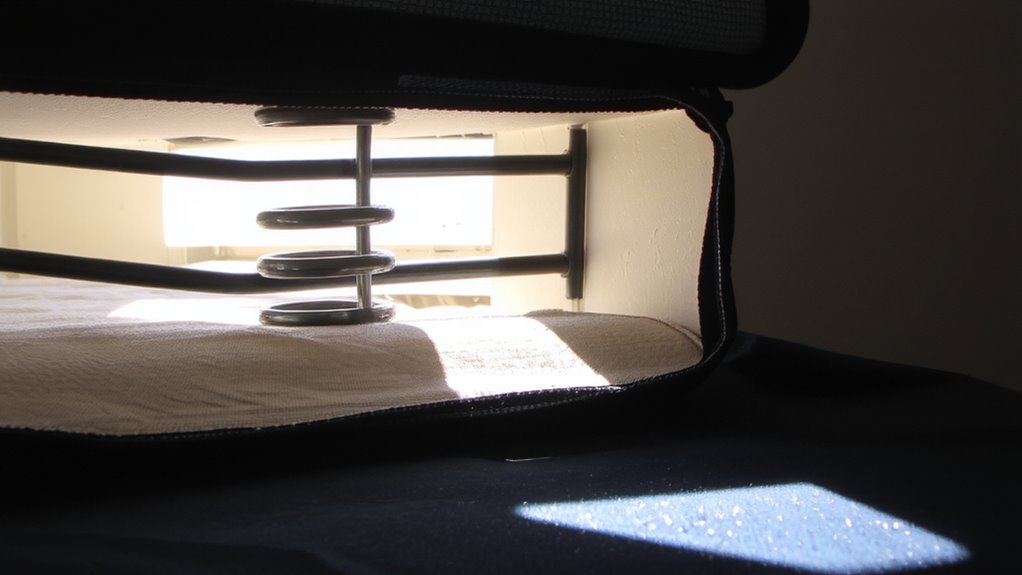
While foam mattresses cradle your body by contouring closely, innerspring models rely on pocketed or Bonnell coils that create open spaces within the mattress, allowing air to flow more freely. That open structure reduces heat retention, a common issue with denser foams that trap body heat due to high material density. You’ll find innersprings often sleep cooler because the coil system doesn’t absorb and hold warmth like solid foam layers can. If you tend to overheat at night or struggle with sleep disruptions tied to temperature, this breathability offers a practical benefit. Though comfort layers on top still play a role, the underlying coils promote airflow by design. Many models also use breathable fabrics and cooling covers to enhance this effect. When shopping, check material density in any foam used-lower density usually means better ventilation. Look for trial periods and warranties that let you test thermal performance risk-free.
How Coil Systems Improve Airflow for Hot Sleepers
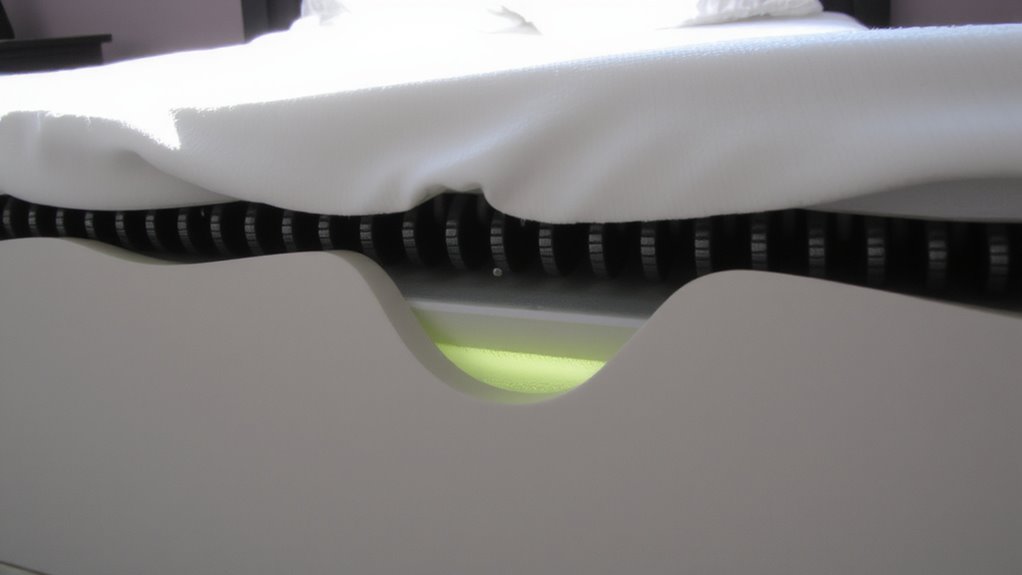
Because your body heat can build up during the night, especially if you’re a hot sleeper, the open design of coil systems in innerspring mattresses helps move air through the bed more effectively than solid foam layers. The coil design creates consistent ventilation gaps between each spring, allowing warm air to escape and cooler air to circulate. These gaps reduce moisture buildup and help maintain a more comfortable sleep surface. You’ll find that this airflow support can make a difference if you tend to overheat. While coil systems don’t eliminate all heat retention-especially if there are thick comfort layers above-their structure naturally supports better breathability. When comparing models, look for designs that emphasize open coils and breathable covers. Many innerspring mattresses also come with trial periods and warranties, so you can test temperature performance risk-free. This feature-focused choice supports your long-term comfort, particularly if staying cool is a priority.
Innerspring vs Hybrid vs Foam: Which Breathes Best?
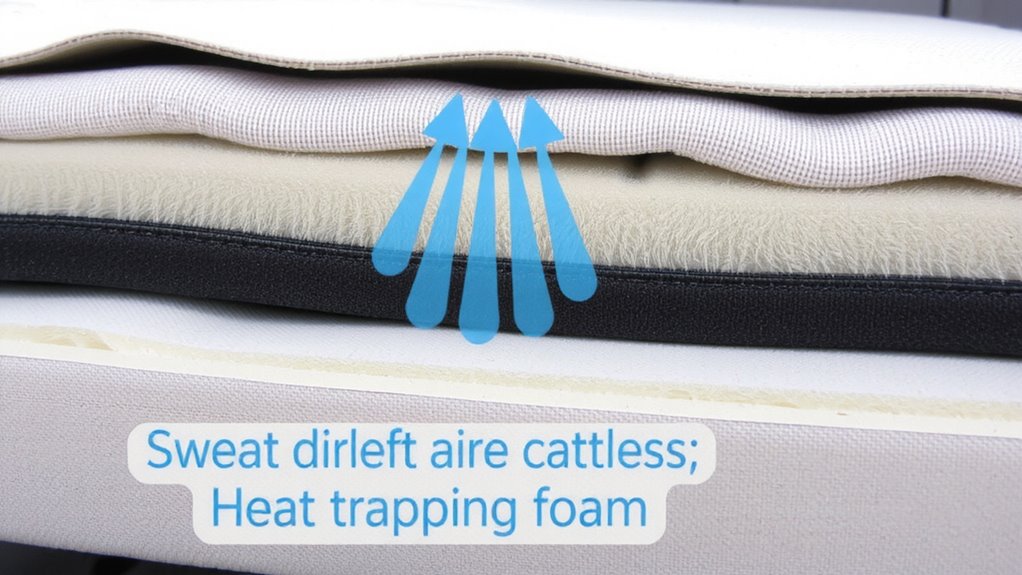
If you’re trying to stay cool at night, you might wonder how innerspring, hybrid, and foam mattresses compare in breathability. Innerspring models use open coil systems that promote airflow, making them naturally cooler. Hybrids blend coils with foam layers, balancing support and temperature control, though thicker foams may increase memory foam heat retention. All-foam beds, especially those with dense memory foam, tend to trap more heat unless designed with gel infusions or open-cell structures. Latex offers better latex ventilation efficiency, helping regulate temperature more effectively than traditional memory foam. Below is a comparison to guide your choice:
| Type | Airflow Level | Heat Retention Risk |
|---|---|---|
| Innerspring | High | Low |
| Hybrid | Moderate-High | Moderate |
| Memory Foam | Low-Moderate | High |
| Latex | Moderate | Low-Moderate |
| Gel-Infused Foam | Moderate | Moderate |
Cooling Fabrics in Innerspring Mattress Covers
A well-designed innerspring mattress doesn’t just rely on coils for cooling-its cover fabric plays a key role in keeping you comfortable. You’ll often find covers made with moisture wicking fibers that pull sweat away from your skin, helping you stay dry through the night. These fibers, like bamboo or TENCEL™, work quietly to manage humidity without feeling abrasive. Paired with ventilated quilting, the cover allows air to circulate just beneath the surface, boosting breathability. This combo helps prevent heat buildup, especially if you tend to sleep hot. The construction doesn’t dramatically lower temperature but supports steady airflow and moisture control. When shopping, check if the cover is removable or washable-this helps maintain performance. Many brands offer trial periods, so you can test how well the fabric manages heat and moisture in your real-world routine. Look for durable stitching and breathable layers to get long-term comfort.
How Edge Support Affects Temperature Regulation
While edge support is often associated with durability and stability, it can also influence how well your innerspring mattress regulates temperature. Strong edge reinforcement doesn’t just extend usable sleep space-it impacts airflow through perimeter ventilation. When edges allow breathability, heat escapes more efficiently, helping you stay comfortable. Closed, dense borders trap warmth, especially if materials restrict air movement. Look for designs that combine sturdy coils at the edge with open-cell foams or mesh layers to promote cooling.
| Feature | Impact on Temp | What to Look For |
|---|---|---|
| Edge reinforcement | Moderate | Coil-based, not solid foam |
| Perimeter ventilation | High | Mesh or breathable fabric borders |
| Dense border foam | Negative | Avoid thick, non-porous edging |
Choose models offering airflow-conscious edge design-many brands include this in trial details.
Top Cooling Features in Innerspring Mattresses
What makes some innerspring mattresses stay cooler through the night? It’s the smart cooling tech built right into the comfort layers. If you sleep hot, you’ll want to look for models with gel infusion in the memory foam-this helps pull heat away from your body. Another option is phase change materials, which absorb and release thermal energy to keep surface temps steady. These features work with the innerspring core’s natural airflow, boosting breathability. Paired with breathable covers and coil support, they help reduce heat buildup. Most brands offer sleep trials and warranties, so you can test temperature performance risk-free. While gel infusion is common and cost-effective, phase change materials often offer more responsive cooling, though they may raise the price. Consider your budget and sweating severity when choosing. Either way, these features support better temperature control for more restful sleep.
On a final note
You’ll find innerspring mattresses often sleep cooler thanks to their coil systems, which allow better airflow than foam. If you sweat at night, look for breathable covers with cooling fabrics and strong edge support to maintain ventilation. Hybrids offer a middle ground, blending coils with some foam comfort. Consider a model with a solid trial period and warranty, so you can test temperature performance risk-free. Compare features carefully for your best cooling fit.