Step-by-Step Guide to Blending Your Own Sleep Tincture at Home
Choose valerian root, passionflower, and chamomile for their calming effects on the nervous system. Prepare a clean workspace and use dried herbs with a 1:5 ratio in 40–60% alcohol. Seal in a jar, label it, and steep for four to six weeks in a cool, dark place, shaking gently every few days. Strain through cheesecloth, store in amber dropper bottles, and take 1 mL before bed. Adjust dose carefully-your ideal blend may take some testing to perfect.
Notable Insights
- Choose calming herbs like valerian root, passionflower, and chamomile for sleep support.
- Prepare a clean workspace with sterilized jars, dropper bottles, and a funnel for safe tincture creation.
- Mix dried herbs with alcohol at a 1:5 ratio using 40–60% proof for optimal extraction.
- Steep the blend in a dark, cool place for four to six weeks, shaking every few days.
- Strain through cheesecloth, store in amber bottles, and take 1 mL before bed as a starting dose.
Pick The Best Herbs For Your Sleep Tincture
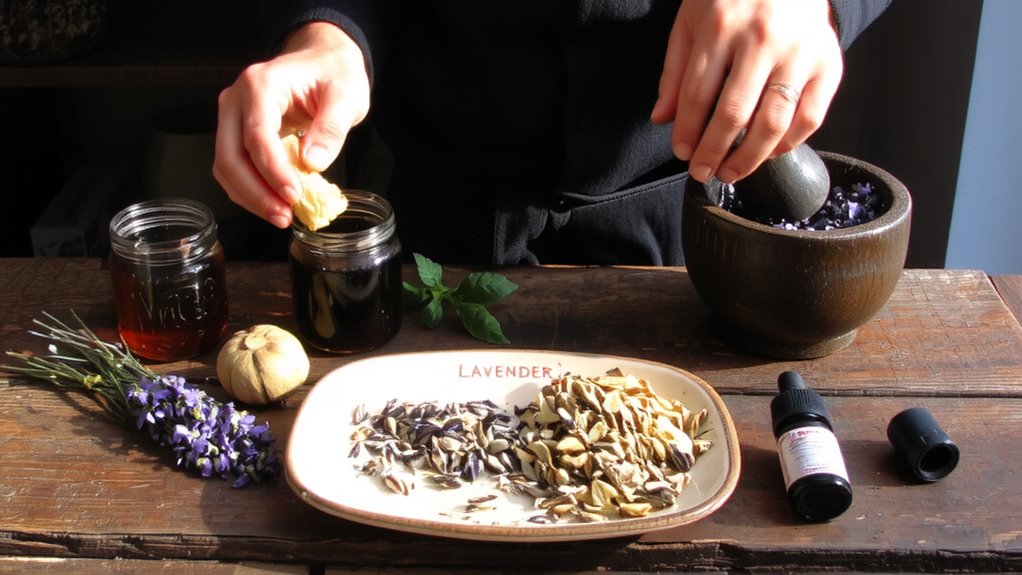
While you’re looking for a natural way to support better sleep, choosing the right herbs for your tincture matters most. You’ll want herbs like valerian root, passionflower, and chamomile, known for calming the nervous system. These work better together than alone-herbal synergy enhances their overall effect, making your blend more effective. But you also need to take into account dosage safety, especially with potent herbs like valerian, which can cause drowsiness if overused. Start low and watch how your body responds. Some herbs interact with medications or aren’t suited for long-term use, so review known research and consult trusted sources. Each person’s sleep needs differ, whether due to occasional restlessness or ongoing sleep patterns. There’s no universal formula, but a balanced mix improves your odds of gentle, restful nights. Always document your choices and reactions to refine future batches. For more guidance on selecting potent blends, explore the best sleep tinctures for restful nights.
Gather Supplies And Prep Your Workspace
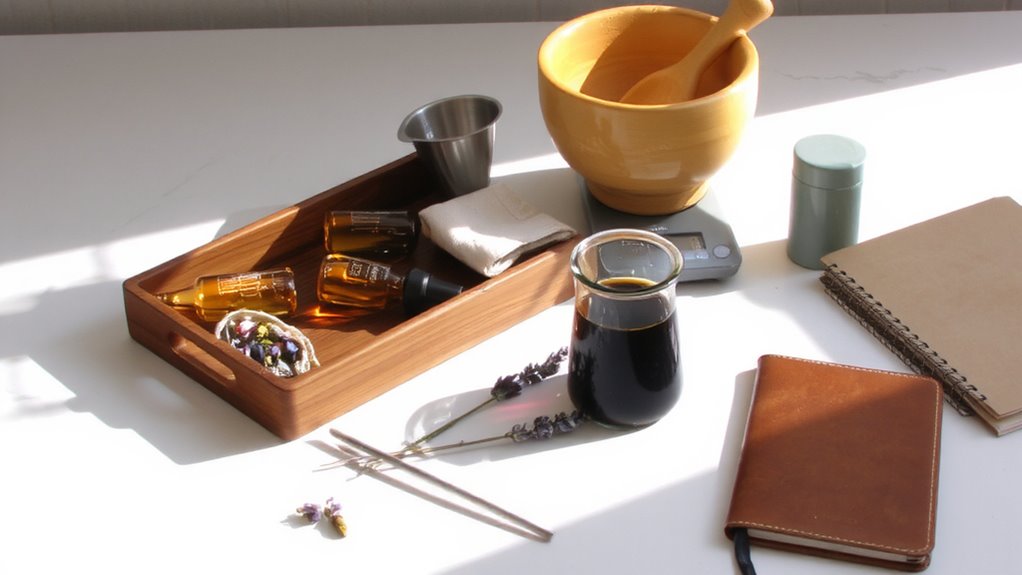
A well-prepared workspace and the right tools make crafting your sleep tincture smoother and more reliable. Start by clearing a clean workspace, free from clutter and distractions, so you can focus on precision and safety. You’ll need glass jars, a funneled strainer, amber dropper bottles, and high-proof alcohol like vodka. Make sure all containers are washed and completely dry before use. Keeping everything organized reduces mistakes and contamination risks. Use proper labeling on every jar and bottle-include the herb name, alcohol ratio, and date started. This helps track potency and shelf life. Good labels also prevent mix-ups, especially if you try different blends. A tidy, well-labeled setup supports consistency, which matters when exploring natural sleep support. Taking these steps now improves accuracy and safety, giving you clearer results when you evaluate how the tincture affects your sleep over time.
Mix Herbs And Alcohol In The Right Ratio
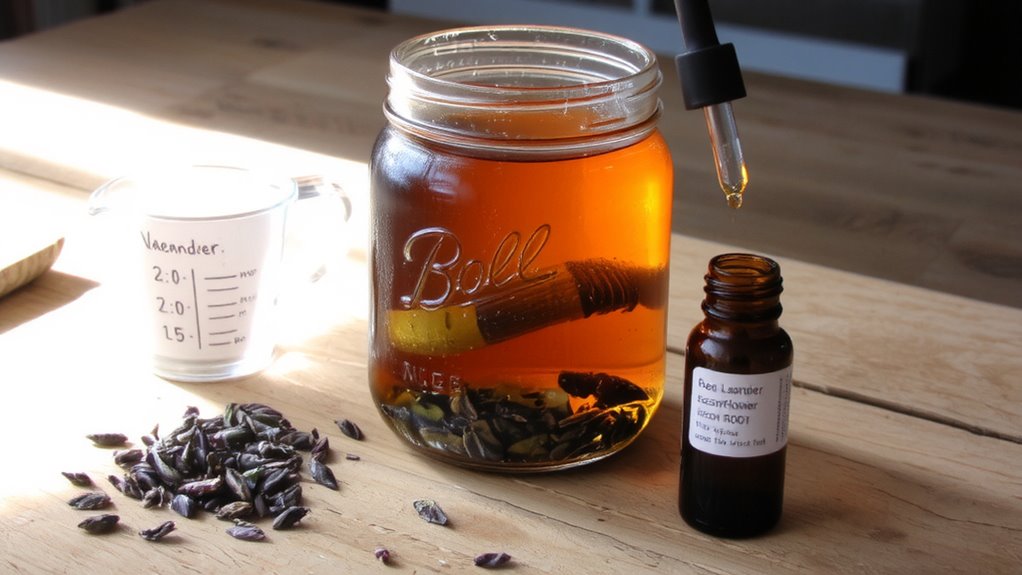
You’ll get the most consistent results by using the right herb-to-alcohol ratio, and a common starting point is 1:5 for dried herbs-meaning one part herb to five parts alcohol by weight or volume. Getting herb ratios right guarantees proper extraction without wasting material or diluting potency. For fresh herbs, use a 1:2 ratio since they contain more water. Alcohol concentration matters, too: aim for 40–60% (80–120 proof) vodka or grain alcohol to effectively pull out sleep-supportive compounds like flavonoids and terpenes. Lower concentrations may not extract key actives fully, while higher ones can pull too many bitter or harsh elements. Adjust ratios and alcohol concentration based on your herbs-valerian, for example, may need stronger alcohol than chamomile. Start with standard ratios, then refine based on results. Consistency in herb ratios and alcohol concentration improves reliability if you make new batches later for ongoing sleep support.
Let Your Sleep Tincture Steep For Full Potency
Once you’ve combined your herbs and alcohol in the proper ratio, let the mixture steep for at least four to six weeks to guarantee full extraction of the active compounds. This storage duration allows the alcohol to pull out both water- and fat-soluble components, enhancing potency. While not required, some prefer aligning the start of steeping with the waning moon, believing it supports deeper extraction as energy turns inward. Though scientific proof is limited, many find tracking moon phases adds mindfulness to the process. Keep the jar in a cool, dark place-like a cupboard-away from sunlight or heat fluctuations. Shake it gently every few days to help breakdown plant material. The longer it steeps, within reason, the stronger it may become, but six weeks is usually ideal. Don’t rush this step; potency relies on time. Steeping isn’t passive-it’s active preparation for a sleep aid that works when you need it most.
Strain, Store, And Take Your Tincture The Right Way
When the steeping period is complete, it’s time to separate the liquid from the plant matter by straining the mixture through a cheesecloth or fine mesh sieve, pressing gently to extract every drop without forcing sediment through. Transfer your tincture into dark glass dropper bottles-amber or cobalt-to protect it from light and extend shelf life. Store it in a cool, dry place, away from heat or humidity, for up to one year. Proper storage maintains potency and guarantees reliable dosage control. Begin with a small dose, like 1 mL under the tongue 30 minutes before bed, and adjust gradually based on your body’s response. Using a dropper gives you precise dosage control, helping you avoid overuse. This method supports informed decisions about sleep aids and managing sleep patterns. Always monitor how your body reacts and consult a healthcare provider if you have existing sleep disorders.
On a final note
You now have the tools to make a sleep tincture safely at home, using simple ingredients and clear steps. Consider your sleep patterns and needs before starting, and consult a healthcare provider if you have concerns or take other medications. Tinctures may support relaxation, but results vary. Store yours properly, use the recommended dose, and track effects over time to decide if it’s right for you.