Bedtime Static Stretching Routine for Spinal Health: 5 Stretches
Do static stretches 30 to 60 minutes before bed to release spinal tension and support natural alignment. Try child’s pose, seated forward bend, cat-cow, knees-to-chest, and lying twists, holding each 20–30 seconds. Set up a calm space with dim light, lavender scent, and a supportive mat. Pair stretching with brushing your teeth to build consistency. Even short efforts count-stick with it for better comfort and sleep over time. More small steps can help fine-tune your routine.
Notable Insights
- Choose 5 spine-friendly static stretches like child’s pose and knees-to-chest to support spinal alignment and relaxation.
- Perform stretches 30 to 60 minutes before bed to calm the nervous system and prepare for sleep.
- Create a calm environment with dim lighting, aromatherapy, and a quiet space to enhance relaxation.
- Pair stretching with an existing habit, such as brushing teeth, to build a consistent nightly routine.
- Hold each stretch for 20–30 seconds to safely release muscle tension without triggering reflex contractions.
Why Bedtime Stretching Boosts Spinal Health
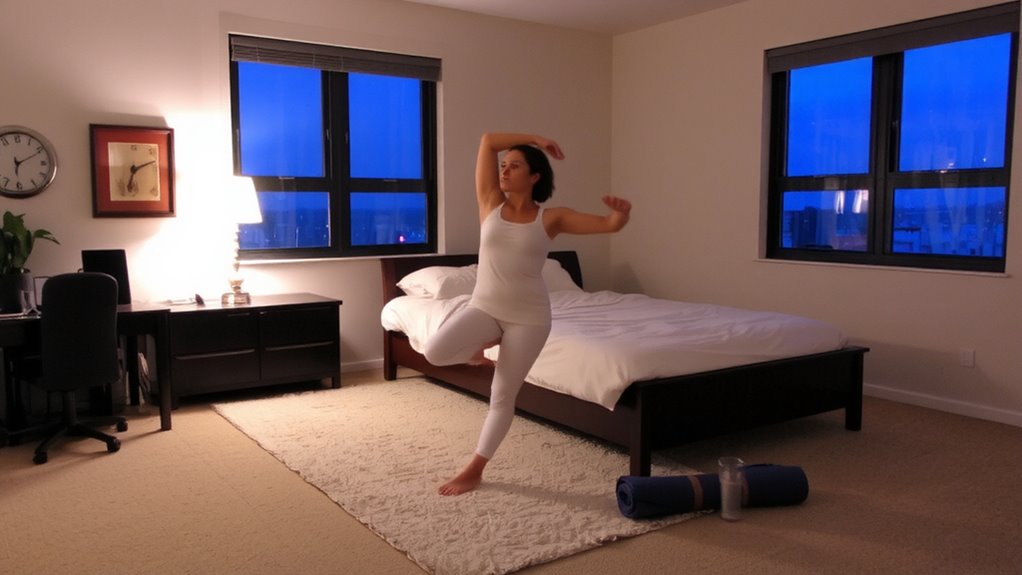
After a long day of sitting, standing, or moving, your spine carries accumulated tension that can affect sleep quality and spinal alignment. Bedtime stretching helps release deep muscle tension, promoting muscle relaxation just when your body prepares to rest. When muscles around your spine loosen, they support natural spinal alignment throughout the night, reducing strain on discs and joints. This alignment can ease discomfort that might otherwise disrupt sleep or contribute to chronic issues. Static stretches, held for 20–30 seconds, gradually lengthen tight muscle groups without triggering reflex contractions. Over time, consistent practice may improve posture and reduce reliance on sleep aids by addressing physical causes of restlessness. Consider how muscle relaxation and spinal alignment interact-better alignment supports deeper rest, while relaxed muscles make alignment easier to maintain. This small routine supports long-term spinal health, letting you evaluate sleep choices based on comfort, not just convenience.
Do These 5 Stretches for Spine Support Before Bed
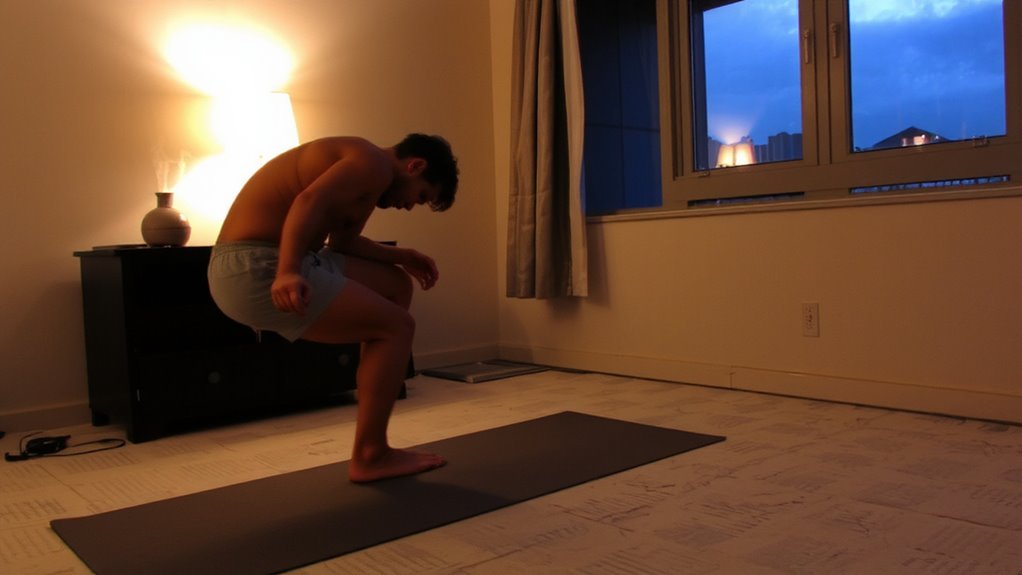
Start with five key stretches that support your spine and may help improve how you feel when you wake up. These moves promote spinal alignment and muscle relaxation, both of which are linked to better sleep quality. Try the child’s pose-kneel, sit back, and reach forward to stretch your lower back. Follow with seated forward bend: extend your legs and reach for your toes to lengthen the spine. The cat-cow stretch warms the spine gently; shift between arching and rounding your back slowly. Then lie on your back and pull your knees to your chest-this hugging motion eases tension. Finish with a lying twist: roll your knees to one side while facing the other to improve mobility. Hold each stretch for 20–30 seconds, breathing deeply. These static stretches support posture and reduce stiffness-simple to do, they fit easily into your nightly routine.
Time Your Bedtime Stretches Right
While aiming to improve your sleep quality, timing your bedtime stretches right can make a noticeable difference in how well your body relaxes. Try to start your stretching routine about 30 to 60 minutes before you plan to fall asleep-this allows enough time for stretch timing to calm your nervous system. Doing it too close to bedtime may leave your body alert, while doing it too early might reduce benefits when you finally lie down. For the best results, aim for routine consistency, even on weekends. A regular schedule trains your body to wind down naturally. You don’t need special equipment, and static stretches require no setup beyond a flat surface. Over time, this consistency supports spinal alignment and can ease tension that disrupts sleep. If you use sleep aids or manage a sleep disorder, consult your provider about how stretch timing fits into your plan. This small, repeatable habit may reduce reliance on external aids.
Set Up a Relaxing Space for Evening Stretching
What if your environment could help signal to your body that it’s time to unwind? Creating the right space makes a difference. Start by adjusting the lighting ambiance-use dim, warm lights to mimic sunset, which supports melatonin release. Avoid bright overhead lights; instead, try salt lamps or soft LED strips near your stretching area. Pair this with aromatherapy benefits by using a diffuser with lavender or chamomile essential oils, both linked to relaxation and improved sleep quality. Choose a quiet corner with enough room to stretch comfortably, free from distractions. Lay down a supportive mat for spine alignment. Keep the space clutter-free to reduce mental noise. These details aren’t just comfort-they shape your body’s readiness for rest. A consistent, calming environment improves long-term adherence without forcing it. For enhanced relaxation, consider incorporating the best essential oils for the bedroom known for promoting restful sleep.
Stick to Your Nightly Stretch Routine
If you’ve already set up a calming space, sticking to your nightly stretch routine becomes far more achievable. Consistency benefits your spine by gradually improving flexibility and reducing tension, which may support better sleep quality over time. To stay on track, use simple motivation strategies like pairing stretching with a habit you already do, such as brushing your teeth. You might also track your progress in a journal or set a gentle reminder on your phone. Aim for the same time each night to help your body adjust. Even on busy evenings, doing just a few stretches is better than skipping entirely. Over time, this habit can become a natural signal to your body that it’s time to wind down. There’s no need for intense effort-steady, mindful movement delivers the best results. Trial the routine for at least three weeks to gauge its effect on your comfort and sleep.
On a final note
You’ll sleep better and support your spine by adding gentle static stretches to your nightly routine. Pick a quiet spot, stretch consistently, and allow your body to unwind. Over time, this habit may reduce discomfort and improve mobility. If sleep issues persist, consider discussing them with a healthcare provider. Trial adjustments, track progress, and use reliable resources to guide choices about sleep aids or posture support.