How Innerspring Mattress Coil Systems Handle Heavy Weight Distribution
You’ll get better support with innerspring coils designed for heavy weight, like lower-gauge (12–14) steel, which is thicker and more durable. High coil counts and reinforced edges help distribute weight evenly, reducing sagging over time. Pocketed or continuous coils offer strong foundation support, while individually wrapped coils limit motion transfer. Look for models with solid warranties and trial periods to test long-term comfort and performance-there’s more to take into account for lasting durability.
Notable Insights
- Lower gauge coils (12–14) are thicker and provide stronger support for heavy sleepers, enhancing weight distribution and durability.
- Pocketed coils offer independent response to body weight, improving contouring and reducing pressure points for heavier individuals.
- Continuous coil systems use a single steel strand to spread weight evenly and resist sagging under heavy loads.
- Reinforced perimeter and center zones increase edge support and structural stability in high-weight areas of the mattress.
- Higher coil counts and dense coil arrangements improve firmness, shape retention, and long-term support for heavy sleepers.
How Innerspring Coils Support Heavy Sleepers
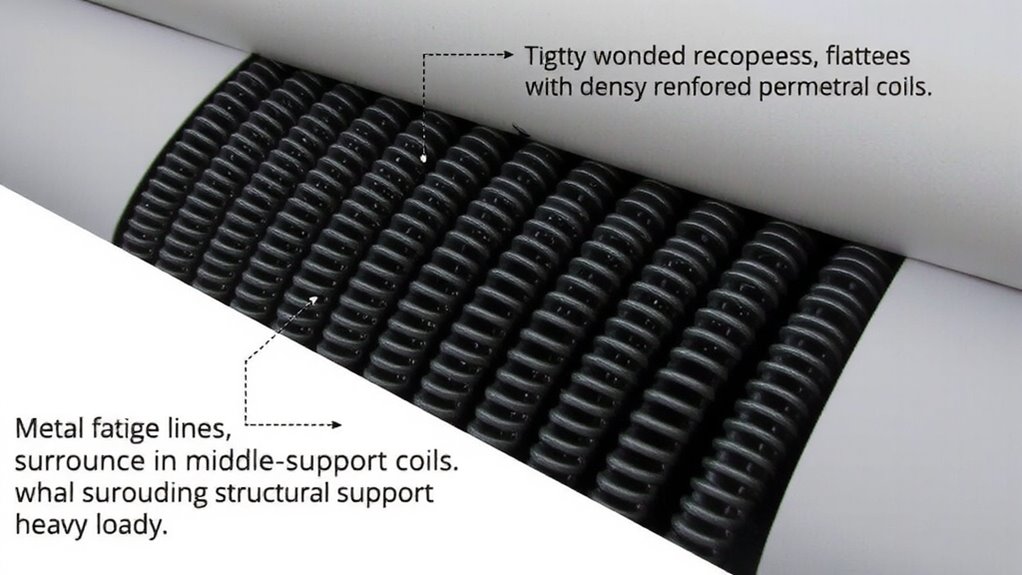
A well-built innerspring mattress can make a real difference if you’re a heavier sleeper looking for durable support and proper spinal alignment. High coil durability guarantees the mattress resists sagging, even with nightly use over time. You’ll want to check the coil count and gauge-lower gauge coils (between 12 and 14) are thicker and better suited for higher weight tolerance, typically supporting up to 1,000 pounds depending on construction. Tightly wound coils distribute your weight evenly, reducing pressure points and helping maintain a neutral spine. Look for reinforced perimeter coils if you sit on the edge often. Mattresses with strong coil systems often come with trial periods and long warranties, letting you test support over time. Don’t overlook cover materials and foam layers-they add comfort, but the coil system remains key. With proper coil durability and high weight tolerance, innerspring models can offer lasting support tailored to heavier frames. For heavy individuals, choosing the best mattresses for heavy people can significantly improve sleep quality and long-term comfort.
Are Bonnell Coils Good for Heavy Sleepers?
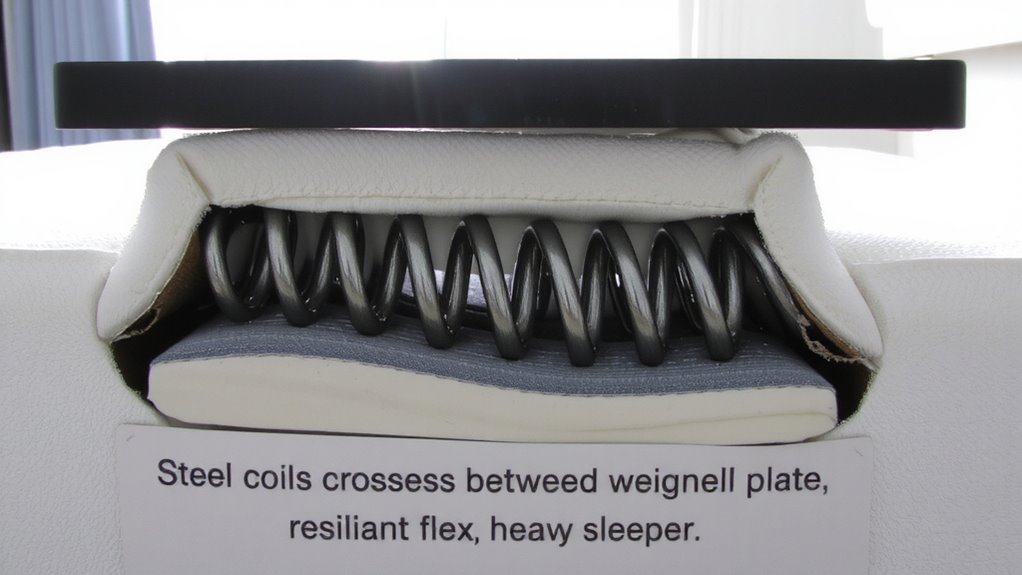
Bonnell coils can work for heavier sleepers, but they come with trade-offs worth considering. These pyramid-shaped coils are joined in an hourglass pattern, creating a firm surface you might find supportive at first. Over time, though, weight compression may cause sagging, especially if you weigh over 230 pounds. Coil durability tends to be lower than in other innerspring types because the interconnected design puts more stress on individual springs under heavy loads. You’ll notice less motion isolation and edge support, which can affect sleep quality if you shift often. If you’re looking for long-term resilience, check the coil gauge-lower numbers mean thicker, sturdier wires. Mattresses with higher coil counts may also resist weight compression better. Many brands offer trial periods, so test the feel over several nights. A solid warranty often reflects confidence in coil durability, giving you added peace of mind when deciding.
Are Continuous Coils Good for Heavy Sleepers?
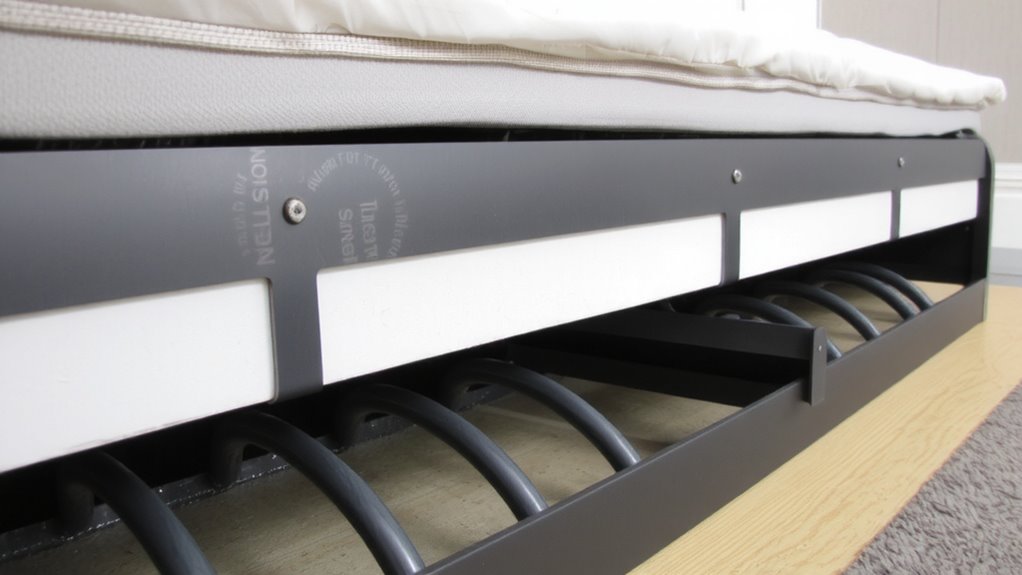
You’ve seen how Bonnell coils handle heavier frames, but continuous coil systems take a different approach. Made from a single strand of steel weaving through each coil, this design boosts coil durability and supports heavier weights evenly. The connected structure helps distribute pressure along the length of the mattress, which can reduce sagging over time. However, because the coils are linked, motion transfer tends to be higher-movement on one side may be felt across the bed. This might affect light sleepers or couples. Continuous coils offer solid foundational support and resist deformation with regular use, making them a practical choice if you prioritize longevity. Most models come with at least a 10-year warranty, giving you time to assess comfort. Try before you buy, if possible, to guarantee the firmness aligns with your sleep needs.
How Pocketed Coils Handle Heavyweight Distribution
Each coil in a pocketed coil system is individually wrapped in fabric and works independently to respond to body weight and shape. This design allows for better coil isolation, meaning your movements won’t transfer across the mattress-ideal if you share the bed. When you’re a heavier sleeper, these coils adjust more precisely to your contours, offering balanced support without over-compressing nearby coils. The fabric encasement adds stability and contributes to durability factors by reducing metal-to-metal friction, which can wear down traditional systems over time. Since each coil moves on its own, the system maintains alignment and reduces strain on the joints. Most pocketed coil mattresses come with trial periods and warranties that cover sagging or coil failure, so test one if support and motion control matter to you. These features make them a practical choice worth considering for long-term comfort. Top models are often highlighted in a best pocket coil mattresses buying guide to help consumers compare support levels and durability.
How Coil Gauge, Count, and Density Impact Support
Three key factors-gauge, count, and density-work together to shape how well a coil system supports your body. Lower gauge numbers mean thicker coils, which offer greater material strength and better support for heavier weight. If you carry more weight, a mattress with a gauge between 12 and 14 usually provides long-term coil durability. Higher coil counts spread weight more evenly, but only if the coils are paired with strong material strength. Density-how closely coils are packed-affects firmness and shape retention over time. A denser coil layout improves support and reduces sagging, especially across the midsection. These elements influence sleep quality by stabilizing your spine and minimizing pressure points. Look for models with reinforced center zones, solid steel coils, and warranties of at least 10 years to verify durability. Test firmness in-store or through a sleep trial to confirm support.
Why Edge Support Matters for Heavy Sleepers
A strong edge makes a big difference when you’re a heavier sleeper, especially since more weight tends to compress the sides of a mattress over time. Without proper edge durability, the perimeter weakens, increasing the risk of rolls and making it harder to sit or sleep near the border. Innerspring mattresses with reinforced edges offer better structural stability, supporting your weight evenly and reducing sagging. This support helps maintain the mattress’s shape and extends its lifespan. You’ll also find it easier to move in and out of bed, which matters if mobility is a concern. Look for models with high-density foam encasement or sturdy coil framing along the edges-these features enhance both durability and performance. Many quality brands offer trial periods and long-term warranties, so test for edge firmness during your trial. Solid edge support means more usable surface and consistent comfort, especially where you need it most.
Best Innerspring Features for Heavyweight Longevity
You’ve probably noticed how edge support affects your comfort and movement, especially if you carry more weight or need a durable sleep surface. Strong frame reinforcement along the mattress perimeter helps maintain shape and prevents sagging over time. For better mattress durability, look for high coil counts with tempered steel coils-they resist compression longer, offering consistent support night after night. Pocketed coils provide targeted responsiveness, reducing motion transfer while adapting to body contours. A dense foundation or high-density foam layers paired with the coil system adds stability and prolongs lifespan. Many top models include reinforced borders and double-insulated coils for heavier sleeper needs. Check warranty terms-some brands offer 10- to 20-year coverage if durability is a priority. Trial periods around 100 nights let you test real-world performance. These features together enhance longevity without sacrificing comfort.
On a final note
You’ll want a high coil count with lower gauge wires, as they offer better support and durability under heavier weight. Pocketed or continuous coils usually handle weight distribution more effectively than Bonnell coils. Look for reinforced edges and dense foam layers to prevent sagging. A solid warranty and sleep trial can help confirm long-term comfort and build quality, giving you a clearer idea of performance over time.