The Science Behind Circadian Misalignment in Delayed Sleep Phase Disorder
Your body’s internal clock runs late in Delayed Sleep Phase Disorder, pushing melatonin release and sleep onset hours past typical times. This shift isn’t just poor habits-it’s tied to genetics and circadian biology. Evening light, especially blue light from screens, delays your rhythm further, while morning light can help reset it. Low-dose melatonin, timed correctly, gradually advances your schedule. Consistency matters most, and small daily adjustments offer realistic progress over time-your next steps depend on understanding how these factors interact.
Notable Insights
- Delayed Sleep Phase Disorder involves a circadian rhythm shift that delays sleep onset despite normal sleep duration and quality.
- The internal clock’s melatonin release is delayed, causing alertness at night and difficulty waking in the morning.
- Genetic factors influence circadian timing, with inherited variations in clock genes contributing to DSPD susceptibility.
- Evening light exposure, especially blue light, suppresses melatonin and exacerbates circadian delay in DSPD.
- Treatment combines timed melatonin and morning light therapy to gradually realign the circadian rhythm with societal schedules.
What Is Delayed Sleep Phase Disorder?
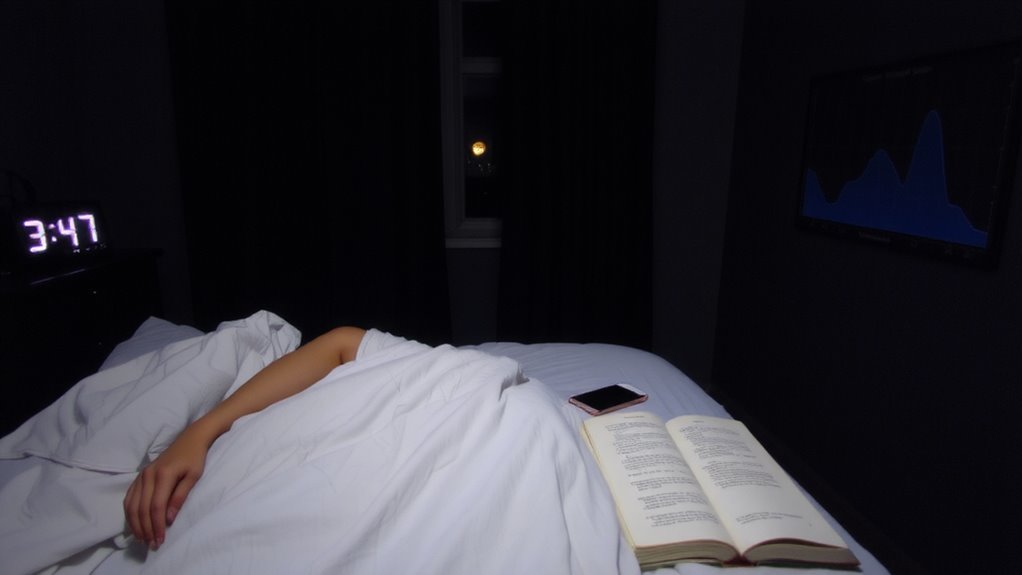
Think of your body’s internal clock as a quiet conductor, guiding when you feel alert or sleepy each day. In Delayed Sleep Phase Disorder (DSPD), that conductor shifts late, delaying your biological rhythm. Your natural sleep onset might not happen until very late at night, even if you try to sleep earlier. You’re not just staying up late-you genuinely can’t fall asleep until your body says it’s time. This isn’t poor discipline or lifestyle alone; it’s a real timing shift in your sleep-wake cycle. You may struggle with morning commitments but feel most alert in the evening. Diagnosis often involves tracking your sleep patterns, sometimes with a sleep diary or actigraphy. Treatment options include timed light exposure, melatonin supplements, and gradual schedule shifts-all aimed at realigning your rhythm. Success varies, so working with a sleep specialist helps you weigh benefits and expectations realistically.
Your Body Clock in Delayed Sleep Phase Disorder
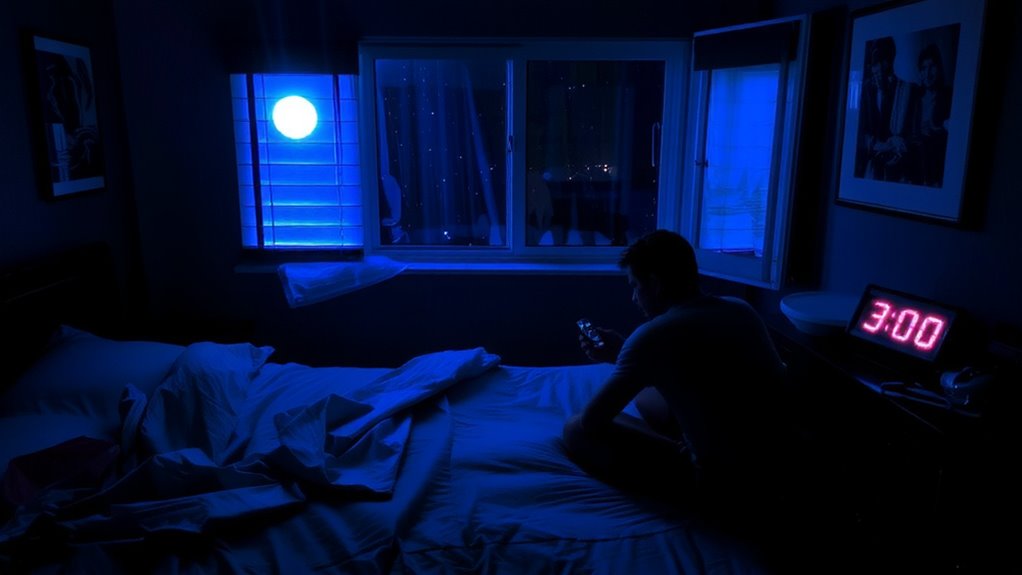
Why does your body resist falling asleep at a “normal” hour, even when you’re tired? Your internal clock runs on a delayed schedule due to natural chronotype variation, shifting your sleep-wake cycle later than average. While sleep homeostasis builds sleep pressure nightly, your circadian rhythm delays melatonin release, making you alert when others sleep. You might feel tired, but your body clock isn’t synced to societal norms. This misalignment isn’t laziness-it’s biology. Light exposure, especially at night, worsens the delay. Adjusting this requires consistent routines and strategic light management. Morning bright light helps shift your rhythm earlier. Avoiding screens before bed supports melatonin timing. Sleep aids may offer short-term help, but long-term success depends on aligning daily habits with your unique clock. Small, consistent changes improve sleep quality over time.
Genetics of Delayed Sleep Phase Disorder
Though you can’t control your genes, knowing how they shape your sleep patterns helps you make smarter choices about managing Delayed Sleep Phase Disorder. You may have a genetic predisposition that shifts your internal clock later, making it harder to fall asleep and wake up at typical times. Studies show this trait often follows a pattern of family inheritance, meaning if a close relative has similar sleep tendencies, you’re more likely to develop it too. These genes affect proteins involved in your circadian rhythm, altering its timing and stability. While you can’t change your DNA, recognizing your genetic background helps you choose effective, personalized strategies. Treatments like timed melatonin or behavioral adjustments work better when you factor in your biological tendencies. Understanding your risk allows for earlier intervention, more realistic expectations, and consistent routines that align with your natural rhythm, improving long-term sleep outcomes.
How Light Affects Delayed Sleep Phase Disorder
What if your evening screen time or morning light exposure was quietly shifting your internal clock further out of sync? For you, light exposure plays a key role in Delayed Sleep Phase Disorder. Your brain’s response to light, especially blue wavelengths, depends on retinal sensitivity, which helps signal when to stay alert or wind down. Evening light-like that from phones or lamps-can delay melatonin release, pushing your sleep later. But morning light, if timed right, might help nudge your rhythm earlier. The timing, intensity, and duration of light exposure all matter. Bright light therapy boxes, often used at home, deliver controlled illumination to support circadian shifts. They typically require daily 20–30 minute sessions near wake time. Choose one with 10,000 lux output and a design that minimizes glare. Most come with a one-year warranty and are built for consistent, long-term use.
Using Melatonin to Reset Your Clock
Could timing your melatonin intake be the key to shifting your sleep schedule earlier? Yes, melatonin timing plays a critical role in resetting your internal clock. Taking melatonin 5 to 7 hours before your current sleep onset time helps signal your body to prepare for sleep earlier. This gradual shift aligns with your circadian rhythm’s natural sensitivity window. Research shows consistent use can advance sleep time by 10 to 30 minutes nightly. But dosage effects vary-lower doses (0.5 to 3 mg) often work as well as higher ones, with fewer side effects like grogginess. Controlled-release versions may support sleep maintenance, while immediate-release forms suit timing precision. Start low, track changes, and adjust cautiously. Consult a provider to coordinate timing with your light exposure plan. Melatonin’s most effective when used short-term and strategically, not as a nightly crutch.
How to Live With Delayed Sleep Phase Disorder
You’ve likely tried adjusting your schedule with melatonin, and while it can help shift your sleep time gradually, living with delayed sleep phase disorder means building a daily routine that works with your biology, not against it. Stick to consistent wake and sleep times, even on weekends, to strengthen your circadian rhythm. Morning light exposure helps signal wakefulness, while dimming lights at night cues sleep. Structure your daily routines around your natural energy peaks-schedule demanding tasks when you’re most alert. Use alarms or apps to prompt bedtime prep. Social support makes a difference; sharing your challenges with family or coworkers reduces stress and builds understanding. Explain your needs clearly so others can respect your sleep schedule. While complete alignment may take time, small, consistent changes improve sleep quality. Avoid caffeine late in the day, and consider speaking with a sleep specialist to review options.
On a final note
You might not outgrow delayed sleep phase disorder, but shifts in light exposure and well-timed melatonin can help realign your rhythm. These tools influence how your internal clock runs, making earlier sleep more achievable. Results vary, so a trial over several weeks gives a clearer picture. Many see improvements without side effects, though consulting a doctor guarantees safe use, especially with other conditions. It’s about adjusting gradually and consistently, not forcing change.