Trialing Blue-Blocker Glasses Two Hours Pre-Sleep to Augment Paraspinal Muscle Regeneration
You’re blocking blue light two hours before bed to support natural melatonin release, which helps your paraspinal muscles recover overnight. These glasses filter screen and indoor lighting that delay sleep signals, improving sleep quality and repair cycles. Amber or red lenses block 90–100% of blue wavelengths, boosting antioxidant activity and protein synthesis. With regular use, benefits appear within two weeks. Most people with evening screen exposure notice deeper rest, especially when combining them with good sleep habits-there’s more to gain if you fine-tune the timing and lens choice.
Notable Insights
- Blue-blocker glasses worn two hours before bed help align circadian rhythms by filtering melatonin-disrupting blue light.
- Timely melatonin release supports overnight paraspinal muscle regeneration and reduces inflammation.
- Consistent pre-sleep use enhances sleep depth, promoting neural relaxation and muscle recovery.
- Amber or red lenses block 90–100% of blue light, optimizing hormonal and restorative sleep phases.
- Ideal for screen-heavy or shift-working individuals; pairs with sleep hygiene for best results.
Why Blue Light Disrupts Muscle Recovery
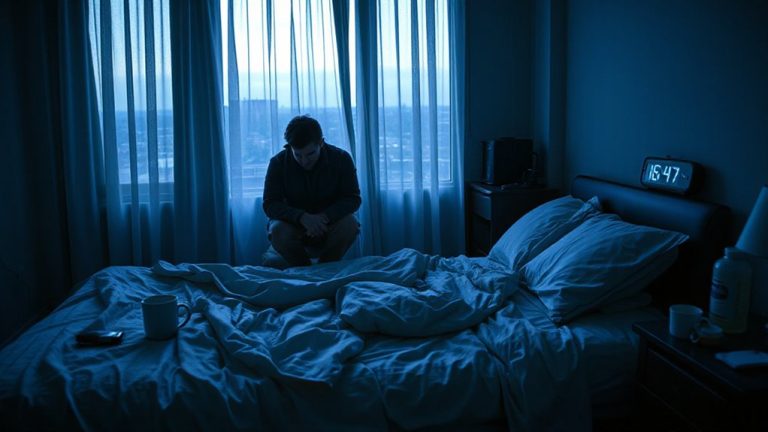
Blue light, especially from screens and LED lighting, can interfere with your body’s natural recovery process after workouts. This disruption stems from circadian misalignment, where artificial light at night confuses your internal clock, delaying the restorative phases needed for muscle repair. Your eyes’ photoreceptors, when exposed to excess blue light, undergo photoreceptor desensitization, weakening their ability to signal nighttime to your brain. As a result, essential recovery hormones may release at suboptimal times. For those prioritizing muscle regeneration, minimizing evening blue light is a practical step. Simple changes-like dimming screens, using warmer lighting, or adjusting device settings-can support better alignment. These adjustments don’t require gear but lay the foundation for effective recovery. Considering sleep aids? Start with light management before opting for supplements or devices. It’s a low-cost, evidence-backed move with clear trade-offs in convenience versus recovery quality.
How Blue-Blocker Glasses Increase Melatonin
While your body naturally produces melatonin to signal sleep, wearing blue-blocker glasses in the evening can help boost this process by filtering out the wavelengths that delay its release. These glasses block blue light from screens and indoor lighting, which otherwise tricks your brain into thinking it’s still daytime. By shielding your eyes, the glasses support your circadian rhythm, helping melatonin levels rise at the right time. This shift doesn’t happen instantly, but with consistent use, many people notice improvements in sleep quality. Better timing of melatonin also means falling asleep faster and fewer nighttime awakenings. Most models are lightweight, with amber or red lenses proven effective in studies. Some brands offer trial periods, so you can test comfort and performance. Though individual results vary, especially if you have a sleep disorder, the glasses are a non-invasive option worth considering for regulating your sleep cycle. For those seeking optimal results, choosing the best orange and blue light-blocking glasses can enhance both comfort and effectiveness.
How Melatonin Powers Overnight Back Muscle Repair
Ever wonder why your back feels less sore after a solid night’s sleep? That’s melatonin at work. When you sleep, melatonin helps reduce muscle inflammation and supports protein synthesis, two key steps in overnight muscle repair. It acts like a quiet signal, telling your body it’s time to shift into recovery mode. As melatonin levels rise naturally in the evening, they boost antioxidant activity, which calms inflamed tissues around your spine. At the same time, this hormone helps coordinate the rebuilding of muscle fibers by promoting efficient protein synthesis. You don’t need supplements-your body does this best when sleep is consistent and starts on time. Good sleep hygiene, like limiting screen time, supports this cycle. If you struggle to fall asleep, addressing sleep timing and environment often helps more than quick fixes.
Research: Blue Blockers Improve Recovery During Sleep
You already know melatonin helps your back muscles repair while you sleep, but did you know something as simple as your evening light exposure can boost this process? Wearing blue-blocker glasses two hours before bed supports circadian alignment by filtering artificial blue light, helping your body ramp up natural melatonin production. Research shows this small change enhances neural relaxation, creating a more restorative sleep environment for muscle recovery. Improved circadian alignment doesn’t just help you fall asleep easier-it deepens sleep quality, which is critical for paraspinal muscle regeneration. These glasses are lightweight, non-prescription, and designed for everyday use, with amber-tinted lenses proven in trials to support melatonin onset. Most models come with a one-year warranty and are easy to clean. Studies observed significant recovery benefits after two weeks of consistent use, especially in people exposed to screens at night. They’re a practical, low-risk tool among sleep aids to contemplate if you’re aiming for better overnight repair.
How to Use Blue-Blocker Glasses for Faster Recovery
How can a simple habit shift boost your muscle recovery while you sleep? Wear blue-blocker glasses two hours before bed to support your circadian rhythm. These glasses filter blue light from screens and indoor lighting, helping your body prepare for rest. Better sleep means improved paraspinal muscle regeneration overnight. For best results, pair them with solid sleep hygiene-keep a consistent bedtime, reduce screen time, and create a dim, quiet environment. Most models are lightweight with amber lenses, designed for comfort during evening activities. Try them for at least two weeks to judge effects on your rest and recovery. Many brands offer a 30-day trial or warranty, so test without pressure. They’re not a fix for diagnosed sleep disorders, but they can be a practical tool when used right. Choose well-constructed frames that fit securely. This small step may quietly enhance your recovery.
Who Benefits Most From Blue Blockers at Bedtime?
While certain individuals may notice only subtle improvements, those with high evening screen exposure or irregular sleep schedules tend to benefit most from wearing blue-blocker glasses at bedtime. If you’re glued to screens late-working, scrolling, or gaming-you likely face more eye strain and disrupted melatonin release. These glasses filter blue light, helping signal to your brain that it’s time to wind down. That shift can improve your sleep quality, especially if your routine’s inconsistent. Shift workers, night owls, or people recovering from muscle fatigue may find them particularly useful. Look for glasses with amber or red lenses, tested to block 90–100% of blue light. Most are lightweight, with durable frames for comfort. Many brands offer 30-day trial periods and warranties, so testing them is low-risk. They’re not a fix-all, but when paired with good sleep habits, they support better recovery and rest.
On a final note
You might try blue-blocker glasses two hours before bed if you’re looking to support muscle recovery, especially after intense physical work or injury. They’re simple to use, non-invasive, and help boost melatonin, which aids overnight paraspinal repair. While results vary, many notice better sleep quality. Consider a short trial, particularly if screen use is high at night. Look for amber lenses and reputable brands, often offering a warranty. Pair them with consistent sleep habits for best results.