Coordinating Light Exposure With Melatonin Supplements for Jet Lag Recovery
You can minimize jet lag by timing light exposure and melatonin to match your destination’s time zone. Take melatonin 30 minutes before bedtime there-ideally 0.5 to 5 mg, starting low. Get bright light in the morning if traveling east, or in the evening if going west. Avoid blue light at the wrong times. Syncing these cues resets your internal clock faster, helping you adjust sleep and alertness smoothly. There’s more to fine-tuning the approach based on your travel direction.
Notable Insights
- Time melatonin 30 minutes before target bedtime to align with destination sleep schedule.
- Use morning light exposure after eastward travel to advance circadian timing and reduce jet lag.
- Seek evening light after westward travel to delay circadian rhythm and adjust to later time zones.
- Avoid morning blue light when traveling east and use dim, warm lighting to prevent circadian delay.
- Combine properly timed melatonin with consistent outdoor light exposure for faster circadian realignment.
What Causes Jet Lag and How to Reset Your Clock
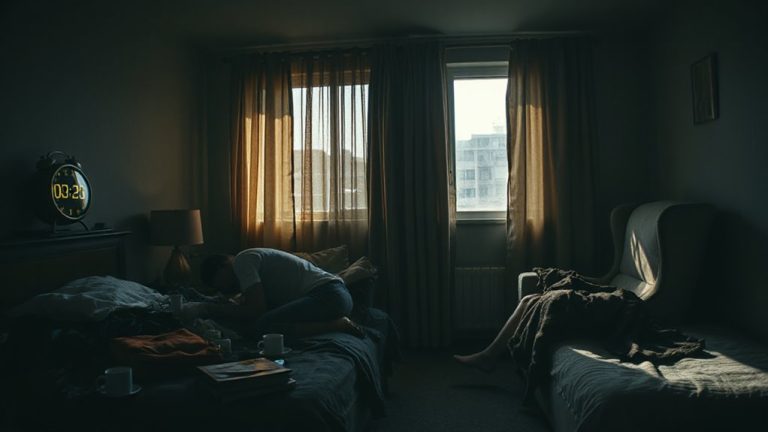
Although your body runs on a natural 24-hour cycle called the circadian rhythm, traveling across time zones throws it out of sync, making you feel tired when you should be alert or wide awake when you need to sleep. This mismatch, known as circadian misalignment, leads to jet lag. Your internal clock struggles to adjust, resulting in sleep phase disruption-your body’s signals for sleep and wakefulness no longer match the local time. You might find it hard to fall asleep, wake too early, or feel sluggish during the day. These effects can last a few days, depending on how many time zones you’ve crossed. Resetting your rhythm involves timed cues like light and darkness, but sleep phase disruption doesn’t fix itself instantly. Planning ahead with gradual schedule shifts before travel may help. Using tools like melatonin supplements, taken at proper times, can support adjustment by signaling when your body should sleep.
How Light Resets Your Body Clock
Why does stepping into sunlight at the right time help you adjust faster after a long flight? Because light triggers photic signaling in your brain, which directly influences circadian entrainment. When light enters your eyes, especially in the morning, it signals your suprachiasmatic nucleus-the body’s internal clock-to suppress melatonin and promote alertness. This process helps shift your sleep-wake cycle to match the new time zone. Exposure to natural or bright artificial light at key times strengthens circadian entrainment, making adjustments smoother. You don’t need intense light; even 15–30 minutes outdoors can be effective. Timing matters: morning light advances your clock, while evening light delays it. Consistent daily exposure supports stable rhythms. Using light this way is a core strategy for resetting your body clock without supplements, relying instead on your body’s natural response to environmental cues.
When to Take Melatonin for Jet Lag
When you’re trying to reset your sleep schedule after crossing time zones, timing your melatonin dose right can make a real difference. Melatonin timing is key-take it too early or too late, and it might not help your body adjust. For best results, take melatonin about 30 minutes before your target bedtime at the destination. This helps signal to your brain that it’s time to wind down. Dosage levels typically range from 0.5 to 5 mg, with lower amounts often being just as effective and less likely to cause grogginess.
| Desired Bedtime | Suggested Melatonin Time |
|---|---|
| 10:00 PM | 9:30 PM |
| 11:00 PM | 10:30 PM |
| 12:00 AM | 11:30 PM |
| 1:00 AM | 12:30 AM |
Always start with the lowest effective dose and adjust as needed.
Adjust Light and Melatonin for East or West Travel
If you’re traveling across time zones, syncing your light exposure with melatonin use can speed up how quickly your body adjusts. Going east? Start taking melatonin earlier in the evening-about 2–3 hours before bedtime at your destination-and avoid blue light in the morning to prevent delaying your internal clock. For westward trips, delay melatonin until later at night and seek evening light to push your rhythm back. Blue light exposure at the wrong time can worsen circadian disruption, so use dim, warm lighting when you need to stay awake. Melatonin helps shift your sleep schedule, but timing matters: taking it too early or too late may prolong jet lag. Pair supplements with smart light choices to reduce sleep onset trouble and align your rhythm faster. This practical combo supports smoother shifts with fewer side effects.
Use Morning Light to Beat Jet Lag
How can you reset your body clock more quickly after crossing time zones? Use morning sunlight soon after arrival. Exposure to light in the early hours helps shift your internal rhythm forward, supporting better circadian alignment-especially after eastward travel. Your brain responds to morning sunlight by suppressing melatonin, signaling it’s time to be awake. Aim for 20–30 minutes of outdoor light, ideally within an hour of local sunrise. Cloudy or shaded conditions still work, though direct exposure is more effective. Consistency matters: repeat this daily until your sleep schedule stabilizes. Doing so can shorten jet lag by several days. Don’t rely solely on indoor lighting; it’s not intense enough to drive strong circadian changes. By actively using morning sunlight, you’re guiding your body toward natural sleep-wake cycles without supplements-though timing matters just as much as exposure.
Combine Light and Melatonin Like a Pro
Why not get the most out of your jet lag strategy by pairing light exposure with melatonin at the right times? Proper light timing helps reset your internal clock, while melatonin pairing boosts the signal that it’s time to sleep. If you’re traveling east, take melatonin in the evening at your destination’s time and seek bright light in the morning. Going west? Use light in the late afternoon and take melatonin closer to bedtime. Syncing these cues improves your body’s adjustment. Most melatonin supplements start working in 30–60 minutes, so plan accordingly. Expose yourself to bright light-ideally natural sunlight-for 20–30 minutes. Avoid dim or blue-light-heavy environments that weaken the effect. With smart light timing and melatonin pairing, you’re not guessing-you’re guiding your rhythm.
Don’t Make These Jet Lag Mistakes
Ever wonder why some travelers bounce back from long flights while others feel foggy for days? You might be making common jet lag mistakes. Skipping light exposure at the right time delays your rhythm adjustment, while misusing melatonin can worsen sleep inertia-leaving you groggy instead of refreshed. Take melatonin too late, and you risk next-day drowsiness; take it too early, and it won’t align with your new time zone. Overhydration risks are real, too-drinking too much water during the flight can disrupt sleep and increase bathroom wakes. Avoid heavy meals and alcohol; they impair sleep quality and amplify jet lag symptoms. Instead, time your light exposure, use melatonin only as needed, and stay moderately hydrated. These steps reduce recovery time and support smoother adjustment without harsh side effects. Small, informed choices make a noticeable difference.
On a final note
You can ease jet lag by timing light exposure and melatonin carefully. Seek bright light in the morning if traveling east, or in the evening if going west. Take melatonin a few hours before bedtime at your destination. Pairing these strategies supports faster adjustment. Start gradually shifting sleep times before your trip. Most people notice improvement within a few days. Give your body time, and stay consistent with light and sleep cues.