How to Manage Sleep in Children With Asthma and Allergies
Keep your child’s bedroom clean and allergen-free by using allergen-proof covers on bedding and running a HEPA air purifier nightly. Wash sheets weekly in hot water and remove clutter, carpets, and pets to reduce dust and dander. Keep windows closed during high pollen times, and have your child shower before bed. Follow a consistent asthma plan with evening medication as directed, and monitor for coughing or wheezing. You’ll find more ways to support restful nights ahead.
Notable Insights
- Use allergen-proof mattress and pillow covers to reduce dust mite exposure during sleep.
- Keep pets out of the child’s bedroom and off their bedding to minimize dander.
- Run a HEPA air purifier in the bedroom nightly to reduce airborne allergens.
- Establish a consistent bedtime routine that includes asthma medication as prescribed.
- Wash bedding weekly in hot water to remove allergens and prevent nighttime symptoms.
How Asthma and Allergies Disrupt Sleep
While asthma and allergies might seem like daytime concerns, they often peak at night and interfere with your child’s ability to sleep soundly. Nighttime coughing can wake your child repeatedly, breaking sleep cycles and reducing overall rest quality. Breathing difficulties tend to worsen when lying down, as mucus pools in the airways and lung capacity shrinks slightly. These symptoms not only delay falling asleep but also lead to restless, fragmented sleep. You may notice frequent turning, snoring, or even gasping during the night, all tied to underlying asthma or allergic reactions. Monitoring for these signs helps you recognize patterns and decide whether to consult a doctor or adjust current treatments. Early intervention can improve sleep duration and daytime behavior. Consider tracking symptoms for a week to help professionals determine the best management approach.
Remove Allergens From the Bedroom

One effective way to help your child sleep better is by reducing allergens in the bedroom, where dust mites, pet dander, mold, and pollen can collect easily. You can substantially improve air quality with simple, consistent steps. For pet dander control, keep pets out of the bedroom entirely and bathe them weekly to minimize shedding. Vacuum carpets and upholstery frequently using a HEPA filter, and consider switching to hard flooring to reduce buildup. Dust mite reduction starts with washing bedding weekly in hot water and using allergen-proof covers on mattresses and pillows. Eliminate clutter, which traps dust, and fix leaks promptly to prevent mold. Maintain humidity below 50% with a dehumidifier if needed. Regular cleaning and good ventilation make a noticeable difference over time, supporting better sleep and fewer allergy-related disruptions. For maximum protection, choose a hypoallergenic mattress cover that blocks allergens while remaining breathable and comfortable.
Use Allergy-Proof Bedding and Air Filters
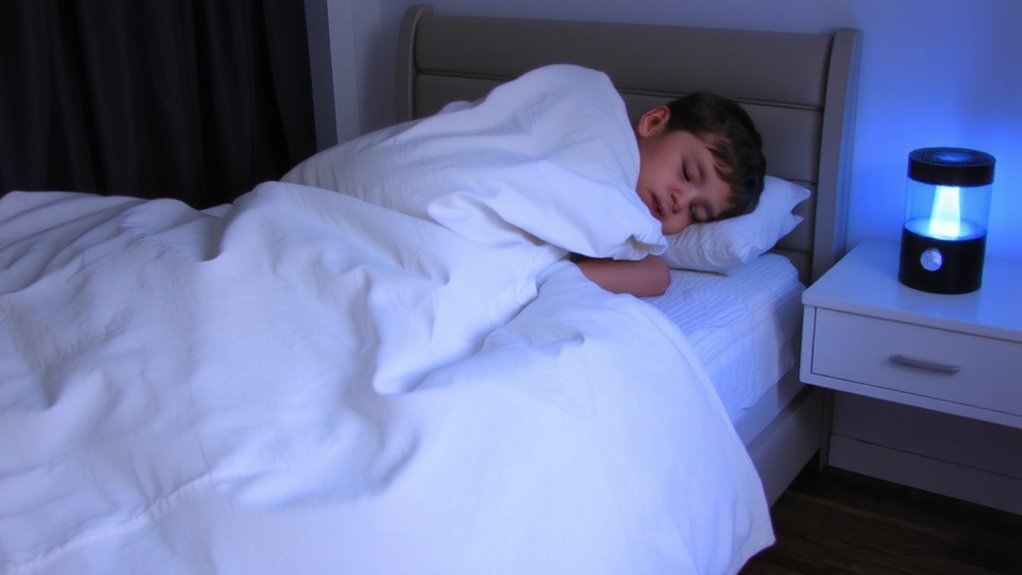
You’ve already taken steps to reduce allergens in your child’s bedroom by cleaning regularly and keeping pets out, and now you can build on that progress by focusing on what goes directly into the sleep environment-bedding and air quality. Use allergy-proof covers made from tightly woven, hypoallergic materials to encase mattresses, pillows, and box springs; these block dust mites, pet dander, and mold spores. Wash bedding weekly in hot water to maintain effectiveness. Pair this with a portable air purifier that features true HEPA filtration, which captures at least 99.97% of airborne particles as small as 0.3 microns. Place the unit near your child’s bed, run it consistently, and replace filters as recommended. Many models come with quiet operation modes and filter replacement indicators. Look for units with solid warranties and trial periods so you can test performance in your space. These additions can meaningfully improve air quality and support better sleep. For an affordable foundation that supports healthy sleep, consider a best queen mattress under $400 that’s designed to resist allergens and maintain comfort.
Follow a Calming Bedtime Routine
Why does your child’s bedtime feel more like a struggle than a wind-down? A consistent, calming routine can make a real difference. Start with dim lighting to signal the body it’s time to relax. Avoid screens and keep activities quiet and predictable. Reading stories together not only soothes but also strengthens bonding and sleep cues. Keep the room cool and quiet, and follow the same steps each night.
| Activity | Time Before Bed | Benefits |
|---|---|---|
| Warm bath | 30 min | Relaxes muscles, lowers stress |
| Reading stories | 20 min | Calms mind, builds routine |
| Dim lighting | 30 min | Supports melatonin release |
| Gentle breathing | 10 min | Reduces nighttime anxiety |
This structure supports better sleep onset and may reduce nighttime disruptions. Try each step for at least a week to assess its effect. Consistency matters most.
Spot Nighttime Asthma Symptoms Early
Could your child’s coughing or restlessness at night be more than just a cold? It might be a sign of nighttime asthma. Watch for recurring coughing episodes, especially after midnight, which can disrupt sleep and signal poorly controlled asthma. Night sweats are another clue-unexplained dampness on bedding or clothes could mean the body’s struggling to breathe. You may also notice wheezing, rapid breathing, or chest tightness when your child lies down. These symptoms often worsen in response to allergens like dust mites or pet dander in the bedroom. Tracking these signs over a few weeks helps determine patterns. Early recognition allows timely intervention, reducing sleep disruption and supporting better lung function. Don’t wait until symptoms escalate. Keeping a symptom journal can clarify triggers and severity, guiding conversations with your child’s healthcare provider. Spotting these issues early improves long-term asthma control and helps your child rest easier.
Make a Bedtime Asthma Plan With Your Doctor
If your child often wakes up coughing or seems restless at night, working with your doctor to create a bedtime asthma plan can make a real difference in their sleep and overall health. You’ll discuss when and how to use medications, including quick-relief inhalers or long-term controllers, based on your child’s needs. Asthma tracking helps you and your doctor spot patterns over time, so adjustments can be made before symptoms worsen. Keep a symptom journaling log to record coughing, breathing difficulty, or sleep disruptions-this data supports smarter treatment choices. Your doctor may recommend using a peak flow meter before bed or adjusting medication timing. Be clear on what actions to take if symptoms occur at night. This plan doesn’t replace emergency care but gives you a clear, prepared response. With consistent tracking and communication, nighttime asthma can become more predictable and manageable. Consider using a dust mite-resistant mattress to reduce allergen exposure during sleep.
Control Evening Allergy Triggers
Evening routines play a big role in how well your child sleeps, especially when asthma and allergies overlap. To reduce evening pollen exposure, have your child shower and change clothes after being outdoors, even if it’s just late afternoon play. Pollen can cling to skin and hair, worsening symptoms at night. Keep windows closed during high pollen times, typically in the evening, and use an air purifier with a HEPA filter in your child’s bedroom. This helps capture allergens like pet dander, especially if pets roam the house. If you have pets, avoid letting them on furniture or in bedrooms to limit dander buildup. Choose hypoallergenic bedding and wash it weekly in hot water. These steps reduce triggers that can worsen asthma during sleep. Consistency matters, and small changes can improve airflow and comfort over time.
On a final note
You can help your child sleep better by reducing allergens and sticking to a consistent routine. Use allergy-proof bedding and air filters to improve bedroom air quality. Watch for night coughs or wheezing, and talk to your doctor about a tailored asthma plan. Managing evening triggers early means fewer disruptions. These steps work best when used together, so try them consistently for several weeks. If sleep problems continue, consult your doctor about further evaluation or adjustments.