How to Use Behavioral Strategies to Delay Sleep Onset in Advanced Sleep Phase Disorder
You can delay your sleep onset by getting bright light in the morning, ideally 30–45 minutes outdoors or with a 10,000 lux light box. Avoid evening light, especially from screens, to prevent early melatonin release. Shift dinner and caffeine 30 minutes later every few days, and wake up at the same time daily, even on weekends. These steps gradually reset your internal clock, improving evening alertness and sleep timing. More details follow.
Notable Insights
- Use morning bright light exposure to delay your internal clock and push back sleep onset.
- Avoid evening light, especially blue light from screens, to prevent further phase advancement.
- Gradually delay dinner and caffeine intake by 30-minute increments to extend evening wakefulness.
- Maintain a consistent wake-up time daily to stabilize and slowly shift your circadian rhythm.
- Combine timed light therapy with behavioral adjustments for sustained, medication-free sleep delay.
What Is Advanced Sleep Phase Disorder (ASPD)?
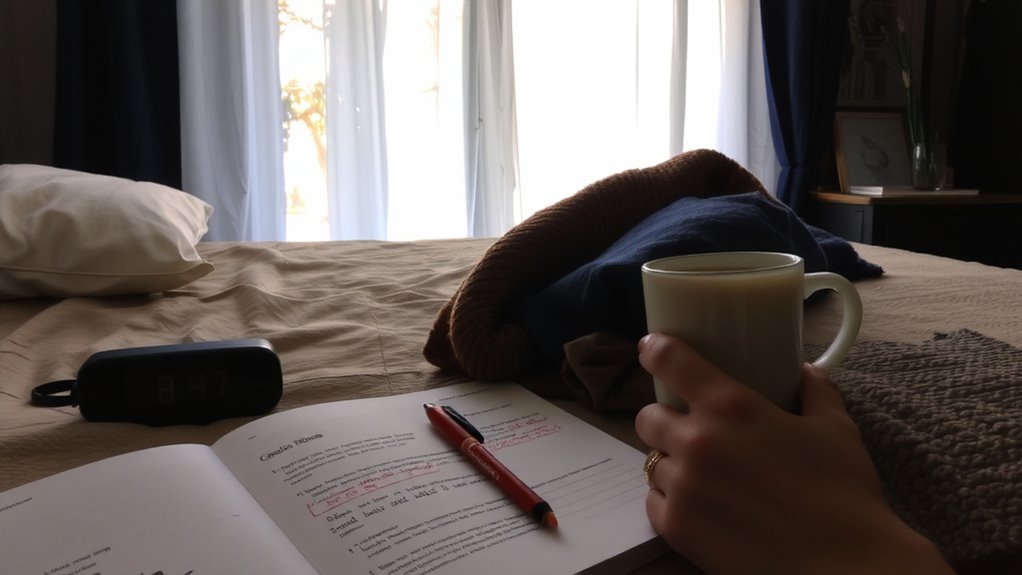
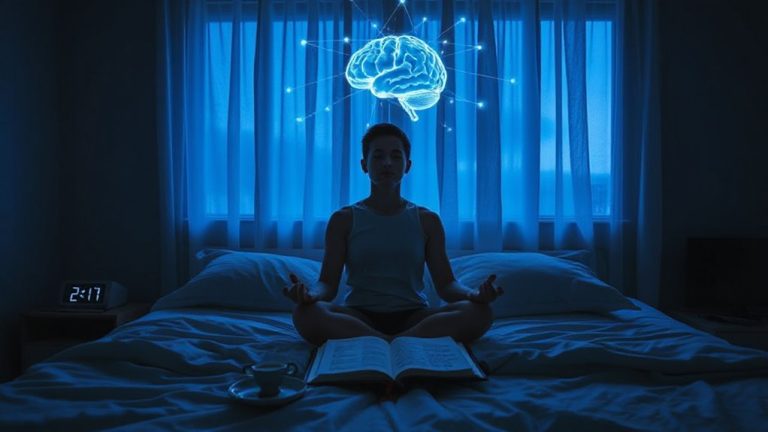
Ever wonder why you feel drowsy by early evening while others are just starting their night? You might have Advanced Sleep Phase Disorder (ASPD), a condition where your internal clock shifts earlier, making you fall asleep and wake up much sooner than typical. It’s not just habit-genetic predisposition plays a role, especially if family members have similar patterns. Age factors also contribute, as ASPD often emerges in middle age or later. Your body naturally begins producing melatonin earlier, signaling sleep well before social hours end. This shift can disrupt evening plans or work routines. While it’s not dangerous, it can limit activities or affect relationships. Recognizing these signs helps you decide whether to adjust behavior, track sleep patterns, or consult a specialist. Understanding your rhythm is the first step toward managing it effectively.
How Light Resets Your Body Clock
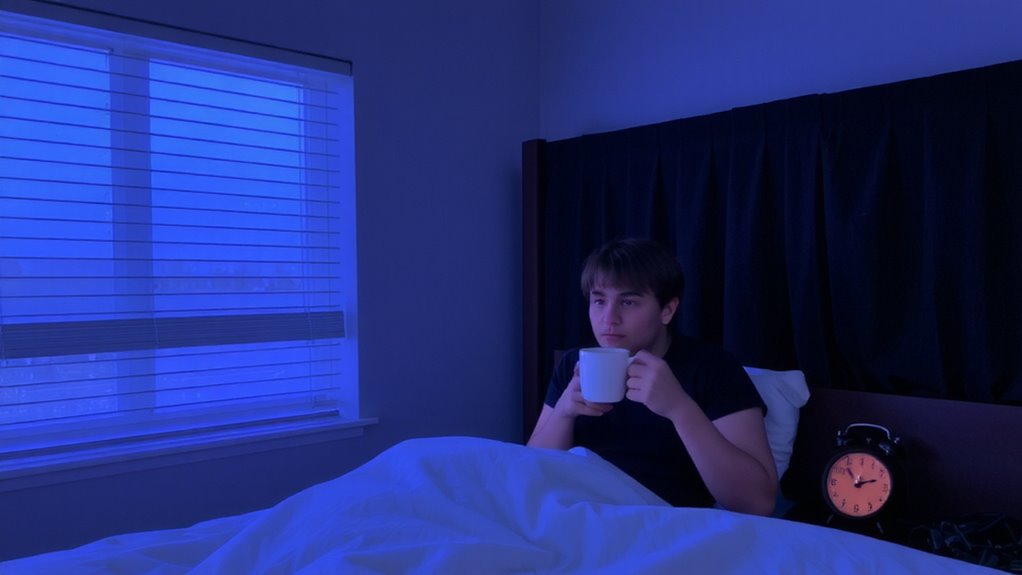
Light plays a central role in shaping your internal clock, and using it wisely can help shift your sleep schedule later. Your body relies on circadian entrainment-the process by which external cues, especially light, synchronize your internal rhythm to the 24-hour day. You’re especially sensitive to light during certain times, known as your photoperiod sensitivity window. Exposure to bright light in the evening can delay melatonin release, pushing sleep later. This sensitivity means timing matters: even moderate light can shift your rhythm if applied consistently. Using indoor lighting or light boxes at the right time trains your body gradually. Think of it like adjusting a watch-small, daily changes add up. You don’t need intense light, just well-timed exposure. Over days, this recalibration supports a later sleep onset without medication.
Get Morning Light, Avoid Evening Light
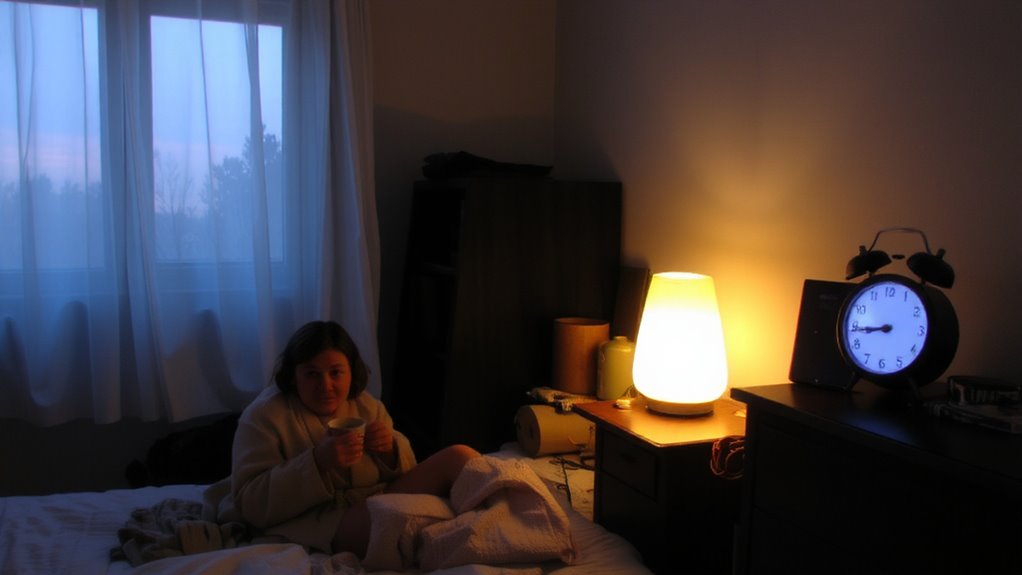
You’ve already seen how evening light can push your sleep later by shifting melatonin release, but just as important is shaping your morning routine to lock in that change. Morning exposure to bright light helps reset your internal clock by signaling the start of your day, making it easier to stay awake longer in the evening. Aim for 30–45 minutes outside within an hour of waking, even on cloudy days-natural light works best. If outdoor access is limited, consider a light therapy box with 10,000 lux output, positioned at eye level without staring directly at it. Pair this with consistent evening avoidance of bright lights, especially blue-rich screens. Dim lights and use filters or amber glasses after sunset to support earlier melatonin onset. Together, morning exposure and evening avoidance strengthen circadian realignment, improving sleep timing and daytime alertness over time. For added protection during evening screen use, consider wearing blue light blocking glasses.
Delay Caffeine and Dinner to Push Back Sleep
Why might shifting when you eat and drink help you stay awake later? Delaying caffeine timing and dinner can signal your body to stay alert past your usual early bedtime. If you usually drink coffee or tea in the morning, pushing that to early afternoon may boost evening wakefulness. Just don’t consume caffeine too late, or it may disrupt sleep altogether. Meal scheduling works similarly-eating dinner later, around 7 or 8 p.m., raises body temperature and metabolism when you’d normally be winding down. This shift supports a later sleep cycle without relying on medication. Try adjusting meal and caffeine timing in 30-minute increments over several days. Monitor how you feel at night and guarantee changes don’t cause indigestion or jitteriness. These small adjustments, paired with light exposure strategies, can gently extend your wake window.
Wake Up at the Same Time Daily
Often, maintaining a consistent wake-up time-even on weekends-can strengthen your body’s internal clock and gradually shift it to a later sleep phase. This practice supports sleep consistency, which helps regulate your circadian rhythm over time. Your body learns to anticipate wakefulness, making it easier to stay alert later into the evening. The routine benefits extend beyond timing: they improve sleep quality and reduce fatigue. Even if you struggle to fall asleep later at first, getting up at the same time daily prevents further advancing of your sleep cycle. Avoid sleeping in, as it weakens the rhythm you’re trying to adjust. Think of it as resetting an internal clock-accuracy matters. Over weeks, this steady signal helps delay sleep onset naturally. No equipment or cost is required, just commitment. It’s a foundational step, often more effective than sleep aids for long-term change.
On a final note
You can gently shift your sleep schedule later with behavioral strategies. Expose yourself to bright light in the morning, avoid it at night. Delay caffeine and dinner by small increments to push sleep onset. Wake up at the same time daily, even on weekends. These steps work gradually, so consistency matters. No supplements or devices required-just timed light and routine. Results may take days to appear. Try this for a few weeks before considering other options.