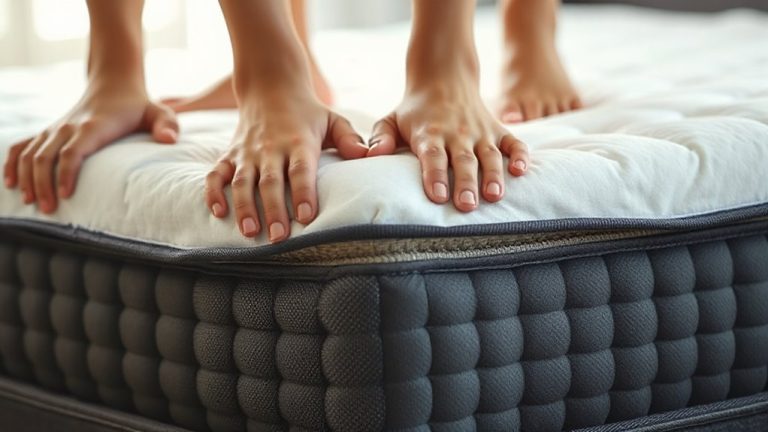
Innerspring Mattress Off-Gassing: Safe Ventilation Practices
You’ll want to unbox your innerspring mattress in a well-ventilated room, ideally with open windows and a fan running for 4–6 hours daily. This helps release trapped VOCs from the foam and fire retardants faster. Sunlight for 2–3 hours can also break down odors, but avoid prolonged exposure. Using an activated carbon filter helps too. Most smells fade within days, especially with airflow-and if you’re sensitive, these steps make a clear difference. You’ll notice how simple adjustments improve air quality more than expected.
Notable Insights
- Unbox the mattress in a well-ventilated room with open windows to reduce VOC concentration quickly.
- Use box fans directed at the mattress surface for 4–6 hours daily to accelerate off-gassing.
- Avoid enclosed spaces; ensure continuous airflow to minimize odor and chemical buildup.
- Limit direct sunlight exposure to 2–3 hours to help break down VOCs without damaging fabrics.
- Consider using an activated carbon air purifier to effectively capture and reduce airborne VOCs.
What Causes Innerspring Mattress Off-Gassing?
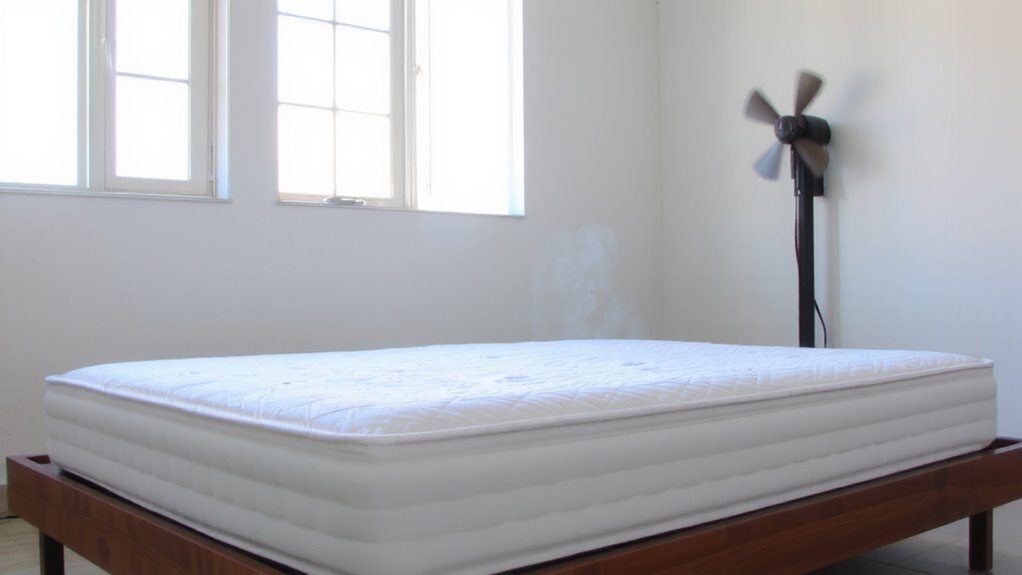
That new mattress smell? It’s from off-gassing, caused by the release of volatile organic compounds (VOCs) from the chemical composition of foam layers often bonded to innerspring coils. You’re exposed to these fumes when materials like polyurethane foam or fire retardants break down slightly after unpacking. These manufacturing additives improve durability and meet safety standards but can temporarily affect indoor air quality. While the scent usually fades within days, sensitive individuals might notice headaches or irritation. This matters if you deal with sleep disorders, as air quality can influence rest quality. Most off-gassing isn’t harmful long-term, but choosing CertiPUR-US® certified foams reduces VOC exposure. Consider this during your trial period-especially if you’re using sleep aids or adjusting routines. Warranties typically don’t cover odor complaints, so check material disclosures before buying. Ventilate well to minimize effects.
How Long Does Mattress Off-Gassing Last?
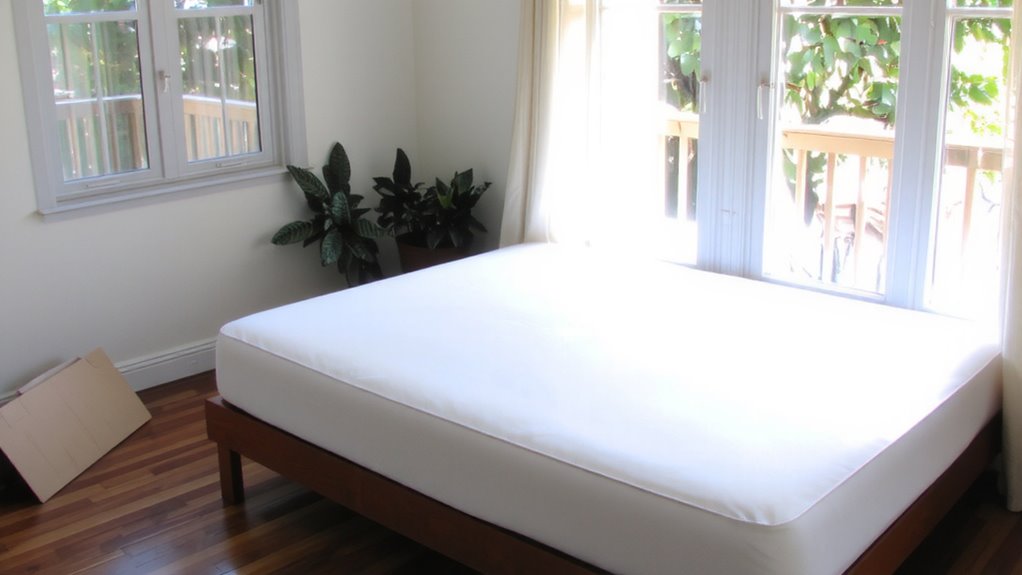
Most innerspring mattresses release noticeable odors for a few days to a week after unpacking, though the timeline varies based on materials and ventilation. You’ll likely notice the smell fades faster in a well-ventilated room, especially with airflow from open windows or a fan. Some mattresses, particularly those with thicker foam layers or synthetic fabrics, may off-gas longer-up to a few weeks. You don’t need to worry about lasting damage to your sleep quality, as odors typically diminish well before they interfere long-term. Still, it’s wise to check the mattress warranty; many offer trial periods that allow returns if off-gassing persists beyond comfort. Good airflow and allowing time to air out the mattress can make a real difference. Keeping these factors in mind helps support better sleep decisions without rushing to conclusions or unnecessary sleep aids.
Is Off-Gassing Harmful to Your Health?
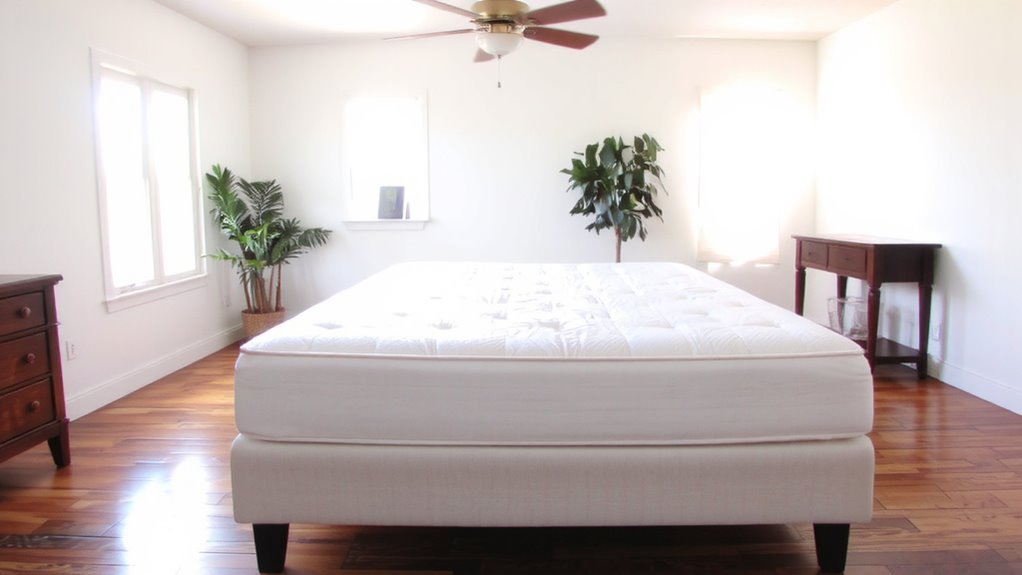
Could the smell coming from your new innerspring mattress actually affect your health? For most people, off-gassing odors are merely unpleasant and not dangerous. The fumes come from volatile organic compounds (VOCs) released as the materials settle. You might notice headaches or irritation at first, especially if you have chemical sensitivity. These reactions are usually short-lived and improve with proper ventilation. Still, there’s limited evidence on long term effects, so minimizing exposure makes sense. If you’re concerned, let the mattress air out in a well-ventilated room for a few days before use. This simple step reduces VOC levels markedly. While no proof ties off-gassing to serious health issues, being cautious helps you sleep better, both physically and mentally. Check your mattress warranty, too-some brands offer trial periods, letting you test comfort and odor response risk-free.
Which Mattress Materials Produce the Most Odor?
Foam layers often top the list when it comes to noticeable mattress odors, especially in innerspring models with memory foam or polyfoam comfort layers. You’ll likely notice a chemical-like smell at first, mainly from off-gassing compounds in the foam itself. Memory foam tends to produce more odor than polyfoam due to its density and composition. Chemical dyes used in fabric covers can also contribute to the smell, though usually to a lesser extent. Flame retardants, added for safety compliance, are another common source of odor, especially in synthetic blends. These materials break down gradually when exposed to air, releasing volatile organic compounds (VOCs). While the scent might bother you temporarily, it’s typically harmless and fades with time. Natural or plant-based foams, along with organic fabrics, often produce less noticeable smells. If odor sensitivity is a concern, look for certifications like CertiPUR-US, which limit harmful emissions.
How to Ventilate a New Mattress for Faster Results
While you might notice a distinct odor when unboxing your new mattress, getting fresh air to circulate around it can speed up the off-gassing process and help it feel more comfortable sooner. Air circulation is key-place the mattress in a well-ventilated room with open windows or use fans to keep air moving. Short bursts of sunlight exposure can also help dissipate odors, but avoid prolonged direct light to prevent fabric damage. Rotate the mattress occasionally for even airflow. Here’s how to optimize ventilation:
| Method | Benefit | Tip |
|---|---|---|
| Open Windows | Improves air circulation | Keep open 4–6 hours daily |
| Box Fan | Speeds up odor removal | Point at mattress surface |
| Sunlight Exposure | Helps break down VOCs | Limit to 2–3 hours to prevent fading |
This approach supports faster settling without compromising material integrity.
How Sensitive Sleepers Can Reduce Off-Gassing Exposure
What if you’re the kind of sleeper who notices every little change in your bedroom environment? Then you’re likely more affected by off-gassing odors from your new innerspring mattress. To reduce exposure, start by unboxing it in a well-ventilated room and let it air out for at least 48 hours, longer if needed. Using an air filtration system with an activated carbon filter helps remove volatile organic compounds more quickly. While odor masking sprays might make the room smell better temporarily, they don’t eliminate chemicals and aren’t a long-term fix. Opt for natural ventilation and time instead. Many brands offer trial periods-test the mattress during this window to assess comfort and sensitivity reactions. Choose models with low-VOC certifications if you’re prone to sensitivities. Your long-term sleep quality depends on minimizing irritants early.
On a final note
You can reduce innerspring mattress off-gassing by ventilating it in a well-aired room for 24 to 48 hours. Most odors fade quickly, especially with breathable covers and low-VOC materials. If you’re sensitive, choose mattresses with CertiPUR-US® certified foams and check warranty details for odor-related return policies. While off-gassing isn’t typically harmful, proper airflow improves comfort. Consider trial periods to test sleep quality and guarantee the mattress suits your needs.