Why Advanced Sleep Phase Disorder Responds Well to Light Therapy
You feel sleepy early because your internal clock runs ahead, but evening light therapy can delay that rhythm. Using a 10,000-lux light box between 7–9 p.m. helps push melatonin release later, so you stay awake longer. This shift aligns your sleep with everyday schedules. For best results, pick a UV-filtered device with steady brightness and use it consistently. Pair it with good sleep habits for improved timing and rest-there’s more to how this works smoothly over time.
Notable Insights
- Light therapy in the evening delays the circadian rhythm, counteracting early sleep and wake times in ASPD.
- Exposure to 10,000 lux light at 7–9 p.m. effectively shifts the internal clock later.
- Evening light suppresses early melatonin release, promoting later sleep onset and improved alignment with social schedules.
- Consistent daily use of light therapy produces noticeable improvements within days to a week.
- Properly timed light therapy addresses the core biological misalignment underlying Advanced Sleep Phase Disorder.
What Is Advanced Sleep Phase Disorder?
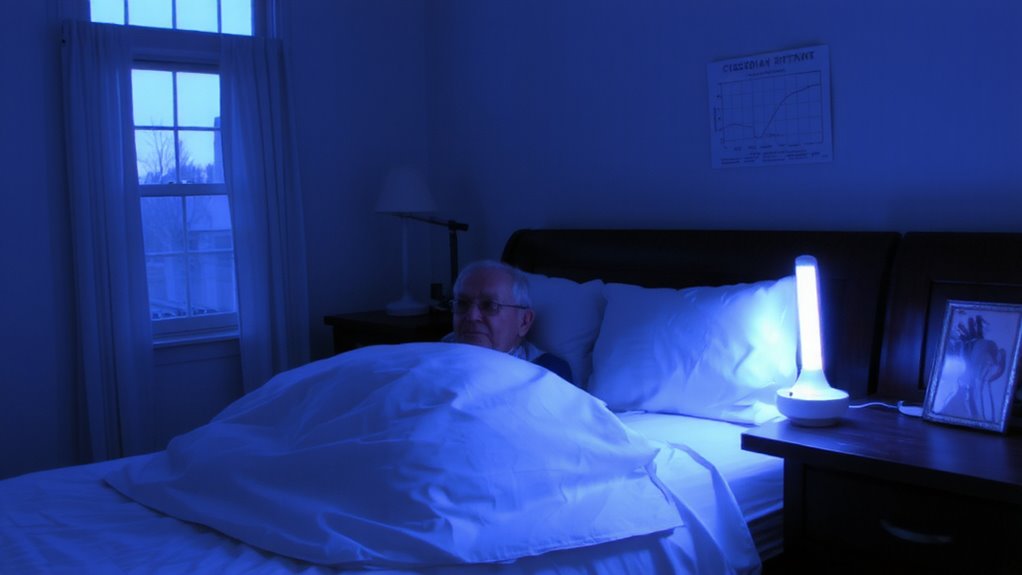
Think of your body’s internal clock like a built-in timer that runs a little too early. That’s what happens with Advanced Sleep Phase Disorder (ASPD). You feel sleepy in the early evening, maybe by 7 or 8 p.m., and wake up hours before you want to-often by 3 or 4 a.m. This shift isn’t just preference; it’s tied to your biology. A genetic predisposition can play a big role, meaning it may run in families. Age factors also matter, since ASPD becomes more common as people get older, especially after 60. Your circadian rhythm literally advances over time. While this pattern doesn’t always need treatment, it can disrupt work, social life, or sleep quality. Recognizing these features helps you decide whether to adjust habits, seek testing, or explore time-based therapies. It’s not about fixing sleep-it’s about aligning it with your daily needs.
When to Use Light Therapy for ASPD?
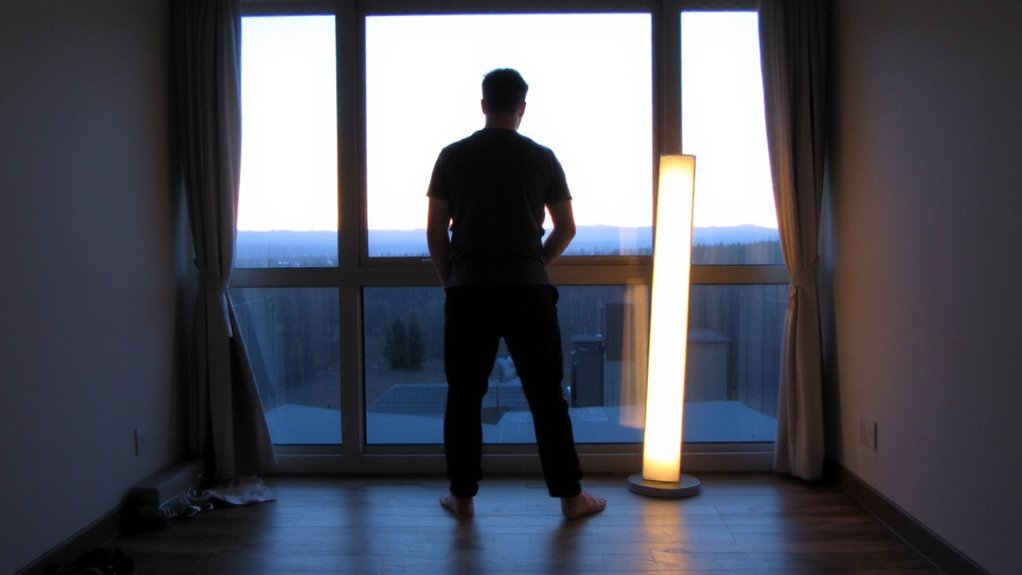
You might already know that ASPD shifts your sleep schedule earlier than typical, making you tired by dinnertime and awake before sunrise. Light therapy works best when used in the early evening, around 7 to 9 p.m., to help delay your internal clock. This timing helps shift your sleep phase later, aligning it closer to social norms. Using light therapy earlier could worsen symptoms, so timing is key. Most devices emit 10,000 lux, and 30 minutes of exposure is often enough. Side effects like eye strain or headaches are rare but possible, especially with prolonged use. User consistency matters-results usually appear within a week or two with daily use. Sticking to a regular schedule boosts effectiveness. If results lag, adjusting the timing or duration slightly might help. Always consult a sleep specialist to tailor the approach to your needs.
How Light Therapy Treats ASPD’s Early Schedule
Why does light therapy help shift your early sleep pattern? It works by resetting your circadian rhythm, the internal clock that controls when you feel sleepy or alert. When you’re exposed to bright light in the evening, your brain gets a signal to delay sleep onset, pushing your schedule later. This shift directly affects melatonin timing, delaying its release so you feel awake longer and sleep later. Light therapy fundamentally “tricks” your body into adjusting its natural cycle. You’ll likely see changes within a few days to a week of consistent use. For best results, sit near a bright light source for 30–60 minutes at your target time. Timing matters-use it too early or late, and it won’t help. Regular, timed sessions support lasting improvement in your sleep-wake pattern.
Choose the Right Light Therapy Device
A light therapy device that fits your routine and biological needs makes a real difference in adjusting your early sleep pattern. Look for a device intensity of 10,000 lux, as this level has been shown to effectively influence circadian rhythms when used for about 20 to 30 minutes daily. Position the device about 16 to 24 inches from your face, angled slightly downward, to get consistent exposure without staring directly at the light. The light color matters too-choose one that emits cool white or blue-enriched light, since these wavelengths are most effective at suppressing melatonin and resetting your internal clock. Make sure the device filters out harmful UV rays to protect your eyes and skin. Check if it offers adjustable brightness settings and comes with a sturdy stand or portability options. Many models include a money-back trial or warranty, so you can test it risk-free.
Boost Results With Sleep-Friendly Habits
While light therapy plays a key role in adjusting your internal clock, combining it with consistent sleep-friendly habits can substantially improve results. You’ll want to focus on building a consistent routine, going to bed and waking up at the same time every day-even on weekends. This helps stabilize your circadian rhythm over time. Good sleep hygiene also matters: keep your bedroom cool, dark, and quiet, and avoid screens at least an hour before bedtime. Try replacing late-night scrolling with calming activities like reading or light stretching. Limit caffeine and heavy meals in the evening. These small changes, paired with your light therapy sessions, support better sleep quality and longer-lasting adjustment. Over time, a consistent routine and solid sleep hygiene can make your treatment more effective, helping you maintain progress without relying solely on devices. Give these habits a few weeks to show results. Using a best sleep lamp can further enhance your light therapy and create a more soothing bedtime environment.
On a final note
You can manage advanced sleep phase disorder with evening light therapy, which delays your internal clock. Use a bright, white light box for 30–60 minutes in the early evening, ideally around sunset. Choose a device emitting 10,000 lux, with a diffuser to reduce glare. Models often come with timers and carry warranties of 1–2 years. Combine treatment with consistent sleep habits for best results. Check with your doctor before starting, and allow a few days to notice changes.