The Impact of Artificial Light on Human Circadian Rhythms and Sleep Hygiene
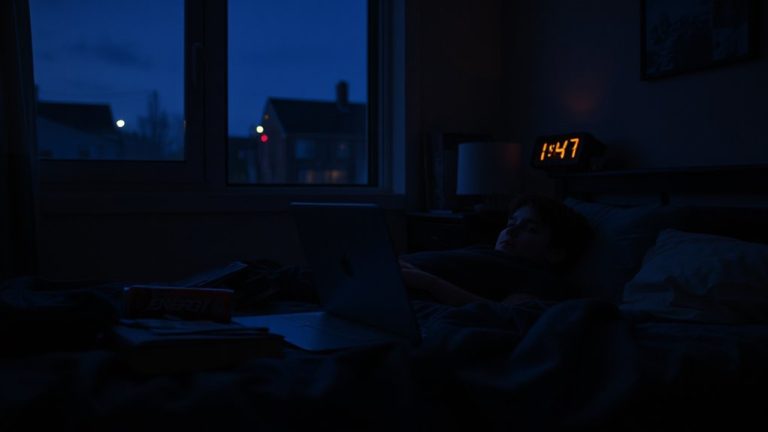
You’re exposed to artificial light at night, and it’s delaying your melatonin release, especially from screens and LEDs rich in blue light. This disrupts your circadian rhythm, weakening sleep timing and depth. Even dim lighting can shift your internal clock. For better sleep hygiene, limit evening screen time and reduce blue light exposure. Morning sunlight helps reset your rhythm. Consider light therapy or blackout tools-small changes improve sleep patterns in measurable ways.
Notable Insights
- Artificial light at night, especially blue-rich LEDs and screens, suppresses melatonin and disrupts circadian rhythms.
- Evening exposure to blue light delays sleep onset by tricking the brain into daytime alertness.
- Even dim indoor lighting can reduce melatonin levels and alter the body’s internal clock.
- Inconsistent light exposure weakens circadian regulation, contributing to sleep disorders and poor sleep hygiene.
- Solutions include morning natural light, blackout curtains, screen filters, and limiting evening screen use.
How Light Wrecks Your Sleep
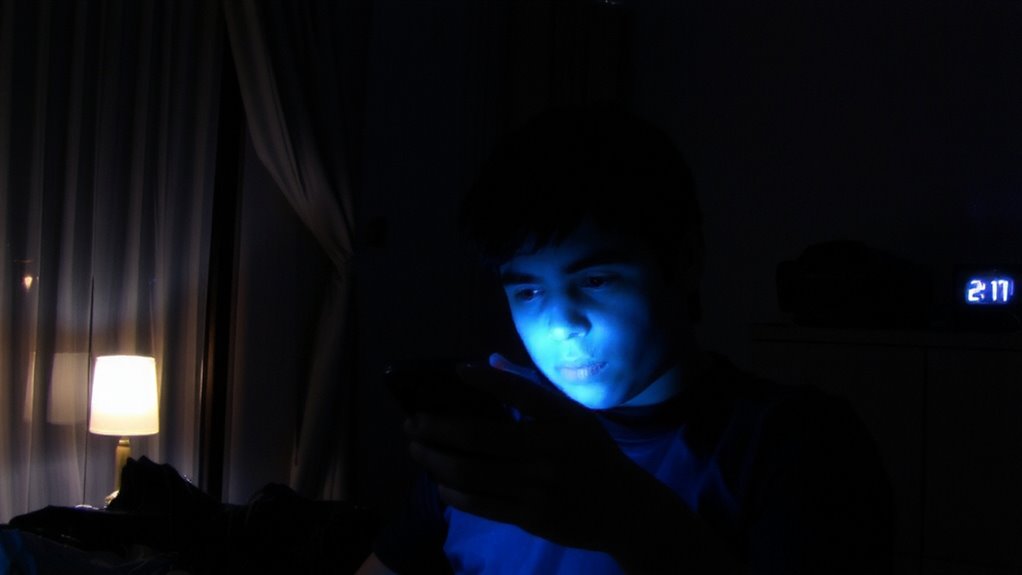
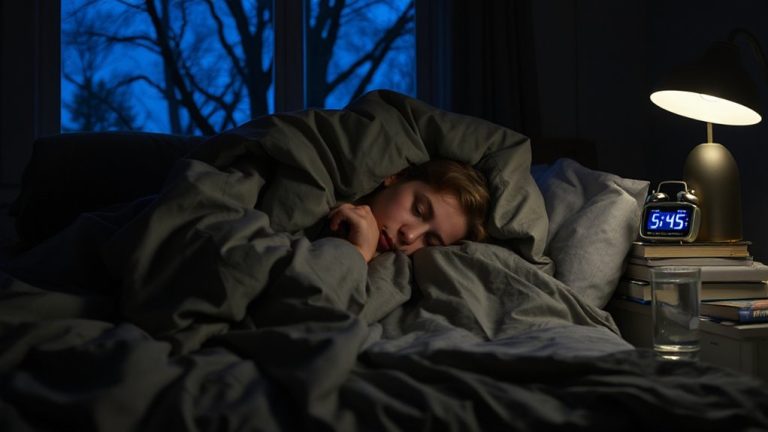
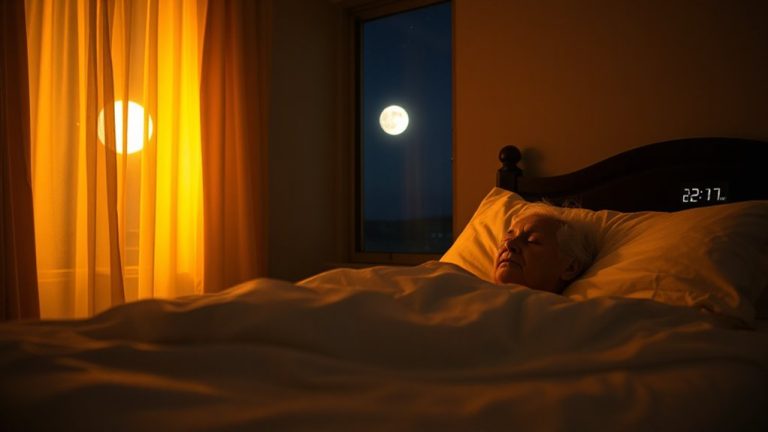
While your body’s internal clock is designed to respond to natural light cycles, exposure to artificial light at night can disrupt that rhythm, making it harder to fall asleep and stay asleep. You’re likely surrounded by light pollution-from streetlights outside your window to screen glare from phones, tablets, and TVs. These emit blue-heavy light that delays melatonin release, pushing back sleep onset. Even dim light can fragment sleep, reducing deep sleep stages over time. If you struggle with sleep, consider reducing screen use an hour before bed or using blue-light filters. Blackout curtains can reduce outdoor light pollution, while dim red nightlights offer low-impact visibility. Over-the-counter sleep aids might help short-term, but they don’t fix the root cause. For lasting improvement, adjusting light exposure is often more effective-and comes with no side effects or dependency risks.
Why Your Body Clock Cares About Light
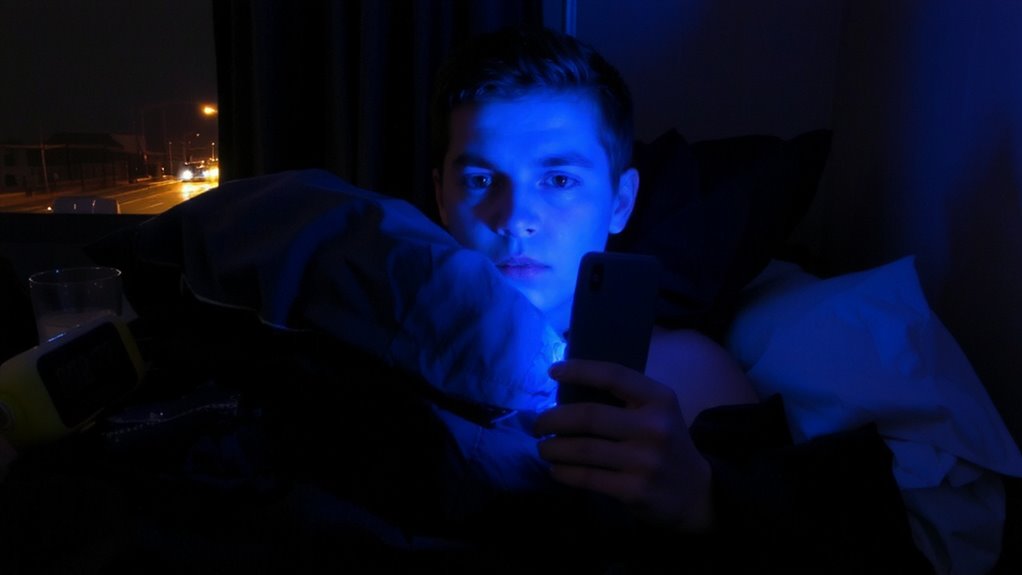
What makes light so powerful when it comes to your sleep? It’s because your body clock relies heavily on light cues to regulate daily rhythms. Your eyes’ retinal sensitivity, especially to blue-rich light, sends signals directly to your brain’s circadian center. This affects melatonin suppression - the reduction of the sleep-promoting hormone - telling your body it’s time to stay alert. Even dim indoor lighting can trigger this shift, altering sleep timing and quality. Your internal clock expects bright days and dark nights, so inconsistent light exposure may disrupt that balance. Over time, irregular patterns contribute to sleep disorders. Using light intentionally - like getting morning sunlight and minimizing evening glare - supports natural timing. Some sleep aids and devices are designed with this science in mind, offering light therapy or darkness-enhancing features. Always check product trial periods and warranties when considering these tools. For infants, incorporating baby sleep solutions can help align circadian rhythms early through consistent light exposure and soothing routines.
Why Blue Light Keeps You Up at Night
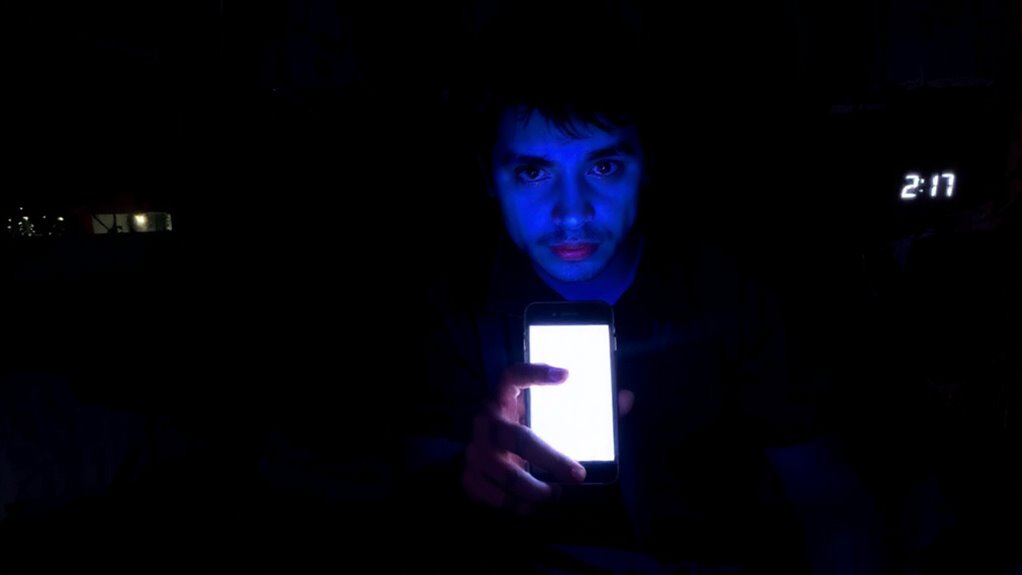
Since your eyes are especially sensitive to blue wavelengths, exposure to blue light at night can strongly interfere with your sleep cycle. Your retinal sensitivity to blue light signals the brain to stay alert, tricking it into thinking it’s still daytime. This response triggers melatonin suppression, delaying the natural release of this sleep-promoting hormone. Devices like phones, tablets, and LED screens emit strong blue light, making them especially disruptive when used before bed. Reducing screen time in the evening helps minimize this effect and supports a smoother shift to sleep. Some devices offer “night mode” settings that reduce blue light output, which may lessen melatonin suppression. While these features aren’t a complete fix, they’re a practical step worth trying. Improving sleep hygiene by managing light exposure gives you more control over your nighttime routine and long-term sleep quality.
5 Nighttime Habits That Sabotage Sleep
Cutting back on blue light at night is a solid first step, but other evening habits might still be working against your sleep. Late night snacking and caffeine consumption can disrupt your body’s natural wind-down process, even if you’re not aware of it. What you eat-and when-matters for circadian alignment. Including sleep-promoting foods in your evening routine can support melatonin production and improve sleep quality.
| Habit | Effect on Sleep |
|---|---|
| Late night snacking | Slows digestion, raises body temperature |
| Caffeine consumption after 2 PM | Blocks sleep-inducing chemicals |
| Screen use before bed | Suppresses melatonin |
| Inconsistent bedtime | Confuses internal clock |
| Heavy evening workouts | Increases alertness, delays sleep onset |
These behaviors might seem minor, but combined, they reduce sleep quality. Adjusting them improves rest without added cost. Consider tracking changes over a week to assess improvements. Small shifts often yield measurable results in falling asleep faster and waking less.
Use Morning Light to Reset Your Clock
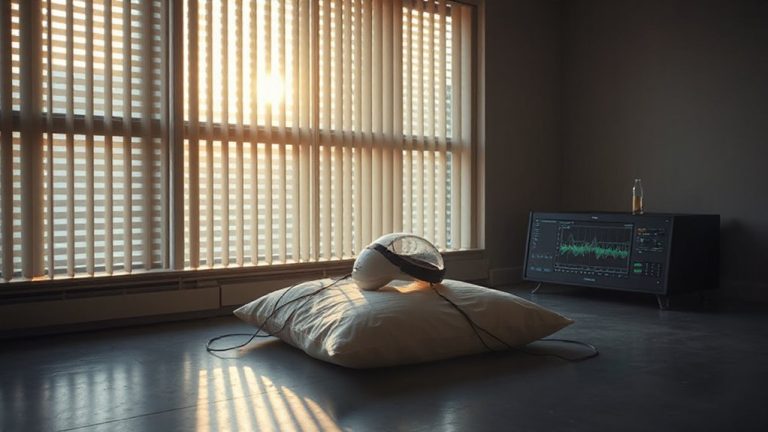
Why does stepping outside in the morning make you feel more alert and in sync? Because natural morning light helps reset your internal clock. Exposure to bright light soon after waking signals your body to stop producing melatonin, boosting alertness and aligning your circadian rhythm. If getting outdoors isn’t possible, consider light therapy devices that deliver 10,000 lux of cool-white light-use them within 30 minutes of waking for 20–30 minutes. Many models are compact, energy-efficient, and clinically tested. Some include adjustable brightness and a timer. For a gentler option, try sunrise simulation alarms, which gradually brighten your room over 15–30 minutes, mimicking dawn. These devices often include nature sounds and proven wakefulness support. Look for ones with a 1–2 year warranty and FDA-cleared status. Consistent use can strengthen sleep-wake regularity, especially helpful for circadian disorders. Some sunrise alarms also offer a projector alarm clock feature, displaying the time on the ceiling or wall for easier viewing.
7 Simple Fixes for Light-Induced Insomnia
You’ve already seen how morning light can set your rhythm right, but managing light later in the day is just as important for sound sleep. Too much artificial light at night, especially from screens, suppresses melatonin and delays sleep onset. To counter this, consider using screen filters that reduce blue light-many devices have built-in settings or apps that adjust color temperature after sunset. This small change helps maintain your natural cycle. For light from outside or hallways, blackout curtains effectively block unwanted illumination, creating a dark environment ideal for sleep. They’re typically made with dense, layered fabric and fit most window types. Many come with warranties and are easy to install. While screen filters support evening wind-down, blackout curtains guarantee you stay undisturbed through the night. Combining both improves conditions for consistent sleep without drastic lifestyle changes. Try them separately or together to see what works best for your routine.
Set Up a Sleep-Ready Bedroom
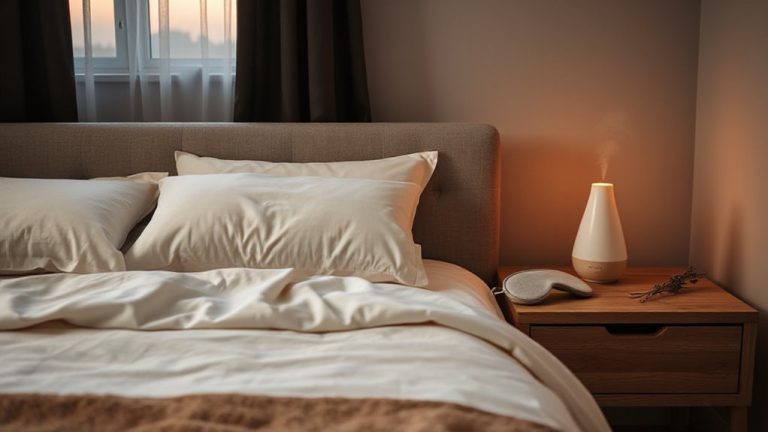
Though it might seem small, the way you set up your bedroom can make a real difference in how quickly you fall asleep and how well you stay asleep. To support your circadian rhythm, aim for a cool temperature between 60 and 67 degrees Fahrenheit-your body naturally drops in temperature at night, so a room that’s too warm can disrupt that process. Consider using blackout curtains; they block outside light from streetlights or early morning sun, helping maintain melatonin levels. Choose breathable bedding and lightweight sleepwear to stay comfortable. Test different setups over a few nights to see what works best. Some blackout curtains come with warranties and easy installation, so check product details if durability matters. These features aren’t just for comfort-they shape your sleep environment in measurable ways. A well-prepared bedroom supports better sleep hygiene without relying on aids.
On a final note
You can improve sleep by managing light exposure throughout the day. Morning sunlight helps set your body clock, while dimming lights and reducing blue light at night support melatonin release. Simple changes-like using warm-toned bulbs, limiting screen time, and blackout curtains-can make a real difference. If sleep problems continue, consider evidence-based aids, check warranty options, and consult a specialist to explore solutions tailored to your needs.