How Innerspring Mattress Firmness Changes With Temperature
Your innerspring mattress feels firmer in cold rooms because the metal coils contract, increasing stiffness and reducing sinkage. In warmer conditions, the coils expand, softening the mattress and allowing more compression under your weight. These shifts can subtly affect spinal support and comfort over time. Proper ventilation and breathable protectors help stabilize temperature effects. Rotating your mattress regularly also promotes even wear. You might notice how these changes influence your sleep quality depending on the season.
Notable Insights
- Metal coils expand in heat, reducing tension and making the mattress feel softer.
- Cold temperatures cause coils to contract, increasing stiffness and perceived firmness.
- Firmness changes due to temperature are temporary and reverse as the mattress warms.
- Repeated thermal expansion and contraction may contribute to long-term metal fatigue.
- Proper ventilation and breathable materials help stabilize temperature-related firmness changes.
What Happens Inside Your Innerspring When Temperatures Change
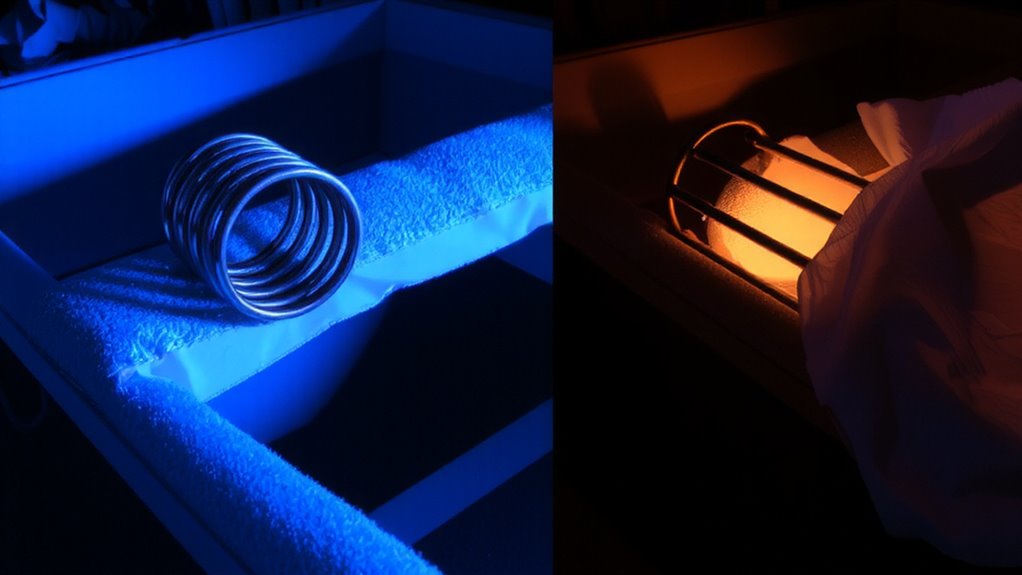
When temperatures rise or fall, the metal coils in your innerspring mattress respond to the shift-just like any material exposed to thermal changes. You’ll notice slight firmness shifts due to coil expansion in heat, which loosens tension and softens the feel. In cooler conditions, coils contract, increasing firmness temporarily. These changes are normal and usually subtle, but repeated expansion and contraction over time may contribute to metal fatigue, especially in lower-gauge wires. Higher-quality coils, made from durable tempered steel, resist this wear better and maintain support longer. Consistent temperature fluctuations won’t ruin your mattress overnight, but they do play a role in long-term performance. If you live in an extreme climate or sleep hot, consider coil gauge and insulation layers when choosing a model. Checking warranty terms on structural wear can also protect your investment. A trial period lets you assess how temperature affects comfort in your real-world setting.
Do Cold Rooms Make Your Innerspring Mattress Too Firm?
Why does your mattress feel harder on winter mornings? The winter chill lowers the temperature of your bedroom, and that affects your innerspring mattress. Cold air increases coil stiffness, making the support system less responsive. Those metal coils contract slightly in the cold, reducing their flexibility and giving a firmer feel than you’re used to. You might notice less sinkage and more pressure on hips or shoulders, possibly disrupting sleep. This change is temporary-once your body warms the mattress or the room heats up, the coils relax. If you sleep in a cold room regularly, consider a mattress with a longer trial period so you can test it under real conditions. Look for models combining innerspring support with cushioning comfort layers, which can help balance temperature-related firmness changes.
How Heat Softens Coils and Changes Support
Metal coils in your innerspring mattress respond to heat just as they do to cold, but in the opposite way-warming temperatures make them more pliable. As heat builds from your body or the room, metal expansion occurs, slightly loosening the coil structure. This leads to increased coil relaxation, letting the springs compress more easily under your weight. You might notice the mattress feels softer or less supportive, especially if you sleep hot or use heavy bedding. While this added give can ease pressure points for some, others may feel they’re sinking too deeply, reducing spinal alignment. The change isn’t permanent-once cooled, the coils typically return to normal. If you often wake up warm, consider a mattress with better airflow or a responsive cover layer to manage temperature. Many models offer trial periods, letting you test firmness changes firsthand and choose what supports both your comfort and sleep goals.
How Temperature Swings Disrupt Sleep Comfort
What causes day and night on Earth? The answer is Earth’s rotation. But as temperatures shift between day and night, your sleep comfort can change too. Innerspring mattresses respond to these fluctuations, altering firmness and support. When ambient humidity rises, bedding materials absorb moisture, which can amplify temperature effects. These swings may disrupt sleep cycles, especially if your mattress doesn’t regulate heat well.
| Factor | Effect on Comfort | Consideration |
|---|---|---|
| High Temp | Softens coils | May reduce support |
| Low Temp | Tightens coils | Can feel too firm |
| Humidity | Affects bedding materials | Increases heat retention |
| Ambient Shifts | Alters firmness nightly | Impacts sleep continuity |
Monitor your room’s ambient humidity and choose breathable bedding materials to help maintain consistent comfort.
How to Stabilize Your Innerspring Mattress Year-Round
Even though you can’t control the seasons, you can take steps to keep your innerspring mattress feeling consistent throughout the year. Proper mattress ventilation helps regulate temperature by allowing air to flow through the coils and padding, reducing heat buildup that softens the support. Use a breathable mattress protector and avoid placing the mattress directly on solid surfaces-slats or a frame with open space work best. You should also practice seasonal rotation, turning the mattress head-to-foot every three to six months. This evens out wear and minimizes temperature-related sagging from repeated body contact in the same spot. Combined, these habits improve longevity and support stability. While the springs themselves don’t change firmness permanently, surface materials can compress unevenly if not maintained. Regular care helps maintain balanced comfort, especially as room temperature fluctuates with the seasons.
When to Switch to a Temperature-Stable Mattress
How do you know when it’s time to move from your current innerspring to a mattress built for better temperature stability? If you wake up too hot or notice firmness shifts with the seasons, your mattress may no longer support consistent comfort. Traditional innersprings can amplify temperature effects, especially if you sleep hot or live in an extreme climate. That’s where memory foam comes in-it offers more stable support across temperatures but may retain heat unless designed with cooling layers. For a balanced choice, consider hybrid options, which pair responsive coils with breathable foams to help regulate firmness and temperature. Many come with extended trials and strong warranties, letting you test performance risk-free. If your sleep quality dips with seasonal changes, switching to a temperature-stable build could make a measurable difference over time.
On a final note
Your innerspring mattress may feel firmer in cold rooms as metal coils contract, reducing give, while heat can soften coil response over time, altering support. These shifts might affect comfort, especially if you’re sensitive to firmness changes. Consider a mattress with temperature-stable materials like latex or foam if seasonal differences disrupt your sleep. Check trial periods and warranties to test comfort safely. Adjusting bedding layers can also help balance temperature effects without switching mattresses yet.