Elderly Sleep Management: Maximizing Rest With Age-Specific Tips
You’re more likely to wake up at 3 a.m. as you age, not due to stress, but because your internal clock shifts and deep sleep decreases. Stick to a consistent sleep schedule and unwind with tea or light reading. Optimize your bedroom with warm lighting and clear pathways. Manage disruptors like sleep apnea or nighttime urination with targeted strategies. If problems persist, a doctor can help identify treatable conditions-there’s more to discover about improving your rest.
Notable Insights
- Maintain consistent sleep and wake times daily to regulate your body’s internal clock.
- Create a relaxing bedtime routine with activities like reading or drinking caffeine-free tea.
- Optimize your bedroom with dim, warm lighting and clear pathways for safety and comfort.
- Reduce nighttime disruptions by limiting fluids and avoiding alcohol before bed.
- Seek medical advice if sleep problems persist or symptoms like snoring suggest sleep apnea.
Understand How Aging Affects Sleep
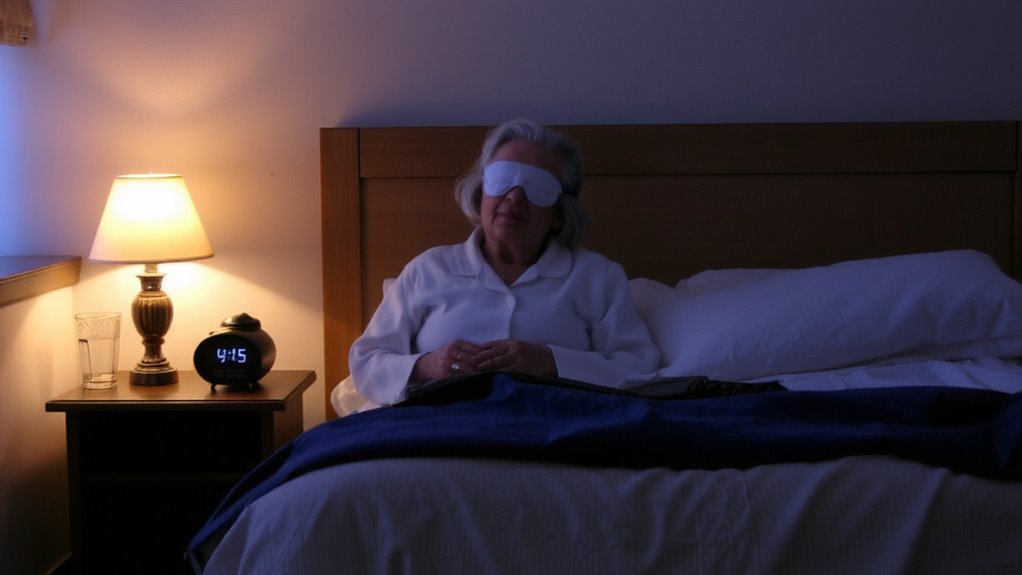
Why do you wake up earlier or struggle to stay asleep as you get older? As you age, changes in sleep architecture reduce deep sleep and increase light sleep, making rest more fragile. Your body produces less melatonin over time-a natural decline that affects your internal clock and makes it harder to fall asleep. You might notice you’re tired earlier in the evening but wake up hours before you’d like. These shifts are normal, not a flaw. Understanding them helps you decide whether sleep aids or lifestyle changes are worth exploring. Some use melatonin supplements to address the decline, though results vary. Tracking your sleep patterns can clarify if adjustments are needed. Talk with a healthcare provider to review risks, benefits, and options-especially if poor sleep affects daily life. Knowledge supports better choices for rest without overstepping into medical advice. The effectiveness of melatonin can depend on the supplement quality, so choosing best melatonin supplements is important for consistent results.
Adopt Better Bedtime Habits After 60

How can you get better rest when your body’s rhythm has changed? Start by building consistent routines that align with your natural sleep patterns. Going to bed and waking up at the same time every day helps regulate your internal clock, even on weekends. Pair this with relaxing rituals like reading a book, sipping caffeine-free tea, or doing light stretching. These habits signal your body that it’s time to wind down. Avoid screens and stimulating activities close to bedtime, as they can interfere with falling asleep. You might need to experiment to find which rituals work best-what’s calming for one person may not be for another. Keep a sleep journal to track what helps or hinders your rest. Best Sleep Journals can provide structured guidance to make tracking more effective. Over time, consistent routines and relaxing rituals improve sleep quality without needing immediate reliance on sleep aids.
Design a Sleep-Optimized Bedroom for Seniors

You’ve started building consistent bedtime habits that work with your changing rhythm, and now it’s just as important to make sure your bedroom supports those efforts. Start with bedroom lighting-use dim, warm-toned lights in the evening to signal your body it’s time to wind down, and consider automatic nightlights for safety during overnight trips. Avoid harsh overhead lighting. When arranging furniture, keep pathways clear and allow easy access to the bed from both sides, reducing strain and fall risk. Position the bed so it’s not directly under a window or facing a door, which can create drafts or visual distractions. Choose furniture at comfortable heights for sitting and standing. A calm, organized space with thoughtful furniture arrangement helps minimize stress and supports deeper rest. Test changes gradually, and adjust based on comfort and mobility needs. Opt for breathable, comfortable sleepwear like best pajamas to enhance thermal regulation and overall sleep quality.
Fix Common Elderly Sleep Disruptors
What’s keeping you up at night-frequent trips to the bathroom, aching joints, or a mind that won’t quiet down? Common disruptors like sleep apnea and restless legs can severely impact your rest. Addressing these issues starts with small, practical changes. Sleep apnea often causes loud snoring and daytime fatigue-consider a CPAP machine if recommended, as it keeps airways open. Restless legs bring an urge to move, usually in the evening; reducing caffeine and increasing evening iron or magnesium intake may help.
| Disruptor | Strategy |
|---|---|
| Sleep apnea | Use CPAP, avoid alcohol at night |
| Restless legs | Stretch gently, manage iron levels |
| Nighttime urination | Limit fluids 2 hours before bed |
Try adjustments for at least two weeks to assess improvement.
Know When to See a Doctor for Sleep Issues
If ongoing sleep problems persist despite lifestyle adjustments, it might be time to consult a healthcare provider. You should seek help if you regularly snore loudly or gasp for air at night-these could be signs of sleep apnea. Left untreated, sleep apnea raises risks for heart issues and daytime fatigue. Chronic insomnia, when you struggle to fall or stay asleep three or more nights a week for over a month, also warrants medical review. A doctor can identify any underlying conditions, like depression or medication side effects, affecting your rest. They might recommend a sleep study to diagnose disorders accurately. Treatment options vary, from CPAP machines for sleep apnea to cognitive behavioral therapy for chronic insomnia. Don’t assume poor sleep is just part of aging-many causes are manageable with proper care.
On a final note
You can improve your sleep by adjusting habits and your bedroom environment to suit aging needs. If disruptions persist, consider common causes like health conditions or medications. Track patterns and discuss them with your doctor, who might suggest a sleep study. Options like CPAP machines or melatonin supplements have specific uses, so trial them under guidance. Warranties and comfort matter when choosing devices. Small, informed steps lead to better rest.